







 Ecommerce News
Running profitable beauty ads on social media requires more than just showing a pretty face and a shiny product bottle. Customer acquisition costs are rising, social feeds move fast, and shoppers demand real proof before spending money on new cosmetics.
In this guide, I will show you how to create good advertisements for beauty products that actually drives sales. We will cover why proper campaign planning is necessary, dive into practical ad strategies you can implement today and look at real examples.
💡 Key Takeaways
- What makes a beauty product ad successful? A successful beauty ad hooks the viewer within the first three seconds, shows close-up texture or application proof, and includes a simple CTA.
- Where to advertise beauty products for conversion? TikTok and Instagram Reels are best for driving fast product discovery and impulse sales. Facebook and Instagram feed ads deliver the highest conversion rates for retargeting.
- How to advertise beauty products effectively? Focus on creating authentic short-form videos that show real results. Pair this visual proof with messaging that targets specific concerns rather than broad claims.
Why Planning Your Beauty Ads Matters
Running pay-per-click campaigns without a clear creative and targeting plan is the fastest way to burn through your ad budget. Without careful planning, your ads will look like generic commercial interruptions. To turn scrolling users into paying customers, you must align your budget, creative assets, and audience targeting before you hit launch.
Standing Out in a Crowded Market
The online beauty space is congested. There are thousands of beauty brands selling the same type of products to the same group of customers.
When you launch a beauty ad on TikTok or Facebook, you are competing not only against direct rivals, but also against lifestyle influencers, entertainment content, and established heritage brands.
If your ad attempts to speak to everyone with broad messaging like “get great skin,” it gets ignored.
Successful campaign planning forces you to pick a sharp positioning strategy. You win by narrowing your messaging to solve one specific problem for one specific group of shoppers.
Understanding Consumer Behavior and Trust
Beauty shoppers do not buy on impulse as easily as they used to. Because cosmetics directly touch skin, face, and hair, consumers carry a higher level of perceived risk.
As of 2026, the need for safe products outweighs the cheap price. The wining ads for cosmetics and skincare products are the ones solving real customer problems.
That’s why visual proof and peer validation are the primary triggers for purchasing cosmetics online. Shoppers want to know three things before buying:
- Does this product work on someone who looks like me?
- What does the actual texture look like on real skin?
- What happens if I do not like the results?
Your campaign strategy needs to answer these three questions directly within the ad format itself. If your ad fails to establish trust in the first few seconds, users will keep scrolling.
More Ad Spend Does Not Mean More Sales
I often see merchants spend thousands of dollars producing slick, television-style videos with bright studio lights and paid models. However, there were only a few checkout conversions.
Why? Because the video looked like a traditional commercial. It lacked a fast hook, failed to show realistic application, and gave viewers no compelling reason to buy right now.
Unplanned campaigns lead to high cost per acquisition, wasted media spend, and false conclusions that paid ads do not work for your brand. In reality, the platform was fine, but the ad creative lacked tactical strategy.
We know scaling paid advertising on TikTok is hard, especially with tracking each creative’s performance. That’s why NestAds provides a creative analysis solution to help you manage ads library, evaluate creative impact and better allocate ad budget across multiple platforms.
Practical Strategies to Build Effective Beauty Ads
To create beauty ads that consistently convert, you do not need an expensive production crew. You need a structured, practical system that speaks directly to what shoppers care about. Here are the core creative and messaging strategies you should use across TikTok, Instagram, and Facebook.
Lead with an Immediate Hook
The best video ads always have excellent hook, which means the first 3 seconds of the ad.
On TikTok, ads need to be both authentic and quickly grasp the audience’s attention. That’s why you’ll see a lot of unique approaches to try to get user to stop scrolling.
Avoid starting your videos with long brand logos, slow fade-ins, or generic music. Instead, open your ad with an immediate visual or textual hook:
- The Problem Hook: Show a close-up of a common issue, such as dry foundation patches or frizzy hair, within the first second.
- The Curiosity Hook: Start with a bold text overlay on screen, such as “Stop applying foundation like this.”
- The Visual Hook: Begin the video with a satisfying, close-up squeeze or swatch of the product.
TikTok’s native analytics help you evaluate ad creative with “Hook Rate” (3-second view) and “Hold Rate” (6-second view) metrics. Use these insights, along with tracking ROAS, to optimize your creative and reduce wasted ad spend.
Use Authentic User-Generated Content (UGC)
User-generated content continues to be one of the highest-performing formats for beauty advertising. UGC refers to casual, smartphone-recorded videos that look and feel like organic social posts.
When a regular person films themselves holding a product, standing in their bathroom, and explaining how it fixed their dry skin, it feels like a friendly recommendation rather than a corporate sales pitch. Work with micro-creators or existing customers to build a library of casual review videos. You can then run these video clips directly through your ad account.
UGC is especially prominent and encouraged on TikTok. As a platform that pushes authenticity, TikTok UGC ads often go viral and help small brands gain traffic.
The best TikTok ads are natural and don’t feel like an ad, which you should always strive for.
Target Specific Pain Points and Skin Types
A good beauty and skincare products ad focuses on addressing customer pain points and highlight how the product can help. In this case, you want people to know that your product is, first and foremost, safe on the skin. The rest is affirmation of different qualities:
| Product Type | Broad (Weak) Claim | Specific (Strong) Claim |
|---|---|---|
| Hydrating Serum | Makes your skin glow all day. | Locks in moisture for dry, flaky cheeks in cold weather. |
| Full-Coverage Concealer | Hides all imperfections easily. | Covers dark under-eye circles without settling into fine lines. |
| Volumizing Shampoo | Gives you amazing, healthy hair. | Lifts flat, fine hair at the roots without leaving greasy residue. |
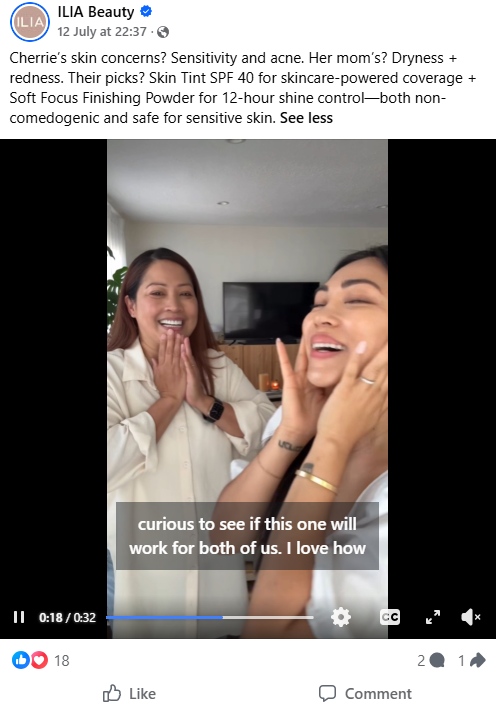
When your ad copy speaks directly to a specific problem, the right shoppers immediately recognize that the product is meant for them. For example, a good Facebook ad copy needs to be as direct and clear as possible:
Show Genuine Product Results
Polished studio lighting can actually hurt your conversion rates because it looks engineered. Modern shoppers want unedited, realistic proof.
Show your product in action using plain, clear lighting. Split-screen videos work exceptionally well for this strategy. Place a “before” shot on the left side of the screen and an “after” shot on the right side. Alternatively, film a creator applying a lip stain or concealer to one half of their face while leaving the other half untouched. This side-by-side comparison provides undeniable visual proof in real time.
Focus on a Customer Retention Strategy
Acquiring a new customer is usually the most expensive part of running paid ads. If your media strategy stops after the first sale, you are leaving most of your potential profit on the table.
Use your Facebook and TikTok pixels to build retargeting audiences based on past store visitors, video viewers, and add-to-cart drop-offs.
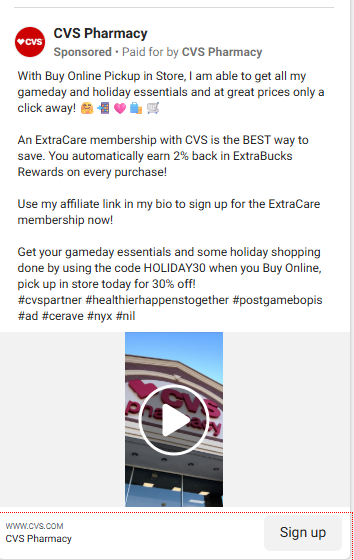
For example, this Facebook retargeting ad from CVS Pharmacy does not only call for purchase, but for membership signup to receive price off:
Keep the Call to Action Simple
Do not confuse your audience with multiple commands at the end of your ad. If you ask a viewer to like your video, follow your page, and visit your website all at once, they will usually do none of those things.
Keep your call to action (CTA) clear, direct, and single-focused. Use action-oriented phrases that tell the buyer exactly what step to take next:
- Weak CTA: “Learn more about our brand journey on our website today!”
- Strong CTA: “Tap ‘Shop Now’ to claim your 15% first-order discount.”
Evaluating Social Media Platforms for Beauty Ads
Choosing where to spend your ad budget depends on your target audience, product price point, and available creative assets. Each major social platform operates differently and serves a specific purpose in your sales funnel.
TikTok for Discovery and Top-of-Funnel Reach
TikTok is currently the strongest platform for fast visual discovery and impulse purchases. Its algorithm prioritizes content engagement over follower count, making it ideal for launching new beauty products or scaling viral UGC videos.
The platform excels at top-of-funnel acquisition, particularly for trend-driven items like lip tints, spot treatments, and unique hair styling tools. However, TikTok audiences move fast and fatigue creative quickly. To keep ad costs low on TikTok, you must refresh your video creative every two to three weeks.
Relevant reading: TikTok Ad Creative Best Practices for Beauty & Personal Care
Instagram for Inspiration & Branding
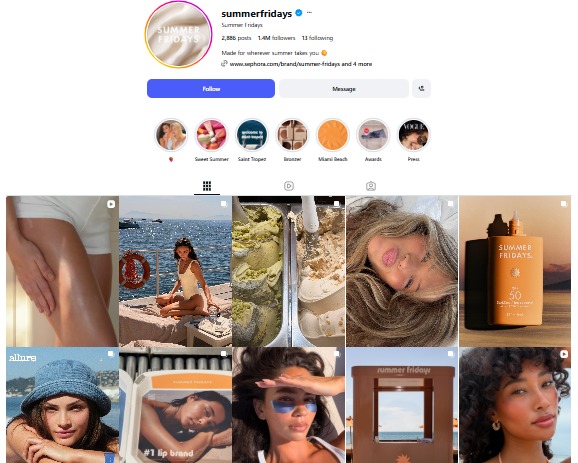
Instagram remains the flagship channel for aesthetic beauty marketing. Formats like Instagram Reels and Carousel ads allow brands to showcase high-quality product textures, curated shade ranges, and polished before-and-after transformations.
Instagram users generally show higher purchasing intent and higher average order values compared to TikTok users. It is an ideal platform for mid-funnel consideration, where shoppers want to browse product shade ranges, read tagged customer reviews, and check a brand’s visual identity before buying.
Facebook for Audience Retargeting and Lifetime Value
While Facebook may not generate the same organic viral buzz as TikTok for beauty trends, it remains an unmatched powerhouse for pay-per-click retargeting and demographic precision.
Facebook’s advertising system excels at reaching older demographics with higher disposable income. It is the best platform for promoting anti-aging skincare, premium hair systems, and multi-step beauty bundles. Use Facebook primarily to run middle-and-bottom-of-funnel campaigns, retargeting cart abandoners, and driving repeat purchases from existing customers.
Overall, each platform has its strengths, and most beauty brands are encouraged to adopt a omnichannel marketing approach. If you are already active on several platforms, learn how to track the customer journey across multiple channels.
Follow Legal Rules for Beauty Ads
Creative strategy and media buying techniques are worthless if your ad account gets flagged, suspended, or fined for policy violations. Because beauty products make direct health and cosmetic claims, advertising platforms and government regulators enforce strict guidelines. You must keep your campaign copy legally compliant and transparent.
Follow Sponsored Content Disclosure Rules
If you hire influencers, pay creators for UGC videos, or gift free products in exchange for ad content, you must clearly disclose that business relationship to consumers.
The Federal Trade Commission (FTC) strictly enforces regulations regarding endorsement and ad transparency. When running paid creator assets, ensure the video or post caption contains clear, unambiguous disclosures:
- Use explicit text markers like #ad or #sponsored at the beginning of the caption, where users can see it without clicking “see more.”
- Utilize built-in platform tags, such as Meta’s “Paid Partnership” label or TikTok’s commercial content disclosure toggle.
- Avoid hidden, confusing, or buried tags like #sp or placing disclosure hashtags in a wall of twenty other tags at the bottom of the post.
Avoid Misleading Skin Filters
Using digital filters, skin-smoothing effects, or post-production retouching to exaggerate the performance of a cosmetic product is illegal in many jurisdictions and violates ad platform policies.
Regulators such as the UK Advertising Standards Authority (ASA) have banned ad campaigns from major cosmetic brands specifically for using beauty filters that artificially smooth skin texture or lengthen eyelashes in mascara ads.
If you run an ad for a foundation, moisturizer, or anti-aging cream, the model or creator’s skin must appear naturally without digital altering filters. Aside from keeping your ad account compliant with platform policies, avoiding heavy filters builds real trust with your buyers and significantly reduces product return rates.
⚠️Important: Each platform such as Meta and TikTok can have different brand guidelines and restrictions for paid advertising. Make sure to read their official documentation and follow their rules to avoid getting banned.
FAQs: Beauty Products Advertisement
TikTok delivers the fastest top-of-funnel reach and immediate sales spikes for trend-focused cosmetics, especially when using casual user-generated video hooks. However, combining TikTok for initial discovery with Facebook and Instagram for retargeting yields the most consistent long-term return on ad spend.
You can create converting video ads using a smartphone by filming near a large window for soft natural lighting, capturing raw behind-the-scenes product packaging footage, and offering free product samples to micro-creators in exchange for unedited review videos that you can run inside your ad account.
Focus on your hook rate (the percentage of users watching the first three seconds) to evaluate if your opening visual works, your outbound click-through rate to see if your offer drives store visits, and your cost per acquisition to ensure your campaign generates sales below your product margin.
For high-volume channels like TikTok and Instagram Reels, refresh your video hooks every two to three weeks to keep ad performance stable. On retargeting channels like Facebook, you can run winning static images, customer reviews, and carousel creative for several months before performance drops off.
Influencer marketing becomes paid advertising the moment you spend budget to boost an influencer’s post or run their video content directly inside your ad account as a spark ad or partnership ad, which means the content must strictly follow platform ad policies and FTC disclosure laws.