







 Ecommerce News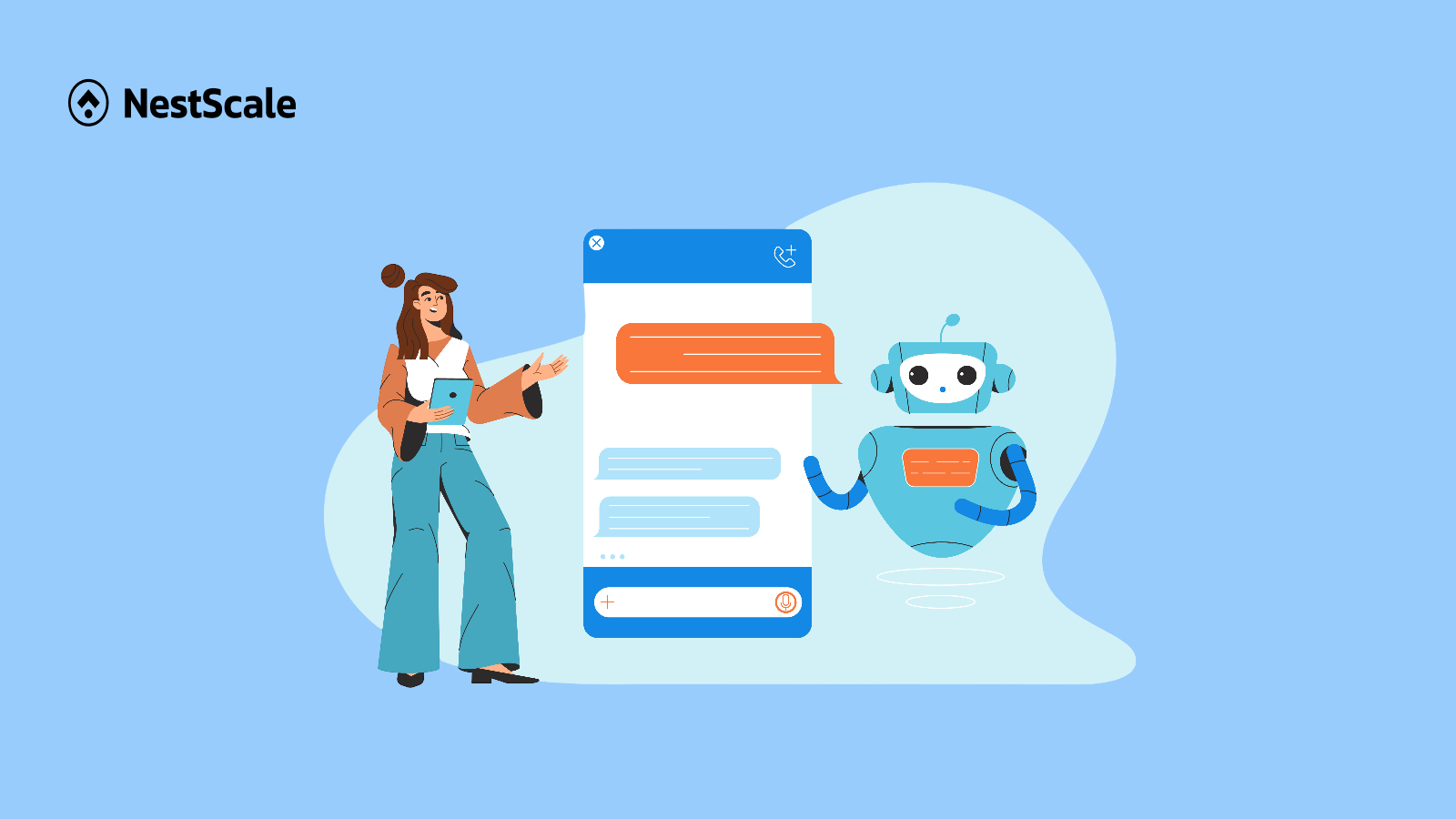
Businesses often spend a massive amount of time resolving customer complaints after they have already happened.
Yet, a recent study revealed that customer service organizations can reduce customer churn rate by 15% simply by shifting from reactive support to proactive outreach.
That is where proactive AI comes into play. It changes how ecommerce stores talk to their customers. Instead of waiting for a customer to complain or ask for help, this technology steps in to solve problems before they even happen.
Let us dive deep into what proactive AI is, how it works, and how you can use it to grow your online store.
1. What is proactive AI
Proactive AI is a technology that automatically identifies customer friction points using real-time behavioral data and steps in to resolve them before the customer ever asks for help.
Unlike traditional systems that wait until a customer acts, Proactive AI takes the first step by using real-time tracking, and machine learning to understand customer behavior.
Proactive AI relies on a few key characteristics:
- Real-time behavioral monitoring: It constantly tracks active user signals on your store, such as product view, add-to-cart, or repeated clicks on certain elements.
- Predictive problem solving: It uses historical customer data to anticipate potential issues a buyer might have before they leave.
- Independent from human intervention: It delivers information, recommends products, or offers discounts automatically without needing a human staff member to trigger.
- Personalization: It tailors its actions to the user’s exact stage in the buying journey, ensuring the assistance feels timely and helpful rather than intrusive.
If a shopper experiences a problem on your site but decides not to reach out, a reactive system cannot help them, whereas proactive AI systems initiate conversations and engage with customers in real time.
2. What are proactive AI agents
While proactive AI is the underlying technology, proactive AI agents are the specific tools that do the actual work on your ecommerce store.
A proactive AI agent monitors your website traffic, shopping carts, and checkout flows of browsing customers.
Here is an example of proactive AI agent in ecommerce:
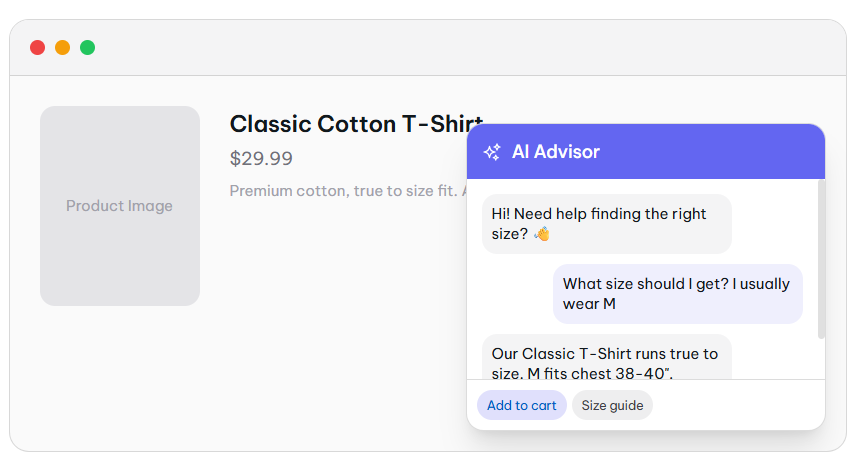
As proactive AI agents remove friction during the customer journey, they can increase add-to-cart rate and improve user experience.
3. How proactive AI changes the customer experience
When you introduce proactive customer support into your online store, the overall experience becomes completely seamless for the buyer.
3.1. Reducing customer wait time
Proactive AI significantly reduces user waiting periods with its ability to give immediate answers.
Research from HubSpot shows that 90% of consumers rate an “immediate” response as important or very important when they have a customer service question, with over half of respondents defining immediate as 10 minutes or less. Proactive AI cuts this window down to real-time execution.
3.2. Driving action and reducing drop-off rates
Proactive tools directly improve your store’s sales metrics by targeting the exact moments shoppers hesitate:
- Detecting buyer hesitation: When the system tracks a user stalling on a page, it automatically triggers a targeted message to offer help before they leave.
- Handling product-related questions: Shoppers often abandon their carts due to sudden doubts about sizing, materials, or shipping costs. AI agents deliver the exact information needed to clear up these uncertainties and close the sale.
- Learn from historical data: The software continuously tracks which interventions successfully prevent cart abandonment. It uses these past patterns to optimize its prompts over time.
3.3. Building deeper trust and loyalty
Every time a customer has to stop what they are doing to search for an answer on your store, their trust in your brand drops a little bit. On the other hand, when your store anticipates what they need, it creates a powerful psychological win.
According to consumer insights shared by McKinsey, 71% of consumers say they want highly contextual interactions where they are immediately understood.
By providing personalized answers in real time, a proactive AI agent can turn a potential moment of frustration into a seamless experience that deepens customer loyalty and builds lasting brand trust.
Before implementing proactive AI, you may need to know the differences between AI agents and chatbots.
3.4. Lowering costs of customer acquisition
Driving paid traffic to your store is expensive, but getting a visitor to actually pay for your products and services is another story entirely. Proactive AI directly lowers your Customer Acquisition Cost (CAC) by helping customers be more confident about their purchases.
Instead of letting a visitor abandon their session, the AI steps in at the exact peak of their buying intent. By instantly resolving doubts for hesitant, first-time browsers right on the product page, it dramatically increases your onsite conversion rate. This means you convert far more traffic into sales, so you don’t have to spend more money on ads than you already do.
FAQs: Proactive AI
Proactive AI maintains engagement by delivering targeted assistance at the exact moment a shopper hits a barrier. By analyzing real-time customer behavior — like stalling on a policy page or repeatedly clicking a broken link — the system steps in with contextual answers before frustration sets in.
Proactive AI tools can provide answers in seconds, and are available 24/7 whenever the customer needs.
You can leverage AI, such as AI chatbots, to track customer lifecycles and initiate automated, personal touchpoints. Instead of blasting your entire email list with the same generic newsletter, try to send targeted, personalized emails based on chat history.
No, it will not. Proactive AI is not designed to replace your human support team. The real goal of this technology is to act as a supportive layer that cleans up real-time friction points and capture more sales/leads. The tool can hand over the conversation to your human staff members and be integrated into CRM platforms for analyzing customer data.