








Have you ever spent weeks planning a new social media strategy, posted consistently for a month, and then suddenly realized you completely hate what you are creating?
You are not alone. Choosing a content pillar for social media is not easy, especially if you want to grow your business.
In this guide, I will share a practical, step-by-step approach to choosing social media content pillars that build real authority, attract your target audience, and prevent you from burning out.
💡 Key Takeaways
- Content pillars are the 2 to 3 core topics your brand consistently posts about to build authority and trust.
- Choosing pillars based only on viral trends or vanity views leads to low conversions and high creator burnout, which damages long-term growth.
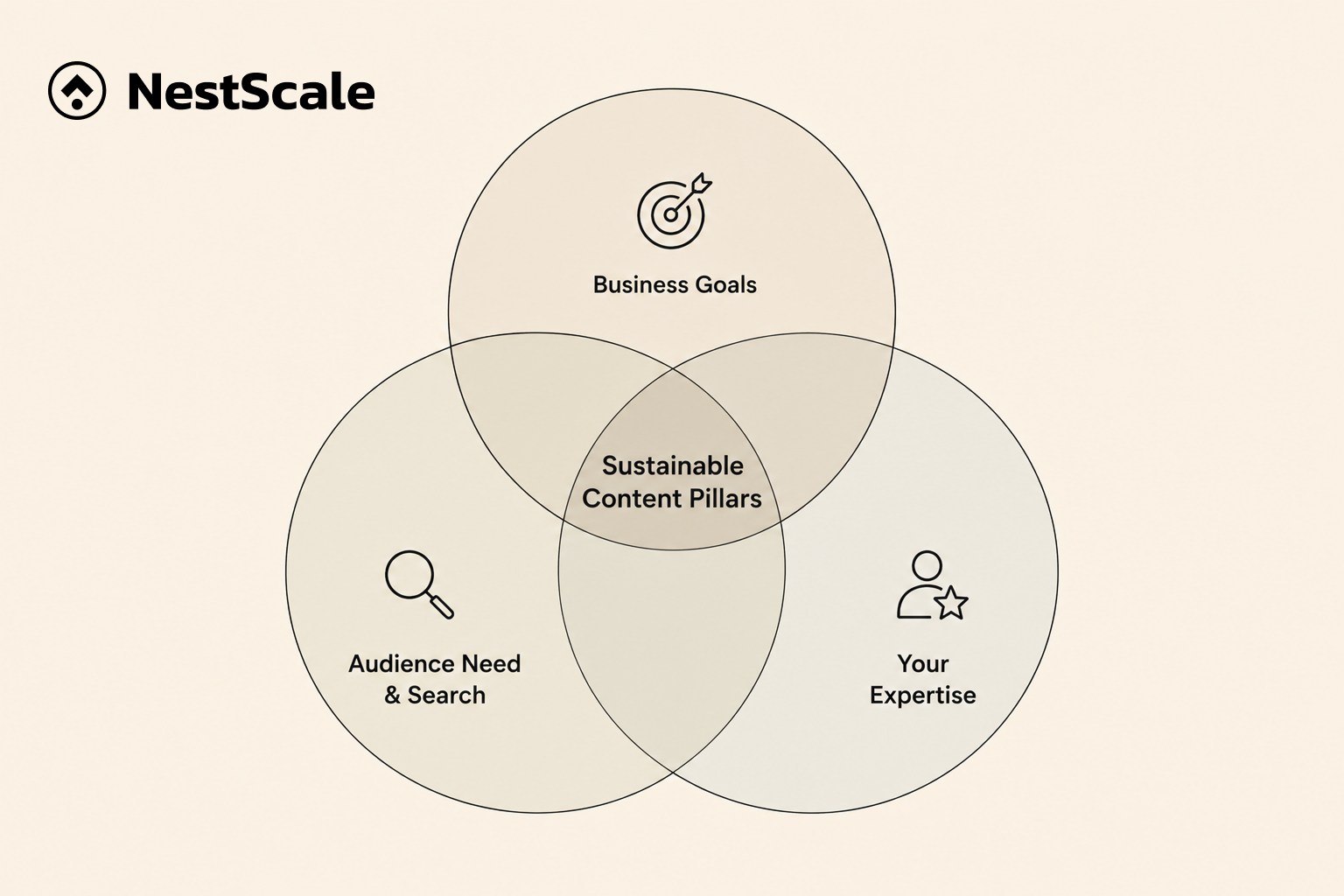
- Sustainable pillars align your brand values, your target audience’s real needs, and your actual expertise.
- You should review and adapt your content pillars by observing how the audiences engage.
What Are Content Pillars in Social Media?
In social media marketing, content pillars are simply the three to five core topics that guide everything you post.
With a content pillar, viewers can quickly understand what you do and why they should hit the follow button. Without pillars, your feed becomes a random collection of thoughts (that maybe nice for content creators, but not brands!)
To see how content pillars work in practice, consider how a general theme breaks down into specific sub-topics and posts:
| Content Pillar | Purpose | Common Formats |
| Educational and How To | Teach practical skills, solve audience problems, and answer common questions. | Step by step tutorials, carousel guides, infographics, quick tips. |
| Entertainment and Storytelling | Captivate the audience through relatable humor, brand narratives, and creative skits. | Short video skits, meme commentary, founder journey stories, funny character videos. |
| Community Engagement | Spark conversations, show brand commitment to their core values | Polls, Q and A sessions, comment replies, interactive questions, social events |
| User Generated Content (UGC) | Feature photos, videos, and reviews created directly by real customers. | Reposted customer videos, product unboxings, branded hashtag challenges |
| Behind-the-Scenes Content | Highlight company team members, workplace environment, and daily operations. | Founder stories, office tours, team spotlights, production workflows. |
Why You May Regret Your Choice of Content Pillars
Selecting content pillars seems straightforward at first. You select some interesting topics, add them to a schedule, and start creating. However, many business owners end up regretting their pillar choices three months down the road.
Here are the four most common reasons why content pillar strategies fail.
You don’t attract the target audience
If you choose a pillar based solely on what gets quick views, such as generic viral jokes or popular pop-culture commentary, you will attract an audience.
However, that audience will likely have zero interest in your actual products or services. For instance, a accounting consultant posting viral pet videos might gain thousands of followers, but those followers will not hire them for financial planning. You end up with empty metric growth instead of potential clients.
Your content pillars can’t be monetized
A major point of regret for business owners is building pillars that are completely disconnected from their paid offers. If you overuse trending topics that are unrelated to what you sell, it will become real hard to advertise your products real soon.
You run out of ideas and burn out
When you pick a topic that is far too narrow, you quickly hit a creative wall. After making five or six posts, you struggle to find new angles. Writing content starts to feel like an uphill battle, leading directly to posting delays and creator fatigue.
The topics don’t match your true knowledge or skills
Trying to maintain a pillar on a topic you do not personally understand is exhausting. Social platforms and audience expectations have shifted toward authentic, experienced voices.
Content created by individuals with first-hand experience builds higher trust and audience loyalty. If you have to spend hours researching just to write a simple post, you selected the wrong topic.
You can’t repurpose your content across platforms
If a content pillar relies entirely on a specific platform feature, such as lip-syncing to trending audio or using platform-specific visual filters, it is nearly impossible to translate that message to other channels.
When you cannot easily turn a short video topic into a LinkedIn post, a newsletter, or an image carousel, you lock yourself into a single platform. This forces you to write every piece of content from scratch for every network, significantly increasing your weekly workload.
How to Choose Sustainable Content Pillars for Social Media
To build a social media strategy that yields steady sales and long-term audience growth, you need a realistic selection framework. You do not need overly complicated formulas. You simply need to align what your business sells with what your audience needs and what you can sustainably create.
1. Identify your target audience and what they need
This step is essential because creating content based purely on what you want to talk about usually leads to total radio silence. You must anchor your pillars in actual search intent and audience questions so every post feels directly relevant to the reader.
Start by auditing your daily customer interactions. Review sales call notes, customer service emails, surveys, analytics, and comment sections under your posts. Write down the top five objections or questions potential buyers raise before hiring you or purchasing your product.
Tip: search niche subreddits, Facebook groups, or review sites related to your field, and copy the exact phrases people use to describe their struggles. Use those verbatim phrases as the foundational titles for your educational content pillars.
2. Define your brand’s personality and core values
Your content pillars need to reflect how you do business. Are you a direct, step-by-step teacher, or an encouraging, supportive friend? Research indicates that 64% of consumers rate brands highly when their social media content clearly reflects brand values.
Let’s ask yourself some questions: What do you want your audience to remember you for? How can you deliver what they need in a unique way? Deciding on your unique perspective helps your content stand out in a crowded feed.
3. Choose content pillars you can actually do well
Selecting pillars that sound impressive but require skills or resources you lack is a quick path to creative paralysis. This step ensures that your chosen topics align with your current production capacity, schedule, and depth of knowledge, making consistent publishing effortless rather than overwhelming.
Before locking in a pillar, test its long-term potential with a quick brainstorming exercise. Pick a potential topic and try to write down ten specific post titles in five minutes. If you struggle to get past three ideas, the topic is likely too narrow or outside your comfort zone.
4. Don’t be afraid to try new formats or adapt over time
It is important to separate your content topic from your content format.
A content pillar is the message, while video reels, text carousels, and images are simply the delivery vehicles. If text posts stop getting reach on a platform, you do not need to abandon your topic. Simply convert that same core message into a short video or a visual infographic. This maintains your core message while adapting to changing algorithm preferences.
Of course, sometimes you discover new customer insights and new topics that can resonate more with them than the current topics. You should always test your ideas after learning how to create new content faster and more efficiently.
Content Pillars That May Hurt Your Long-Term Growth
Some content pillars seem appealing at first because they are easy to copy or offer quick viral potential. However, relying on these choices often harms your brand authority or wastes valuable time.
Generic news rewrites without your own opinion
Simply repeating news headlines that everyone else is sharing does not set your brand apart. Readers can find news anywhere. If you choose an industry news pillar, always add your personal perspective, key takeaways, or predictions. Without your unique insight, news reporting offers very little business value.
Also, if you want to share an idea across platforms or reuse it, don’t just hit a repost. Try to repurpose that content into different formats that align with your audience on a particular social platform.
Unrelated viral trends and memes
Participating in every trending video audio clip or popular meme might give you a brief spike in views. However, building an entire pillar around general entertainment brings in casual viewers who rarely convert into paying customers.
That is not to say you should not use funny, interactive post ideas. They are effective in boosting engagement, but try to make them relevant to your niche instead of posting unrelated memes.
Pure motivation without storytelling
Inspirational quotes can be uplifting, but a profile built entirely on generic quotes leaves your audience without practical solutions. People follow business accounts to learn how to solve specific problems. Always pair inspirational thoughts with an appealing story.
Non-stop promotional sales pitches
This is pretty obvious: most people go on social media for entertainment. A helpful guideline in social media marketing is the 80/20 rule: 80 percent of your posts should educate, entertain, or connect with your audience, while 20 percent should directly invite them to buy your products or services.
On platforms like TikTok where short-form videos are dominant, you would have to be careful about pitching your products. The engagement rate for sponsored ads is often much lower than authentic videos, which means your pitch needs to be indulging and relevant to the audience.
5 Examples of Successful Social Media Content Pillars in Action
Examining how established brands structure their social media presence provides a helpful blueprint for your own strategy.
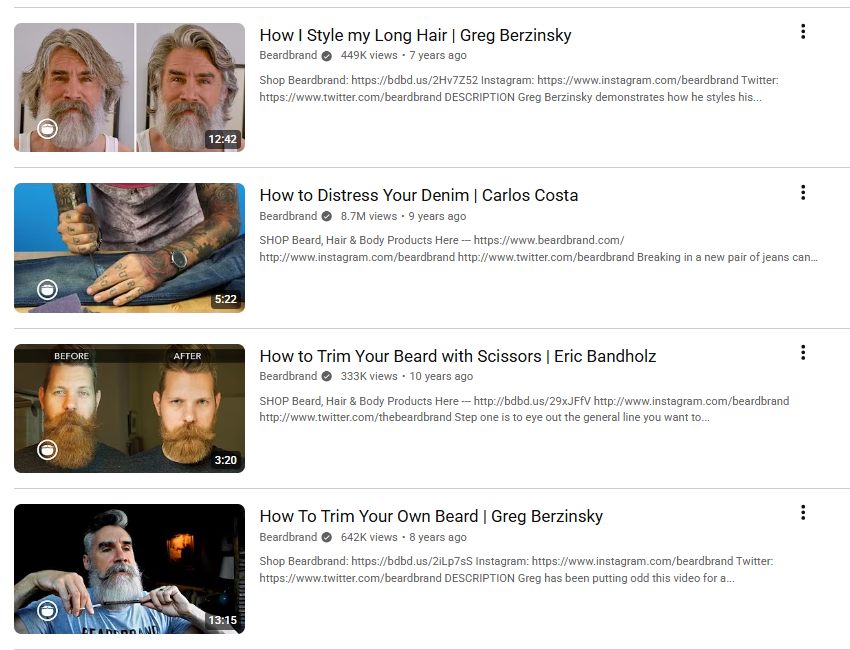
Beardbrand (Educational and How To)
How-to tutorials is one of the best types of content on social media to build a strong, dedicated community.
Beardbrand relies on practical educational content to teach men how to style and care for their facial hair. Operating primarily on YouTube and Instagram, they publish step by step trimming tutorials, hair care guides, and grooming routine walkthroughs. Teaching actionable skills builds strong brand authority while naturally introducing their grooming oils and styling products.
Patagonia (Community Engagement Pillar)
Patagonia uses social media primarily on Instagram and X to spark conversation around environmental activism and outdoor culture. Instead of constantly pitching gear, they ask followers to participate in local environmental campaigns, highlight grassroots organizers, and host discussions around sustainability issues. Engaging their community around shared values builds deep customer loyalty and long term brand advocacy.

Frank Body (User Generated Content Pillar)
Frank Body, a direct to consumer skincare brand, builds its social media strategy around customer photos and video reviews. On Instagram and TikTok, they repost photos of real customers using their products. Showcasing real customer experiences gives prospective buyers authentic social proof.
Buffer (Workplace Culture and Behind the Scenes)
Buffer uses workplace culture and operational transparency as a foundational content pillar. On LinkedIn and X, they share behind the scenes details of their four day workweek, open salary models, and internal team workflows. Showing how their company operates builds deep trust with industry professionals and prospective job candidates.

Gymshark (Product Features and Promotions)
Gymshark drives direct online sales through structured product promotions and clothing launches. Focusing on Instagram and TikTok, they build anticipation for new apparel lines using athlete try on videos, product feature highlights, and direct shopping links. Clear promotional calls to action convert high social media engagement into direct store sales.

Scrub Daddy (Entertainment and Storytelling)
Scrub Daddy dominates TikTok by turning a simple kitchen sponge into an entertainment powerhouse. Their core pillar relies on character driven storytelling and humor rather than traditional advertising. They use a chaotic mascot to participate in trending short-form videos, creative skits, and pop culture jokes. The entertaining narratives hold viewer attention and expand organic brand reach.
FAQs About Social Media Content Pillars
Your core content pillars should stay consistent across platforms, but your content formatting should adjust to match platform norms. You should also observe the differences in how audiences engage with your content on each platform and adjust accordingly.
High reach combined with low conversion usually signals a weak link between your post topic and your sales offer. Review your posts to confirm you are including clear, relevant calls to action. Additionally, evaluate whether the topic attracts casual browsers rather than serious buyers.
Audit your content pillars every three to six months. Review your social media analytics to identify which topics generate the highest comments, website clicks, and sales inquiries. If a pillar underperforms consistently or no longer reflects your core business offerings, you should try to present in different formats or replace it.