







 Marketing Attribution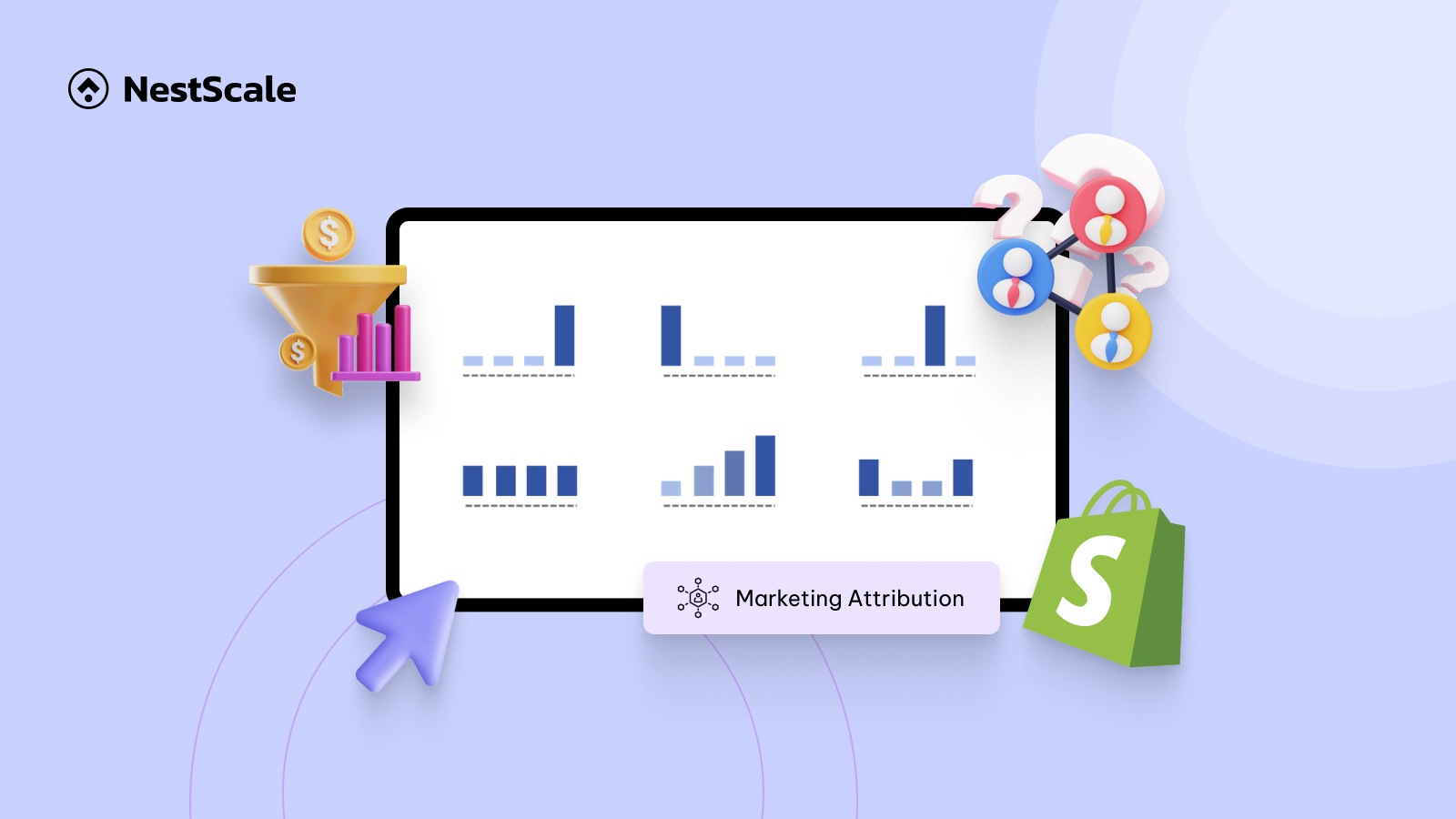
If you run an online store, you already know the frustration of looking at your ad dashboards and trying to make sense of conflicting data. I have spent years helping ecommerce store owners optimize their performance, and I can tell you that this tracking issue is the single biggest roadblock to scaling your business.
By the end of this guide, you will know which Shopify marketing attribution tool fits your budget and scaling goals.

Top Shopify Marketing Attribution Tools for 2026
To find the absolute best options for online merchants, I tested the leading data tracking applications on live Shopify stores. Evaluating these apps required looking past the marketing hype and focusing entirely on features that impact your daily profitability.
I evaluated these applications based on four critical criteria:
- Data Accuracy and Tracking Method: Does the tool rely on outdated browser cookies, or does it use modern, server-side first-party data tracking?
- Platform Integrations: How easily does the software sync with major networks like Shopify, Meta, Google, TikTok, and Pinterest?
- Dashboard Usability: Can an everyday business owner log in and understand the data, or do you need time to learn?
- Pricing Scalability: Does the software offer a fair entry point for small stores, or does it instantly price out growing brands?
Here is a summary table comparing the top five tools based on our testing framework:
| App Name | Key Feature | Pricing | Best For |
|---|---|---|---|
| NestAds | Simple multi-touch models | Free plan available; starts from $129.99/month | SMEs or growing brands |
| Triple Whale | Centralized marketing ecosystem | Starts from $149/month | Mid-market DTC brands |
| Northbeam | Advanced machine learning | From $1,500 per month | High-volume multi-channel stores |
| Rockerbox | Omnichannel cross-platform tracking | Custom enterprise pricing | Large Shopify Plus and retail brands |
| Cometly | Real-time ad manager data sync | Starts from $750/month | Active media buyers and ad scalers |
Based on our testing across various store sizes, here is how these applications rank by use-case:
- Best for SMEs & growing ecommerce stores: NestAds
- Best for medium-to-large ecommerce stores: Triple Whale
- Best for enterprise scaling: Northbeam
1. NestAds
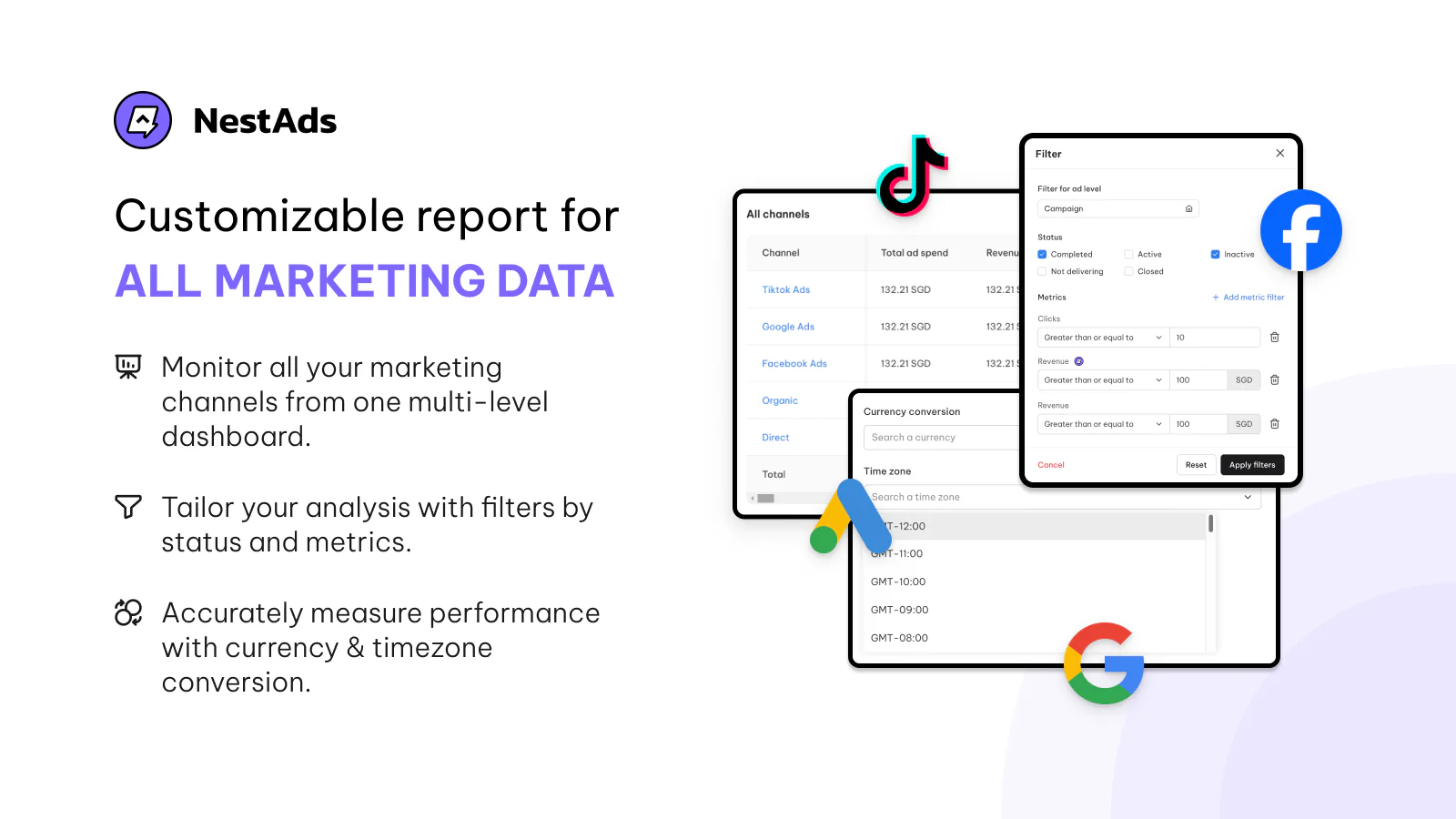
NestAds is a Shopify marketing attribution app that helps growing merchants track the effectiveness of their advertising spend by providing multi-touch attribution modeling.
The NestAds app stood out for its ability to simplify complex customer journeys for brands utilizing standard paid channels. By integrating server-side first-party tracking, it avoids the data loss associated with traditional browser cookies and maps out exactly how shoppers interact with your store across Meta, Google, and TikTok.
Key Features:
- Simplified multi-touch attribution reports.
- Direct integration with Shopify, Meta, Google, and TikTok ad accounts.
- Customer journey path visualization maps.
Pros:
- Affordable entry point for smaller brands.
- Highly visual customer lifecycle layout.
- Seamless server-side setup without coding.
Cons:
- Basic predictive modeling and machine learning.
- Inadequate for brands managing dozens of ad accounts.
If you are running a small or medium brand, take a look at top 3 marketing attribution tools in our video:
2. Triple Whale
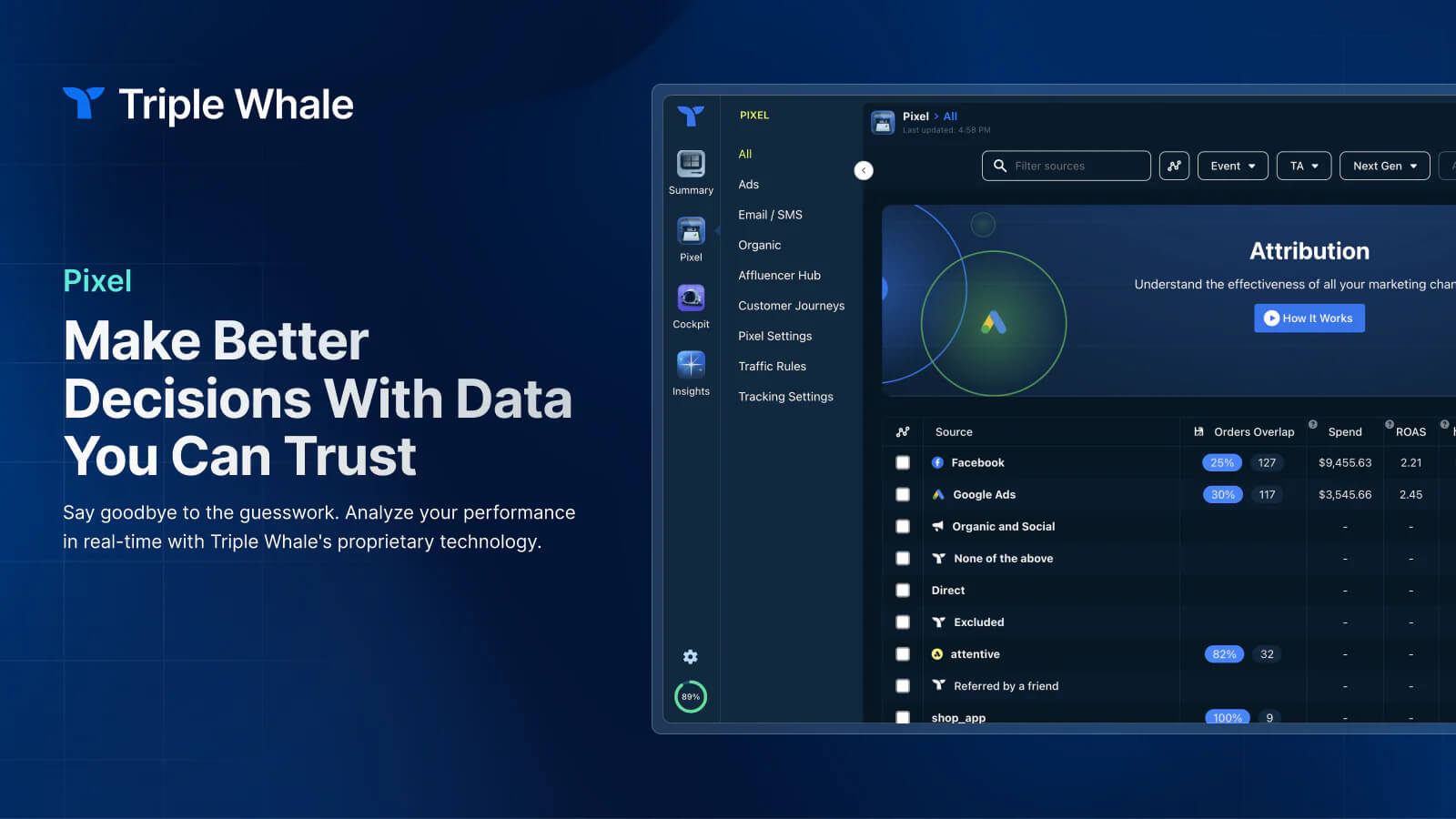
Triple Whale is an all-in-one data centralization and attribution platform built for mid-market DTC brands that need a unified dashboard for tracking profitability.
The platform automatically aggregates marketing metrics, shipping costs, and product manufacturing margins into a single interface.
However, Triple Whale’s price scales up based on your store’s total gross revenue. As your business grows, your monthly software costs will automatically increase even if your ad spend stays the same.
Key Features:
- Proprietary first-party tracking pixel technology.
- Real-time net profit and operating cost tracking.
- Creative asset performance analysis screens.
Pros:
- Centralized marketing, product, and operational costs.
- High data accuracy via proprietary Triple Pixel.
- Profit-based analysis for individual ad creatives.
Cons:
Pricing scales on gross store revenue instead of usage.
Further reading: Triple Whale vs NestAds
3. Northbeam
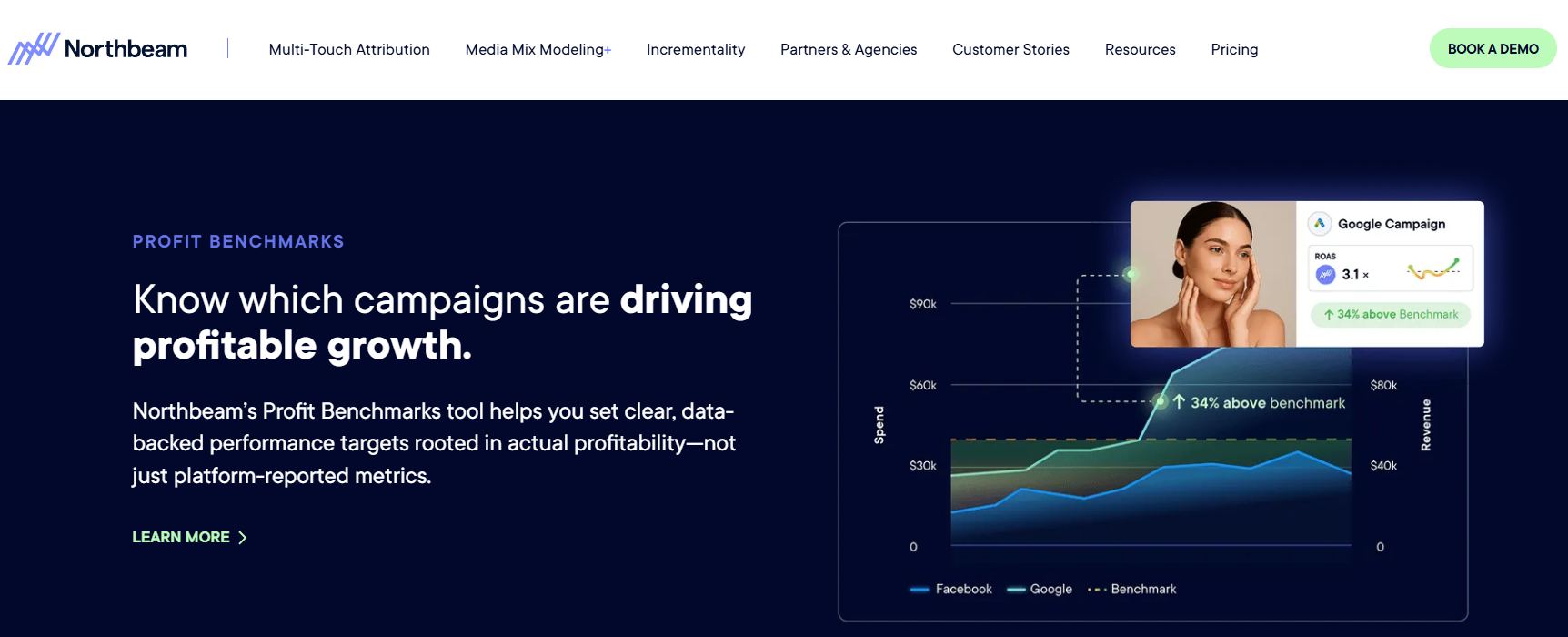
Northbeam is an advanced, data-heavy marketing attribution platform designed for high-volume, multi-channel ecommerce stores that manage huge daily advertising budgets.
Northbeam specializes in resolving data fragmentation through sophisticated machine learning models, making it ideal for brands with complex scaling demands.
However, the learning curve is steep, and Northbeam requires a significant financial investment (at least $1,500/month). Compared to platforms like NestAds, Northbeam is more suitable for enterprises that need deep data analysis.
Key Features:
- Hourly data refreshing for immediate scaling decisions.
- Media Mix Modeling to forecast future ad performance.
- Infinite lookback windows to track long customer consideration cycles.
Pros:
- Hourly data refreshes for fast scaling decisions.
- Advanced Media Mix Modeling for spend forecasting.
- Cross-device tracking across long customer buying windows.
Cons:
Steep learning curve and high monthly cost.
4. Rockerbox
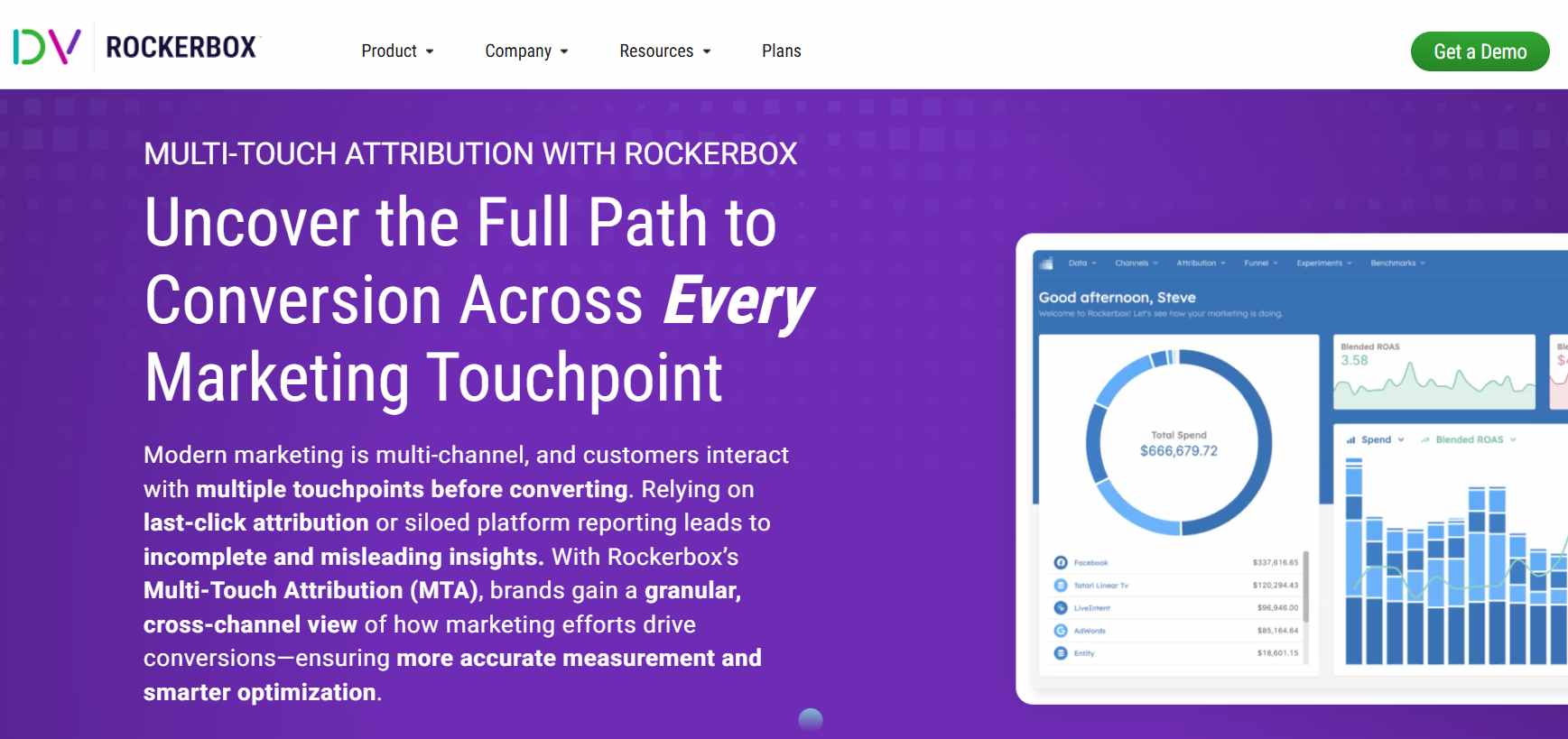
Rockerbox is an enterprise analytics platform designed for large businesses that sell products through multiple sales channels. If you use Shopify Plus but also sell your inventory on Amazon or inside physical retail storefronts, Rockerbox is built for you.
Due to its nature, the contract onboarding process requires a lot of time and assistance from a dedicated account manager. Rockerbox is not an app you can simply download and start using on the same afternoon.
Key Features:
- Offline to online purchase tracking capabilities.
- Customizable programmatic data attribution models.
- Direct integration with enterprise ERP software.
Pros:
- Excellent tracking between digital ads and physical retail sales.
- Direct integration with enterprise ERPs and data warehouses.
- Unified tracking for Amazon and marketplace data.
Cons:
Lengthy, highly technical onboarding process.
5. Cometly
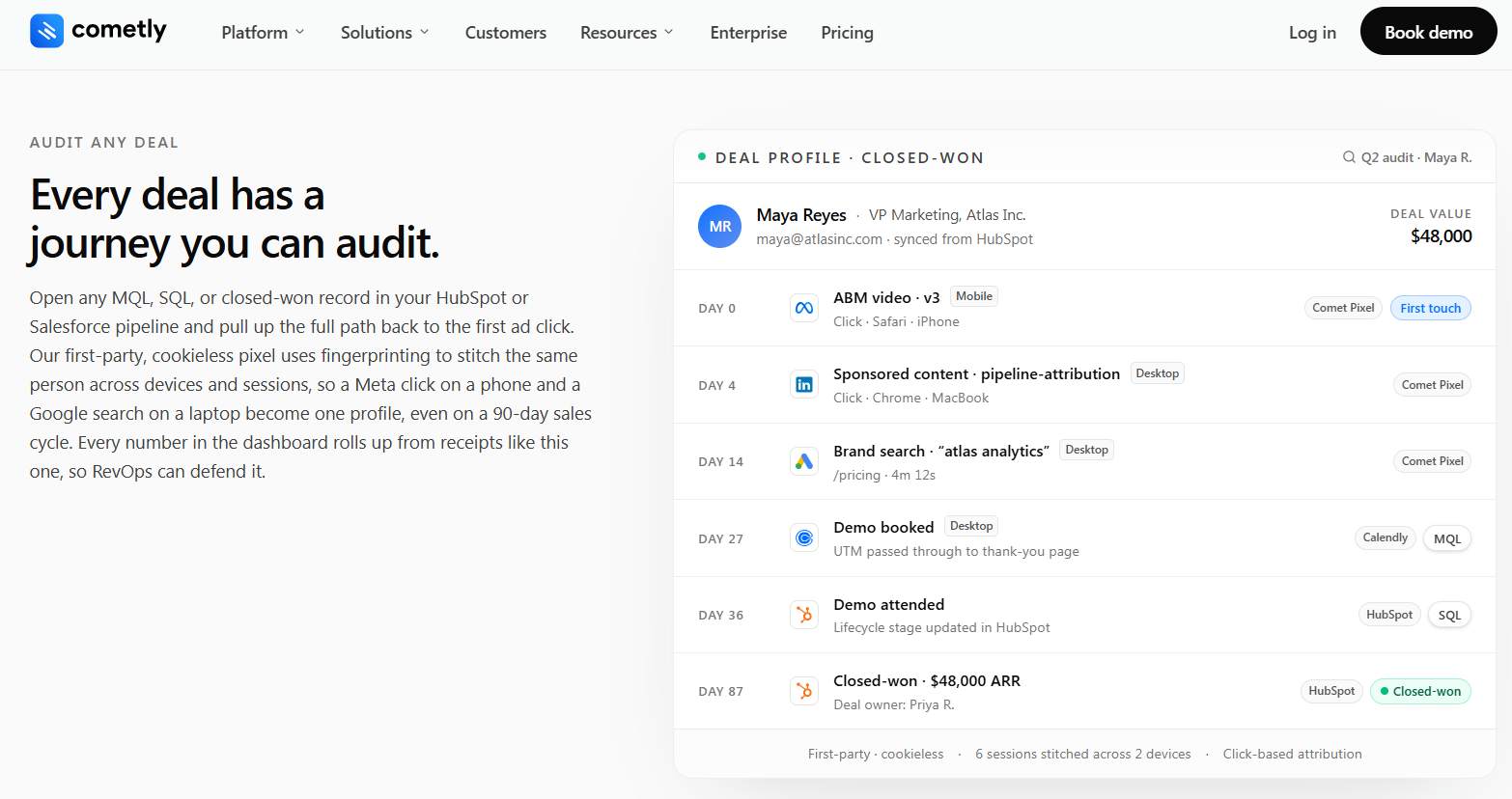
Cometly is a real-time marketing attribution app designed specifically for media buyers and advertising managers who need to optimize active campaigns instantly. The software focuses on improving the data accuracy of your actual ad managers by feeding precise, server-side conversion data back into platforms like Meta and Google.
Key Features:
- Instant server-side conversion api integration.
- Live tracking dashboards built for active media buyers.
- Clear ad-set and creative level match rates.
Pros:
- Instant server-to-server data synchronization.
- High match rates that optimize ad platform algorithms.
- Live dashboards built for rapid campaign adjustments.
Cons:
Lacks broader financial, inventory, or operational reports.
Why Shopify Sellers Use Multi-Touch Apps
Native Shopify tracking reports rely entirely on last-click attribution, which awards 100% of the credit for a sale to the very last link a customer clicked. This model creates a massive blind spot for multi-channel merchants.
The difference between last-touch and multi-touch attribution is that last-touch overestimate channels that are often the final touch (such as website), ignoring the role of ads.
Multi-touch attribution apps resolve this tracking mess by acting as an independent, centralized referee. Merchants rely on these platforms for several key reasons:
- Eliminating double-counted conversions: Stops individual ad networks from claiming credit for the exact same sale.
- Protecting top-of-funnel budgets: Prevents you from accidentally shutting down discovery channels like TikTok or Pinterest that look unprofitable on paper but introduce new shoppers to your brand.
- Mapping realistic customer lifecycles: Visualizes every touchpoint in the buyer journey rather than just the final transaction link.
- Optimizing cross-channel scaling: Provides an unbiased view of your entire marketing ecosystem so you can distribute your ad spend based on true performance metrics.
Common Mistakes to Avoid When Tracking Attribution Data
Buying the most expensive tracking tool on the market will not fix your business if you set up your core infrastructure incorrectly. True data accuracy requires continuous discipline and clean tracking habits.
Relying on Overlapping Platform Pixels
Many store owners look at their Meta dashboard, see a profitable return, look at their Google dashboard, see another profitable return, and assume everything is going perfectly. This is a dangerous trap.
If you do not choose one independent tool to act as your ultimate referee, you will end up making scaling decisions based on inflated numbers. You must pick one central dashboard to be your source of truth and ignore individual platform tracking numbers when calculating your actual daily profit margins.
Changing Your Attribution Windows Mid-Campaign
Modern ad optimization algorithms rely on consistent feedback loops. If you switch your software tracking models from a seven-day click model to a one-day click model while a major campaign is actively running, you will confuse the algorithm.
This sudden shift changes the data points being sent back to the ad network. It can throw your campaigns right back into the volatile learning phase, causing your cost-per-acquisition metrics to spike unexpectedly.
👉 Related:
7+ Best Shopify Analytics Tools to Optimize Store Performance
Top 7 Shopify Profit Tracking Apps in 2026 (Free & Paid)
FAQs: Shopify Marketing Attribution
Marketing attribution is the process of identifying which marketing touchpoints — like ads, emails, or social posts — lead to a sale. It tracks the customer journey to determine which channels drive revenue, helping businesses optimize ad spend and maximize ROI.
Measure attribution by tracking user journeys via UTM links, pixels, and server-side APIs. Businesses then apply attribution models: single-touch (giving all credit to the first or last click) or multi-touch (distributing credit across multiple interactions) to analyze performance.
Browser tracking sends data directly from the user’s browser to ad platforms, but is easily blocked by ad blockers and privacy settings. Server-side tracking routes data through your own secure cloud server first, ensuring cleaner, more accurate data.
The best choice depends on your specific business scale and tracking needs:
– Triple Whale: Best all-in-one dashboard for mid-to-large Shopify stores.
– NestAds: Best multi-touch marketing attribution for small-to-medium Shopify stores.