







 Shopify Development
Many merchants track their profits through basic spreadsheets and use Excel to calculate ROI. This manual process is slow and often inaccurate. In my experience, poor cash flow management and a lack of real-time financial clarity are primary reasons why small businesses struggle to survive over time.
To build a sustainable brand in 2026, you need to know your true net profit, margins and loss. This guide breaks down the best Shopify profit tracking tools available today so you can step away from rows of numbers to making informed business decisions.
1. How I choose the best profit tracker for Shopify
When analyzing profit tracking applications, I focused on these benefits:
- Automated Data Syncing: The app can integrate natively with major ad networks like Meta, Google, and TikTok to fetch marketing costs and calculate ROAS without delay.
- Granular COGS Tracking: You should be able to input your cost of goods sold at the individual variant level, allowing for shifts in supplier pricing over time.
- Handling of Hidden Fees: The platform needs to accurately calculate transaction processing fees from providers like PayPal alongside shipping label adjustments.
- Intuitive Dashboard Design: Financial data should be clear and accessible, helping you spot unprofitable products at a single glance.
- User Analytics: A profit tracker that combines customer behavior analysis can help you make strategic decisions to directly improve user experience.
2. Top 7 Shopify profit tracking apps
Before we dive into the specific features of each software program, here is a quick overview of how these tools position themselves for different business needs.
| App Name | Key Strength | Best For | Pricing |
|---|---|---|---|
| TrueProfit | Real-time net profit tracking with ad sync | Mid-to-large stores running multi-channel paid ads | Starts from $35/month |
| NS Revenue Heatmap & Replay | Combine financial tracking with visual heatmaps | Store owners focused on conversion rate optimization and AOV | Free plan available |
| BeProfit | Highly customizable visual charts and report builders | Growing brands that prefer visual graphics over standard reports | Starts from $49/month |
| SimplyCost | Predictable flat-rate tracking featuring variant-level retroactive COGS updates | Bootstrapped beginners who want a reliable, budget-friendly spreadsheet escape | $4.99/month |
| Profit Calc | Automated cost handling for complex dropshipping integrations and currency changes | Global dropshippers and businesses with Cash on Delivery (COD) model | Starts from $29/month |
| Profitario | Low-cost basic automation with a handy browser extension for marketplace supply costs | New or low-volume ecommerce stores | Free plan available; paid from $20/month |
| Lifetimely | Deep customer retention analytics including lifetime value (LTV) | Subscription brands and mature stores looking to optimize post-purchase value | Free plan available; paid from $79/month |
2.1. TrueProfit
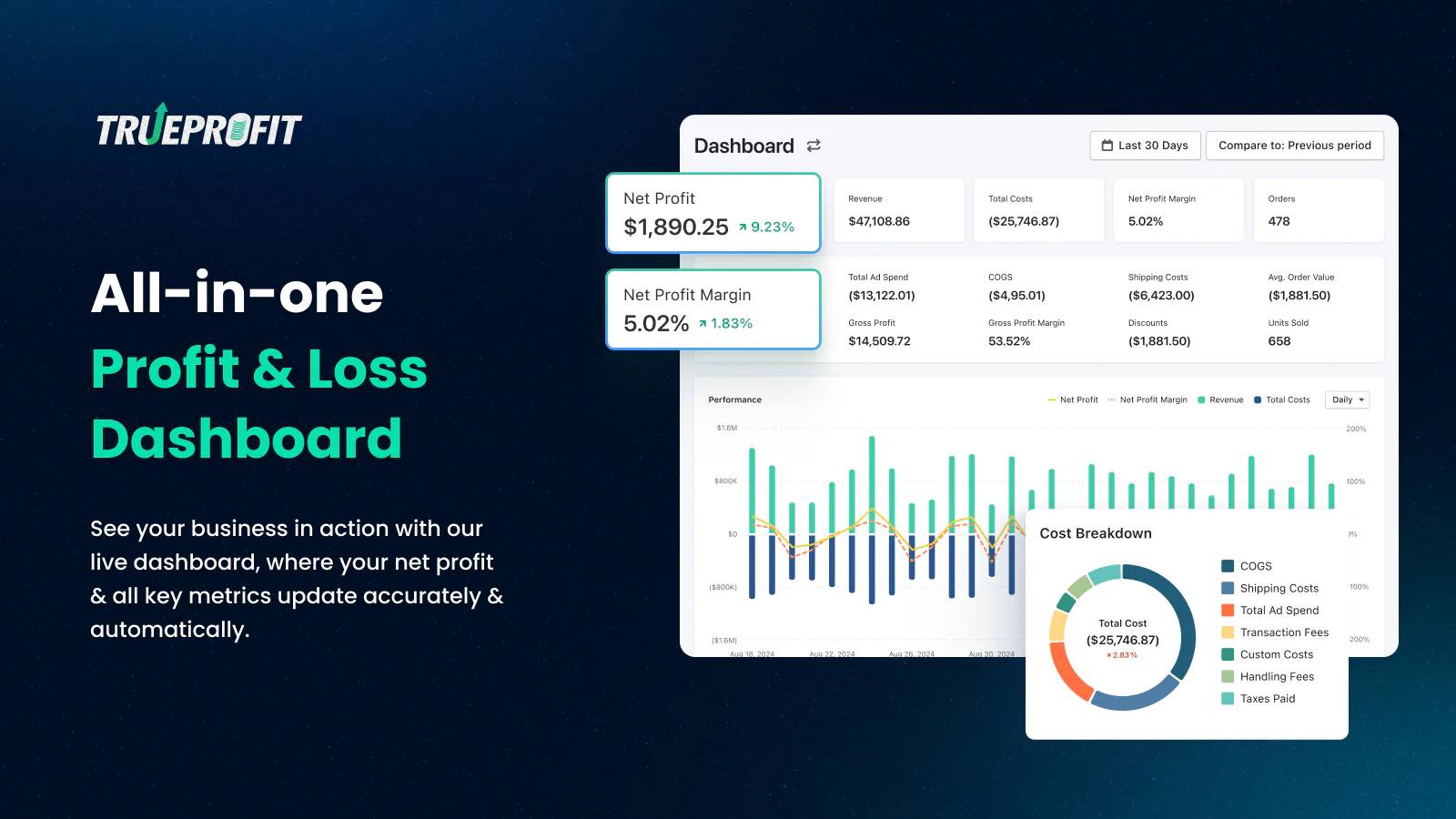
TrueProfit serves as an automated financial command center for your e-commerce store by pulling all your scattered expenses into a single dashboard. Its core strength is its ability to seamlessly bridge the gap between your real-time marketing costs and your store inventory expenses without requiring any manual data entry.
Why it’s great for profit tracking
- Automated P&L Dashboard: Populates financial metrics instantly upon installation without any manual configuration.
- Multi-Network Ad Integration: Connects directly with over ten major advertising platforms to capture your exact marketing spend.
- Order-Level Expense Tracking: Monitors return costs and transaction fees on an individual order level for true net margins.
- Dynamic Shipping Cost Rules: Adjusts fulfillment expenses automatically based on package weight or final delivery destination.
Customer reviews of TrueProfit
Merchants highly appreciate this application for its exceptional accuracy and automated performance. It holds an impressive 5.0-star rating on the official Shopify App Store. Users frequently praise the order-level tracking system because it allows them to identify exactly which marketing campaigns are generating real cash rather than just vanity conversions.
Who it is best for
This platform is ideal for mid-sized to large e-commerce businesses that run high-volume ad campaigns across multiple advertising networks and need an automated financial anchor.
2.2. NS Revenue Heatmap & Replay
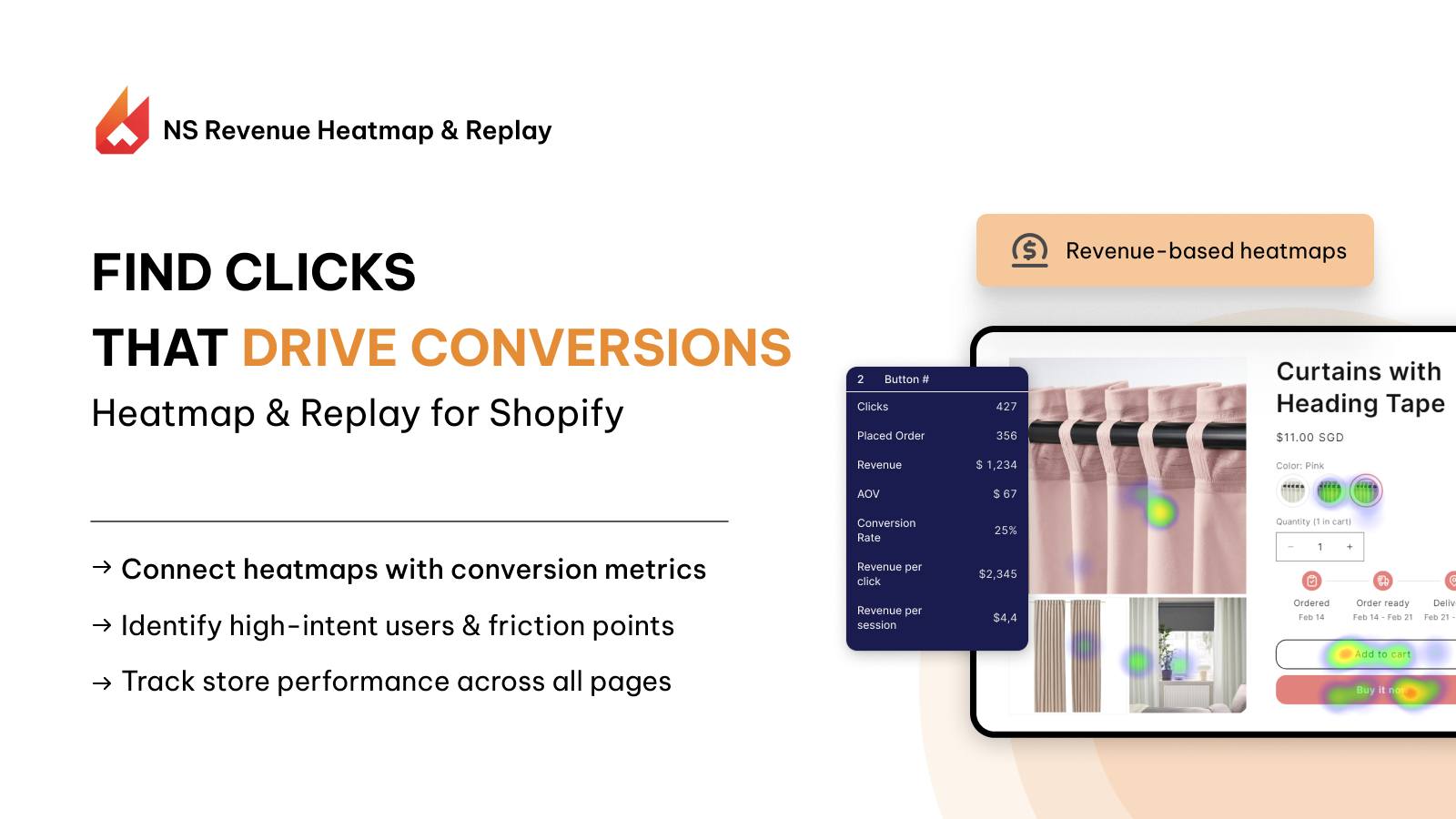
NS Revenue Heatmap & Replay takes a unique approach by blending financial tracking with customer behavior analytics. Its main strength lies in its visual mapping tools, which allow you to see the exact store elements and user sessions that are driving revenue or causing costly cart abandonment.
Though not traditionally a profit tracker and more of a CRO tool, NS Revenue Heatmap can help you see the user behavior behind each click and purchase, adding more nuance to your profit reports and helping you make better marketing decisions.
Why it’s great for profit tracking
- Behavioral Revenue Syncing: Matches customer session recordings directly to revenue and AOV for clear conversion optimization.
- Drop-off Point Identification: Spots friction points on pricing elements to show exactly where users abandon your purchase funnel.
- Scroll Depth Correlation: Connects visual scrolling behavior on store pages with real-time customer purchasing actions.
- Page-Level Analytics: Tracks core performance metrics for each page without complex manual tracking setups.
Customer reviews of NS Revenue Heatmap & Replay
This app is currently free to use and in its post-launch phase. The customer support team that made the app is also frequently highlighted for responding quickly to technical configuration questions. Merchants can give it a try to see how the apps work.
Who it is best for
This application is built for store owners who want to actively stop revenue leakage and boost conversions by visualizing exactly how buyers interact with their store layouts.
2.3. BeProfit
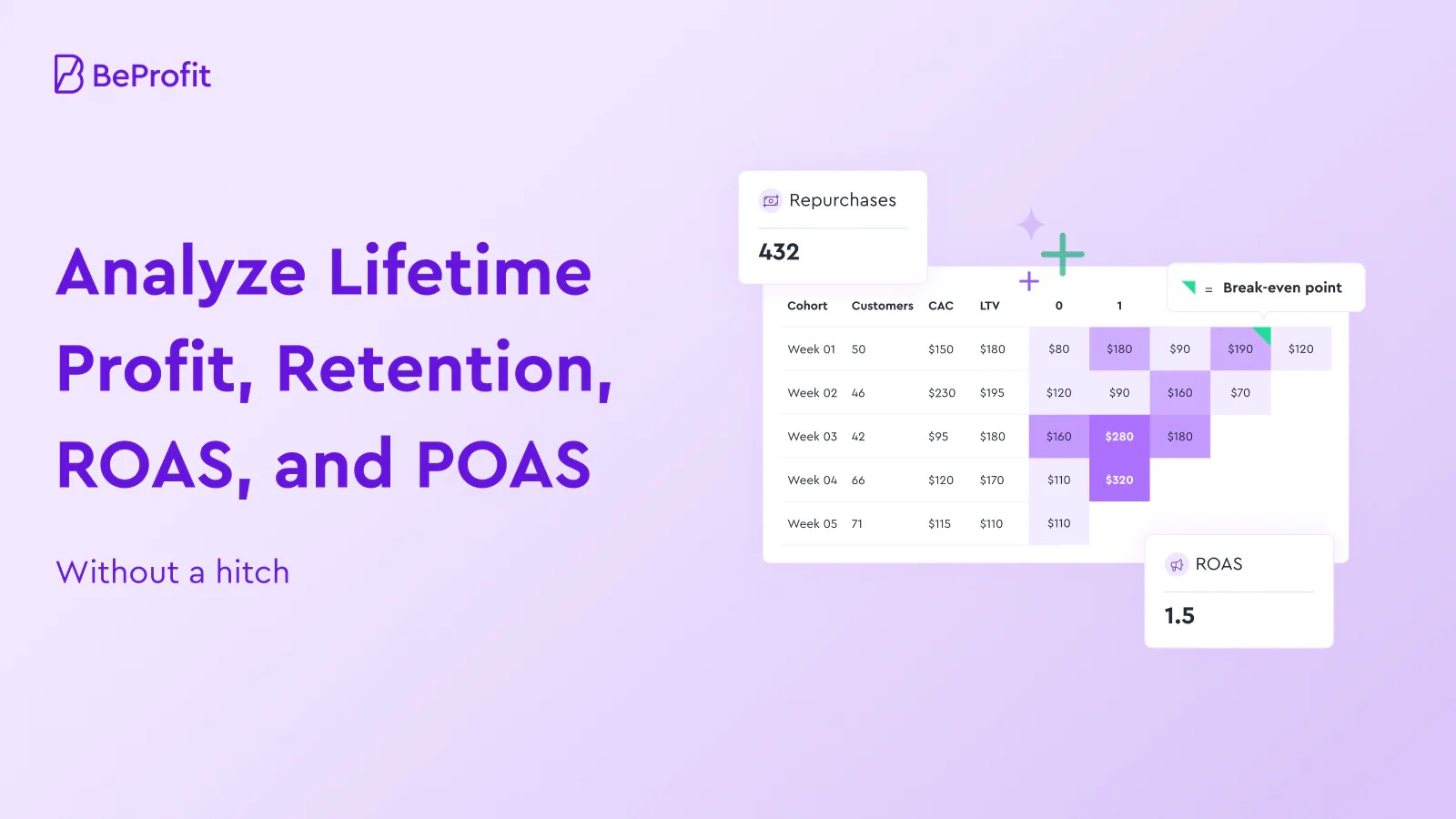
BeProfit functions as a highly adaptable data analysis tool that turns complex balance sheets into clear visual graphics. Its primary strength is its deeply customizable report builder, which gives you complete control over how you organize, view, and analyze your multi-channel expenses.
Why it’s great for profit tracking
- Custom Report Builder: Allows you to arrange complex financial data into personalized, easily scannable tables.
- Gateway Fee Automation: Tracks transaction fees automatically from alternative or international payment processing channels.
- Visual Margin Charts: Displays intricate profit margins through highly digestible, interactive graphics.
- Fulfillment Software Sync: Integrates smoothly with secondary shipping platforms to ensure logistics costs match reality.
Customer reviews of BeProfit
BeProfit has over 150 reviews, scoring 4.2 starts out of 5. The general consensus among store owners is positive, pointing out the clarity of the profit and loss layouts. Some users mention that navigating the initial data synchronization can take a bit of patience, but they agree that the long-term depth of the reporting dashboards makes the effort worthwhile.
Who it is best for
This software guides growing brands that prefer highly customizable visual charts over basic spreadsheets.
3.4. SimplyCost
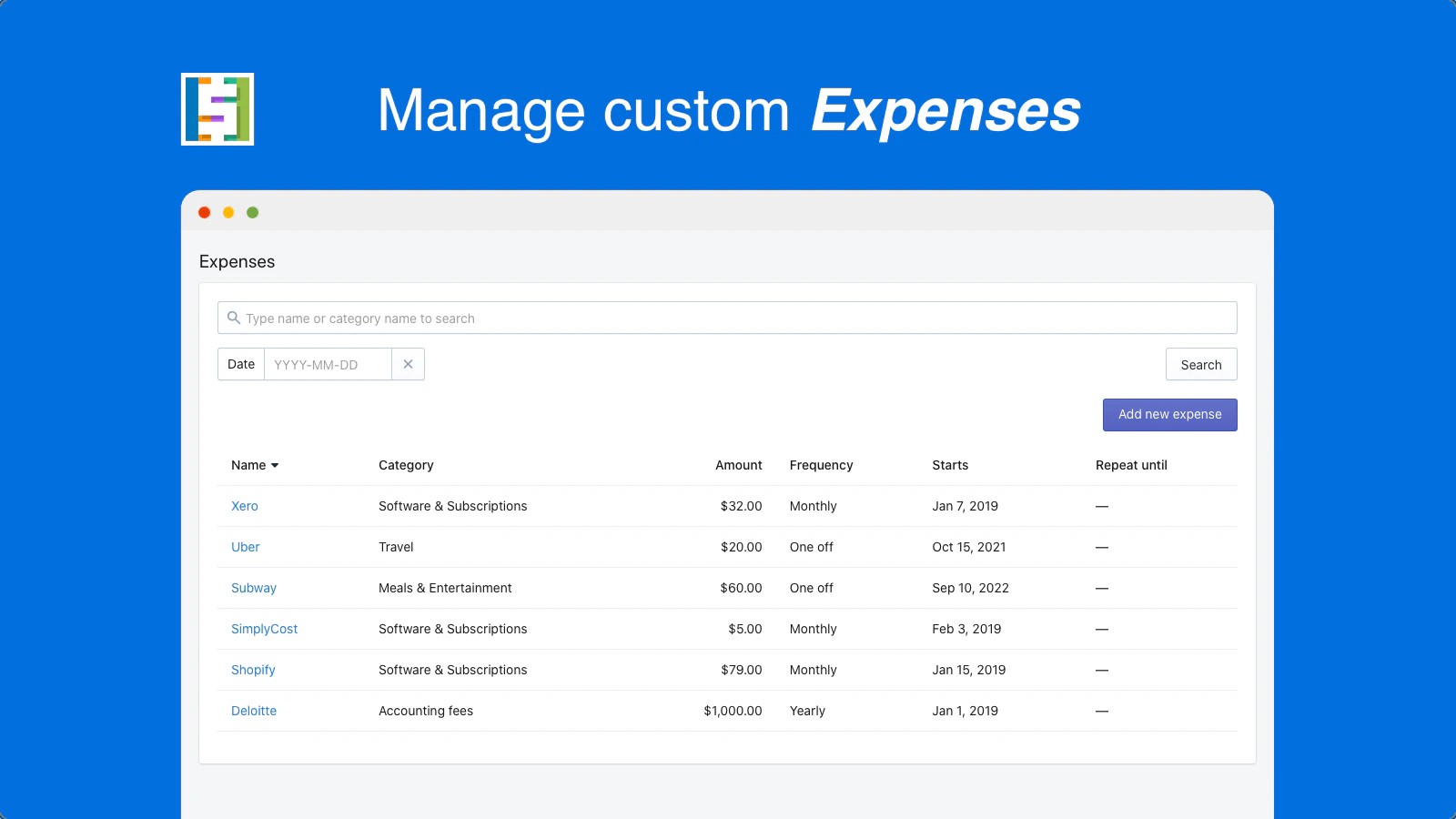
SimplyCost is a streamlined, no-frills profit calculator designed to keep your accounting simple and accurate. Its biggest strength is its flat-rate monthly pricing model, which allows growing businesses to track their product costs extensively without facing higher software fees as their order volume scales.
Why it’s great for profit tracking
- Flat-Rate Pricing Structure: Operates on a predictable monthly fee that does not increase when your store order volume scales up.
- Missing COGS Auditor: Features a dedicated internal tool to quickly identify inventory items currently lacking cost data.
- Retroactive Cost Adjustments: Applies historical product cost updates to past sales periods to quickly fix reporting mistakes.
- Multi-Currency Engine: Handles diverse international transactions smoothly by utilizing updated daily exchange rates.
Customer reviews of SimplyCost
SimplyCost has more than 50 reviews and scores a solid 4.7 stars. Merchants love this app because it remains highly stable and affordable for smaller storefronts. The feedback highlights its simple interface, which allows owners to manage their product costs without dealing with heavy analytics features that they do not need.
Who it is best for
It identifies it as the perfect match for bootstrapped beginners who need to escape manual spreadsheets without breaking the bank.
3.5. Profit Calc
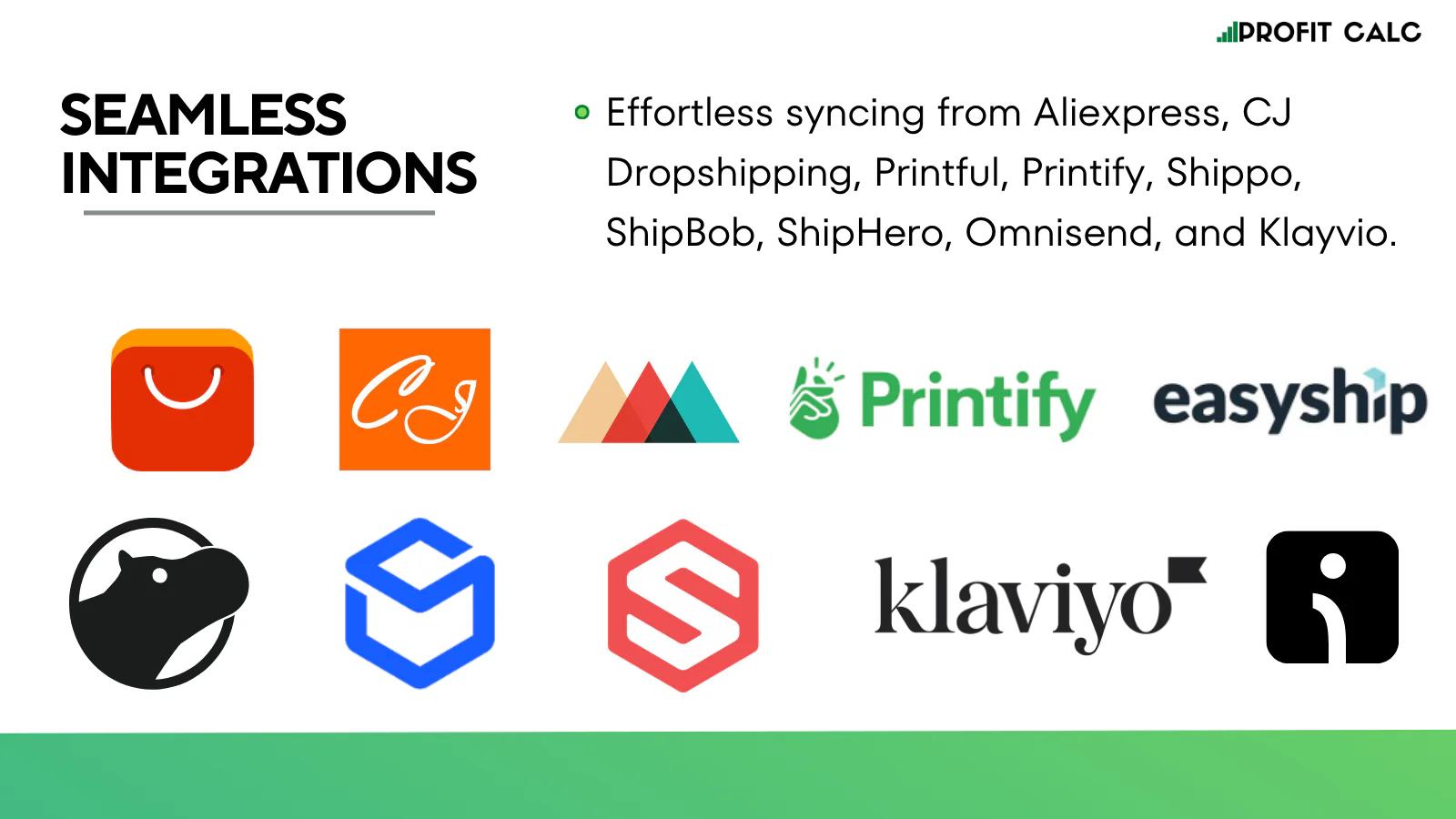
Profit Calc is a specialized accounting tool built to handle the chaotic operational logistics of international supply chains. Its main strength is its tailored compatibility with global dropshipping frameworks and global payment methods, making it incredibly reliable for cross-border e-commerce.
Why it’s great for profit tracking
- One-Click Dropshipping Setup: Offers specialized configurations designed specifically for rapid product supply chain tracking.
- Automated VAT Tracking: Monitors regional value-added tax liabilities automatically across international borders.
- Native Cash on Delivery Support: Handles complex COD logistics systems to accurately account for delayed payments.
- Direct Ad Link Accounting: Pulls daily marketing expenses directly from your active platform tracking links.
Customer reviews of Profit Calc
Profit Calc has over 50 reviews and scores a full 5 stars. Reviews focus on how dependable the application is when dealing with fluctuating currency changes across different international markets. Dropshippers point out that the automated integration with popular fulfillment extensions saves hours of manual entry work each week.
Who it is best for
This solution targets global dropshippers and stores operating primarily on cash on delivery models across different countries.
3.6. Profitario
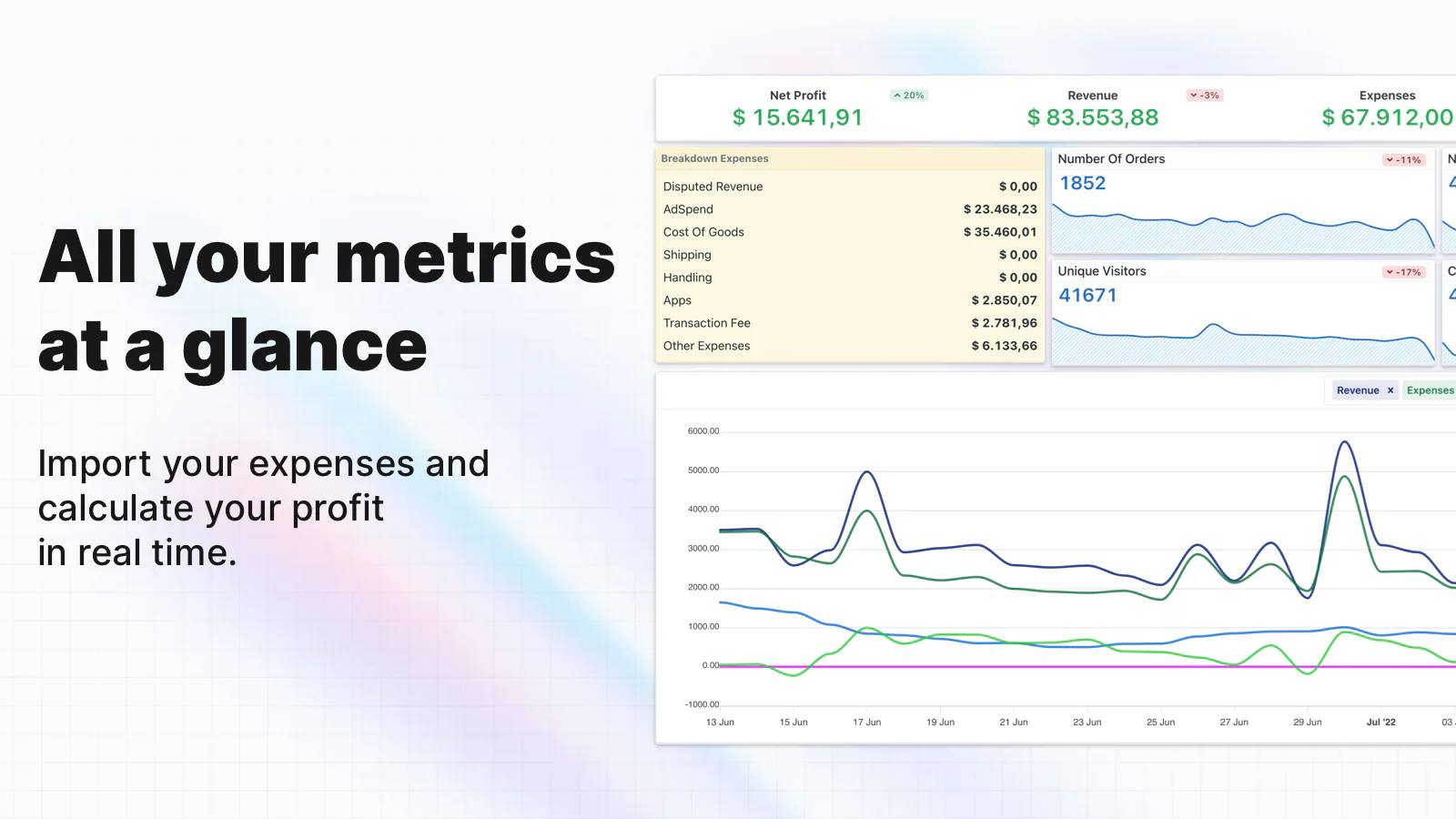
Profitario is a lightweight expense tracking application built explicitly for early stage entrepreneurs. Its key strength is its accessible cost structure combined with a dedicated browser extension that makes importing initial supplier costs from external marketplaces fast and painless.
Why it’s great for profit tracking
- Accessible Entry Tier: Provides a low-cost starter plan that allows new brands to explore basic automation.
- Browser Extension Extractor: Pulls supply costs directly from marketplace portals without manual data entry.
- Clean Balance Sheets: Creates streamlined financial statements that focus purely on baseline operational margins.
- Historical Data Importer: Ingests archived store data to establish an immediate financial baseline for your business.
Customer reviews of Profitario
Profitario scores 4.4 out of 5 stars with 50 reviews. The user feedback is generally encouraging, especially from entrepreneurs who are just launching their first online storefronts. While seasoned brands sometimes express a desire for more advanced custom report builders, beginners praise the app for making early profit accounting less intimidating.
Who it is best for
It identifies low-volume or brand-new stores looking for basic automation at a minimal cost.
3.7. Lifetimely
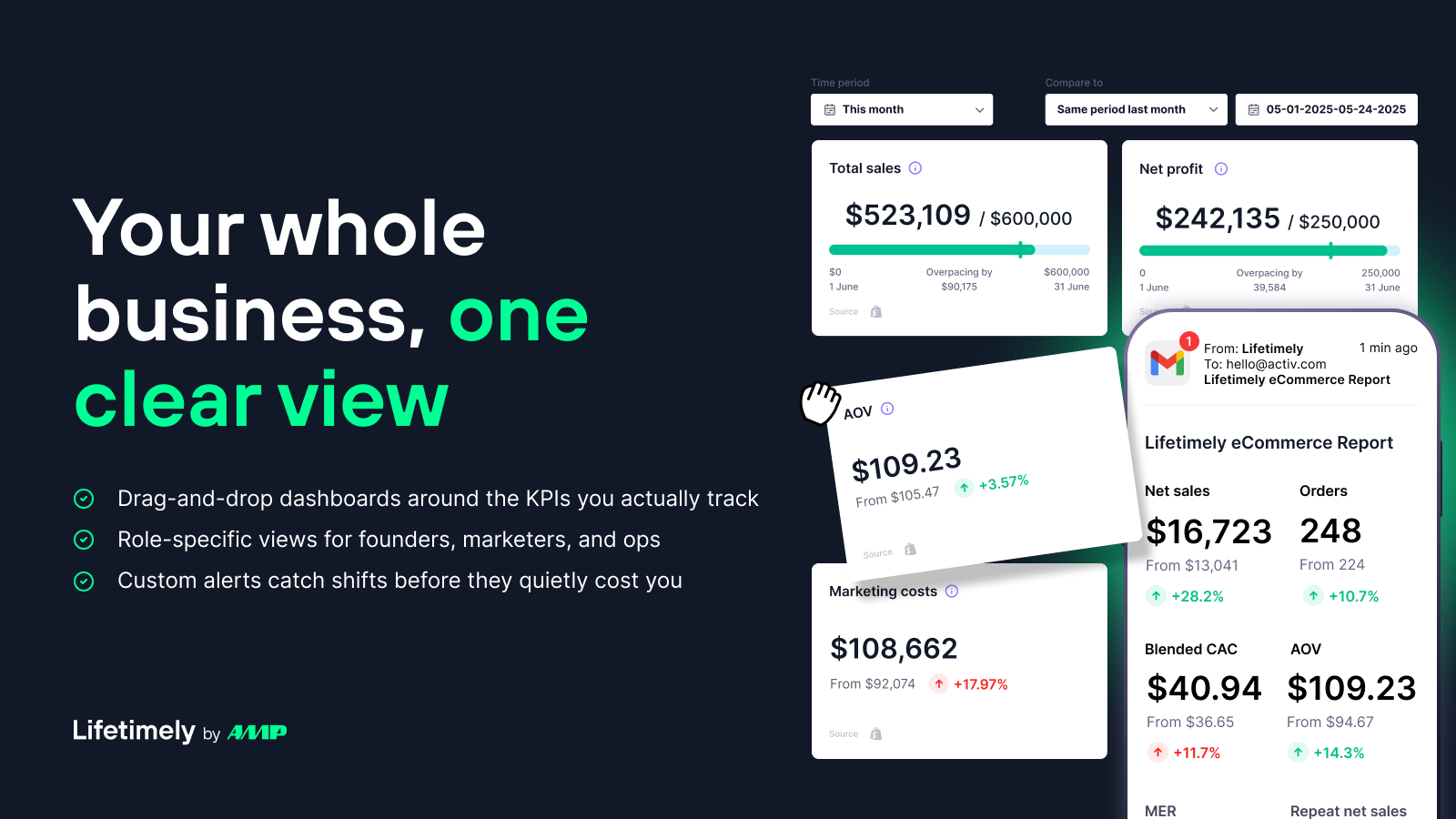
Lifetimely focuses heavily on backend profitability by analyzing the long-term value of your customer base. Its core strength is its advanced customer lifetime value tracking and cohort reporting, which show you exactly when and how repeat buyers become truly profitable.
Why it’s great for profit tracking
- Retention Tracking Metrics: Monitors repeat purchase behavior to show how often buyers return over time.
- Cohort Analysis Tools: Details the long-term profitability of customers acquired during specific promotional events.
- CAC Payback Calculation: Measures the exact timeframe required to recoup your front-end customer acquisition costs.
- Storage Cost Blending: Imports warehousing and inventory storage fees directly into your baseline profitability.
Customer reviews of Lifetimely
Lifetimely has over 450 reviews, scoring 4.8 out of 5 stars. Merchants give this software high praise for its predictive tracking capabilities. Businesses with recurring subscriptions state that the customer lifetime value metrics give them the confidence required to spend more on front-end ads because they know exactly when a customer becomes profitable.
Who it is best for
This system pinpoints subscription brands or established stores deeply focused on customer retention and post-purchase profitability.
👉 Related:
9 Tactics: How to Increase AOV on Shopify (No Ads)
7+ Best Shopify Analytics Tools to Optimize Store Performance
FAQs: Shopify Profit Tracking App
Shopify tracks your total sales revenue and basic order counts out of the box. However, it does not automatically calculate your true net profit unless you manually input the cost of goods sold for every single product variant.
To see an accurate picture of your net earnings after ad spend, shipping labels, and processing fees, you must use a dedicated profit tracking application.
These tracking tools connect directly to your advertising accounts using secure developer access links known as APIs. Once authorized, the software automatically communicates with networks like TikTok, Google, and Meta at regular intervals throughout the day.
To understand the true financial health of your ecommerce store, you should focus closely on three primary metrics:
– Gross Profit Margin: the percentage of revenue remaining after subtracting your direct cost of goods sold.
– Contribution Margin: sales revenue after deducting both your product costs and your variable expenses such as ads spend.
– Net Profit Margin: the percentage of revenue remaining as profit after all expenses, including operational costs, interest, and taxes, are paid.
You can learn more important ecommerce metrics before choosing a tracking tool.