







 Marketing Attribution
The best tools to optimize ad spend that we recommend are NestAds, Triple Whale, and Madgicx, with each platform built with a different approach to managing your ad budget.
Real optimization means knowing exactly where your profits are going. This means the best platforms for ad spend analysis show you true ROAS and cross-channel attribution; actually helping you reduce wasted ad spend without losing sales.
This guide breaks down the 7 best ad spend optimization tools for Meta, TikTok, and Google, covering their strengths, limitations, and who can benefit from them.
💡 Key Takeaways
-
If you want a quick answer without reviewing every platform, here are the three most recommended tools to maximize your ad spend efficiency:
- NestAds: Best for Shopify stores, offering affordable flat-rate multi-touch attribution and accurate server-side pixel tracking.
- Triple Whale: Best for larger ecommerce brands, connecting your multi-channel ad spend directly to real store profitability, inventory, and shipping costs.
- Madgicx: Best for hands-off media buyers, utilizing autonomous AI algorithms to scale winning ad sets and pause underperforming budgets.
How we evaluate ad spend optimization platforms
To find the absolute best ad spend optimization tools, we look judge each platform using four criteria: data attribution accuracy (relying on secure, first-party server-side tracking to bypass browser privacy blocks), workflow automation capability (the power to scale or pause ads via autonomous scripts), ad channel integration (seamless native connections to Meta, Google, and TikTok), and fair pricing (pricing tiers that fairly match the business scale). This framework ensures we only recommend software that actively protects and expands your actual profit margins.
7 Best Platforms for Ad Spend Analysis (2026)
Here is the comparison table isolated by itself so you can easily copy and paste it into your notes, sheets, or documents:
| Tool Name | Best Fit For | Primary Ad Channels | Pricing |
|---|---|---|---|
| NestAds | Shopify store owners and SMBs | Meta, TikTok, Google Ads | $129.99/month (flat rate) |
| Triple Whale | Growing Shopify brands wanting total financial views | Meta, Google, TikTok, Amazon | From $219/month (scales based on revenue) |
| Madgicx | Media buyers who want autonomous ad automation | Meta, Google Ads | From $45/month (scales based on monthly ad spend) |
| Birch | Media buyers wanting custom rule configurations | Meta, Google, TikTok, Snapchat | From $49/month (scales based on monthly ad spend) |
| AdRoll | Small brands looking for simple retargeting layouts | Web Display, Meta, Pinterest | From $36/month |
| Optmyzr | Inventory-heavy brands focused on Google Shopping | Google Ads, Microsoft Ads, Amazon | From $299/month |
| Skai | Enterprise companies with huge multi-channel budgets | Retail Media networks, Paid Social | From $114k per year |
1. NestAds
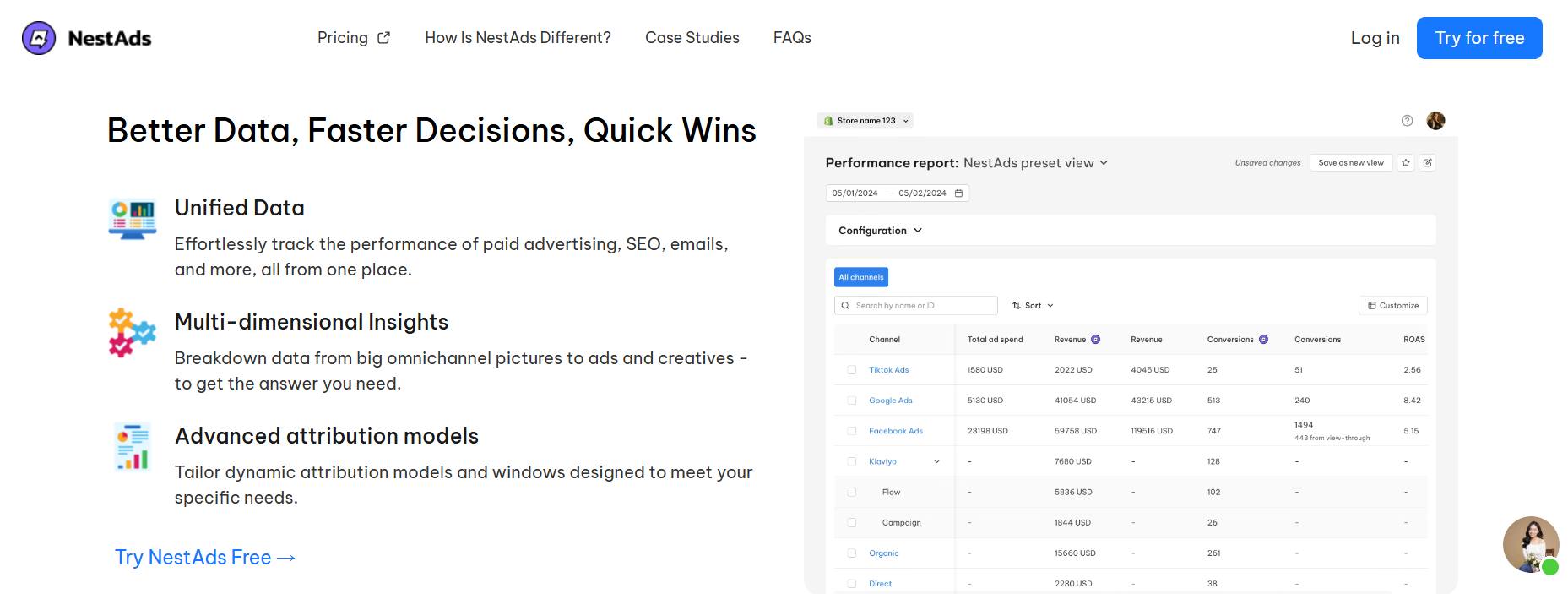
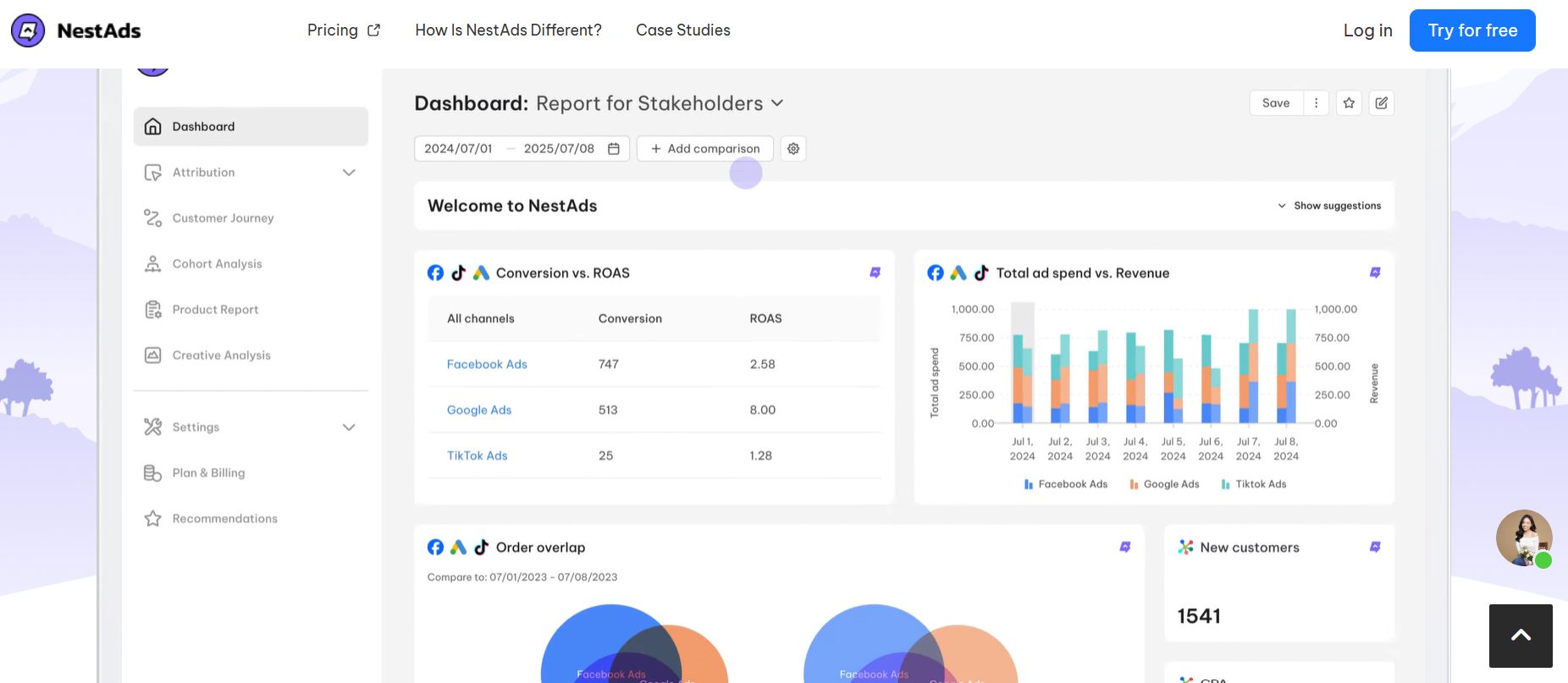
NestAds is a centralized marketing attribution and ad spend tracking platform built from the ground up for small-to-medium Shopify stores. It serves as an accessible data control center that unifies your disparate TikTok, Meta, and Google campaign streams into a unified visual space. Unlike legacy data warehouses that demand high upfront setup fees and complex software training, NestAds separates itself from the pack by offering highly competitive, flat-rate pricing models linked to powerful first-party tracking pixels.
Key Strengths
- First-Party Pixel Infrastructure: It uses a secure server-side tracking pixel that cuts through mobile browser blocks to save critical conversion data, allowing you to feed highly accurate data back into your ad channels to drive down customer acquisition costs.
- Attribution-Backed Creative Analysis: This feature tracks individual ad graphics and video performance across different ad networks, stopping you from over-crediting a single marketing channel and wasting budget on redundant customer touchpoints.
- Side-by-Side Asset Comparison: You can immediately isolate and scale your lowest cost per acquisition visual designs, effectively cutting off capital allocations to low-performing variations before they drain your budget.
Limitations
- Ecosystem Restriction: The application is deeply integrated into the Shopify ecosystem, meaning it cannot easily support custom open-source online storefronts built on WooCommerce or Magento.
- Advanced Modeling Gaps: It lacks predictive modeling tools found in high-end enterprise software, making long-term budget forecasting a manual process.
Best For
Small DTC Shopify store owners and advertising agencies.
2. Triple Whale
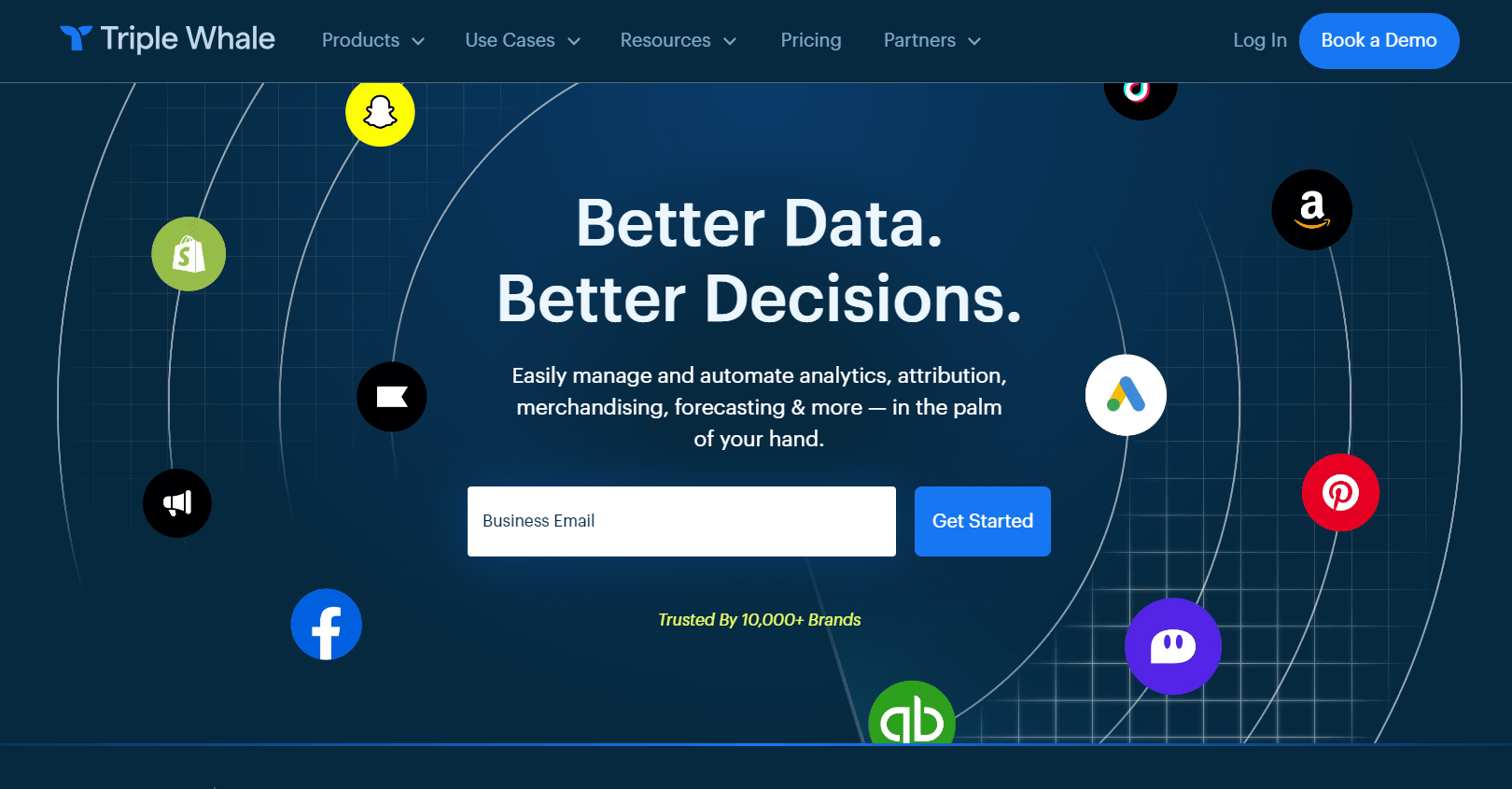
Triple Whale is a data aggregation platform built for scaling ecommerce businesses that want to track their complete financial health on a single screen. It pulls information directly from your product inventory sheets, shipping carriers, and every major ad network to calculate your true business profitability. It differs from isolated ad-tracking tools by linking your daily ad spend directly to your real-time cost of goods sold (COGS) and long-term customer lifetime value (LTV) figures.
Key Strengths
- AI-Powered Visual Creative Agents: This module utilizes computer vision technology to scan ad images, copy layouts, and video hooks across Meta, Google, and TikTok. It automatically groups your ads by performance tiers and explains exactly why an asset is winning, enabling you to replicate successful layouts and eliminate testing waste.
- Total Financial Ecosystem Aggregation: It integrates with your broader financial tech stack to calculate true net profit. By checking shipping expenses and warehouse costs right alongside live ROAS figures, it protects your cash flow from unprofitable scaling.
- Real-Time Multi-Channel Overview: This dashboard clusters your marketing channels to reveal overlapping budget waste across multiple digital touchpoints, stopping you from over-spending on users who are already converting.
Limitations
- Revenue-Tiered Pricing: It utilizes a revenue-tiered subscription pricing model, meaning your software costs increase automatically as your store generates more sales, which can make it expensive for high-volume, low-margin businesses.
- Complex Onboarding Process: The large volume of incoming data streams can cause a minor setup and configuration delay for smaller teams.
Best For
Scaling Brands: Mid-market Shopify brands spending between $50,000 and $100,000 per month on multi-channel ads who require a real-time view of how their visual creative choices impact true store profitability.
3. Madgicx
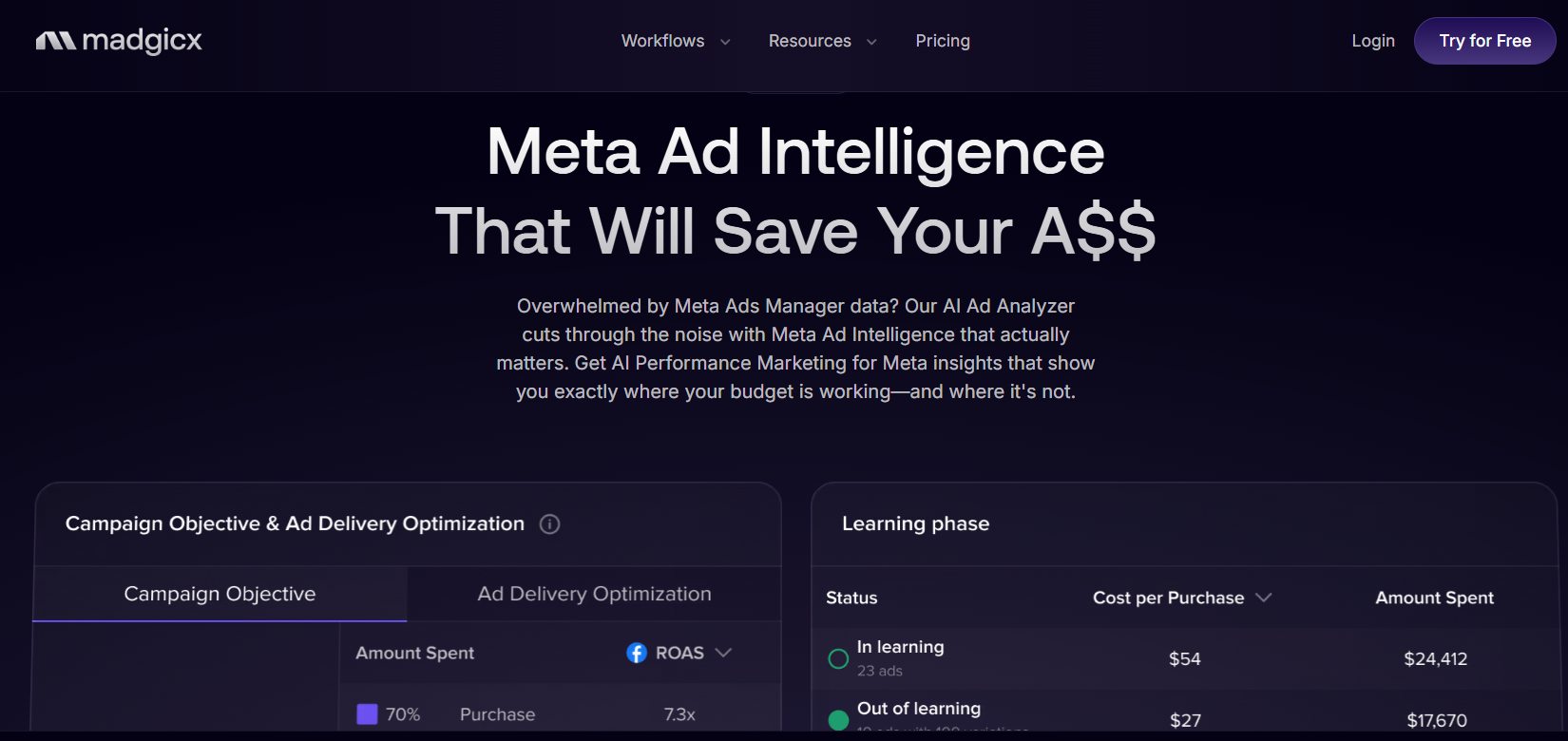
Madgicx is an AI-driven media-buying and optimization platform built to automate daily budget adjustments on Meta and Google ad networks. It functions as an automated digital ad manager that constantly monitors your active campaigns and executes complex optimization tactics automatically. It stands out from static reporting setups by actively modifying budgets, scaling winning target groups, and shutting down poor performers on autopilot.
Key Strengths
- Autonomous Budget Optimization: This framework actively modifies budgets, scales winning target groups, and shuts down poor performers on autopilot around the clock based on target efficiency metrics, preventing nighttime budget drainage.
- 360-Degree Creative Matrix: It offers a color-coded visual tracking grid that flags exactly which creative variations are overspending or ready to scale across different stages of your funnel. This gives you a clear warning when an ad is hitting creative fatigue so you can pause it before performance drops.
- Funnel-Based Spend Allocation: This system maps target audiences by intent level, ensuring your marketing capital routes primarily toward buyers closest to converting while minimizing spend on colder, low-converting segments.
Limitations
- Native Data Dependency: It relies heavily on the native data streams provided by the ad networks themselves rather than establishing a completely independent, third-party pixel tracking pipeline.
- Guardrail Requirements: It demands precise initial boundary setup and constant monitoring to prevent automated scripts from over-allocating funds during temporary performance spikes.
Best For
Hands-Off Media Buyers: Independent media buyers and busy marketing managers running high-volume social media ads who want to hand over daily bid modifications and scaling tasks to automated scripts.
Further reading: What Is The Alternative to Triple Whale? NestAds Comparison
4. Birch
Birch is a highly flexible campaign automation engine designed for media buyers who want to deploy hyper-specific operational scripts across their digital ad portfolios. Operating across Meta, Google, TikTok, and Snapchat, the software executes user-defined rule sequences directly inside your ad accounts. It differs from standard automation tools by avoiding rigid, pre-packaged optimization structures, giving you complete freedom to build your own custom algorithmic logic.
Key Strengths
- Custom Script Automation Engine: It gives you complete freedom to build your own custom algorithmic logic and automated rule sequences. This allows you to construct hyper-specific conditional rules that pause underperforming ad campaigns instantly, ensuring zero budget leakages.
- Competitor Research and Script Transcriptions: This utility includes specialized modules that let you monitor competitor ad patterns, break down their top visual frameworks, and transcribe successful video ads into structured text scripts. This lets you mimic high-ROI patterns without spending testing capital.
- Automated Cross-Network Rules: This tool syncs spend boundaries across multiple channels like Meta and TikTok simultaneously, defending your global budgets from unexpected cost spikes by maintaining strict, automated cost per acquisition caps.
Limitations
- No Native Pixel Tracking: It does not feature a native, first-party tracking pixel framework of its own, meaning its automated rules are only as precise as the conversion data already arriving inside your ad managers.
- Steep Learning Curve: It requires a clear, technical understanding of campaign logic and rule scripting to prevent internal campaign conflicts and unintended automation errors.
Best For
Advanced Agencies: Experienced ad agencies and technical in-house media buyers managing multiple complex client ad accounts who need custom if-then parameters to run automated operations safely.
5. AdRoll
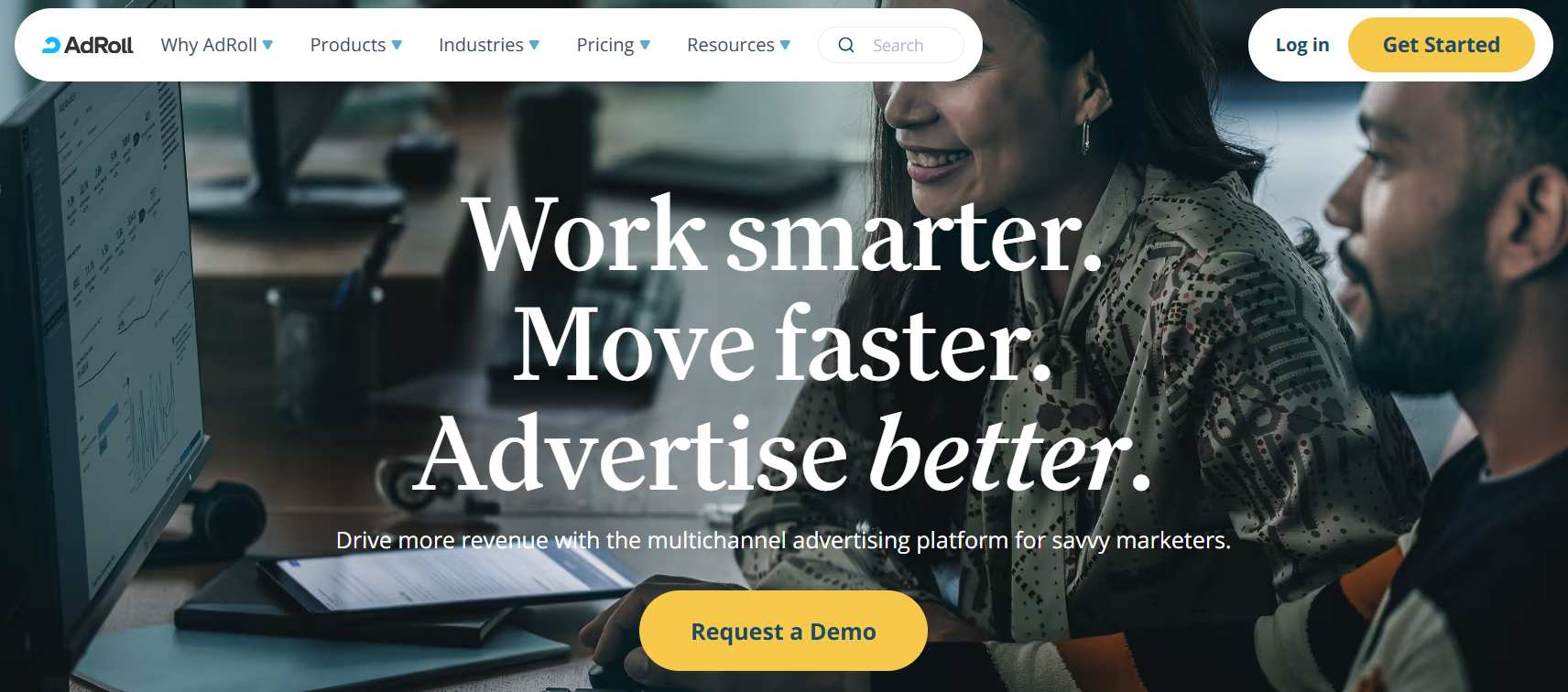
AdRoll is an all-in-one retargeting and audience optimization platform built to help small-to-midsize ecommerce brands recapture lost website traffic across multiple channels simultaneously. It automatically coordinates web display banners, social media feeds, and email remarketing flows out of a single shared budget pool. It differs from enterprise multi-channel software by focusing on radical simplicity, allowing small teams to manage retargeting campaigns without extensive technical training.
Key Strengths
- Dynamic Creative Optimization: This asset manager tracks which specific visual layouts perform best across display networks versus social timelines. It automatically shifts your remarketing funds toward the exact creative variations driving the lowest cost per order, stretching small remarketing budgets.
- Unified Shared Budget Pool: It houses multiple remarketing streams in a single framework, avoiding overlapping target groups that bid up your own advertising costs and cause internal competition.
- Single-Dashboard Coordination: It combines email, banners, and social retargeting to maximize conversion velocity for cold traffic, eliminating the need to pay for extra tool management fees across separate platforms.
Limitations
- Funnel Specificity: It is not engineered to construct or optimize top-of-funnel cold acquisition campaigns aimed at raw demographic audiences.
- Auxiliary Platform Fees: The company charges an auxiliary platform processing fee on top of your standard network advertising costs, which can impact thin profit margins.
Best For
Lean Marketing Teams: Emerging ecommerce teams that want an automated, budget-friendly solution to manage, analyze, and optimize retargeting ad budgets across web displays and social media platforms simultaneously.
6. Optmyzr
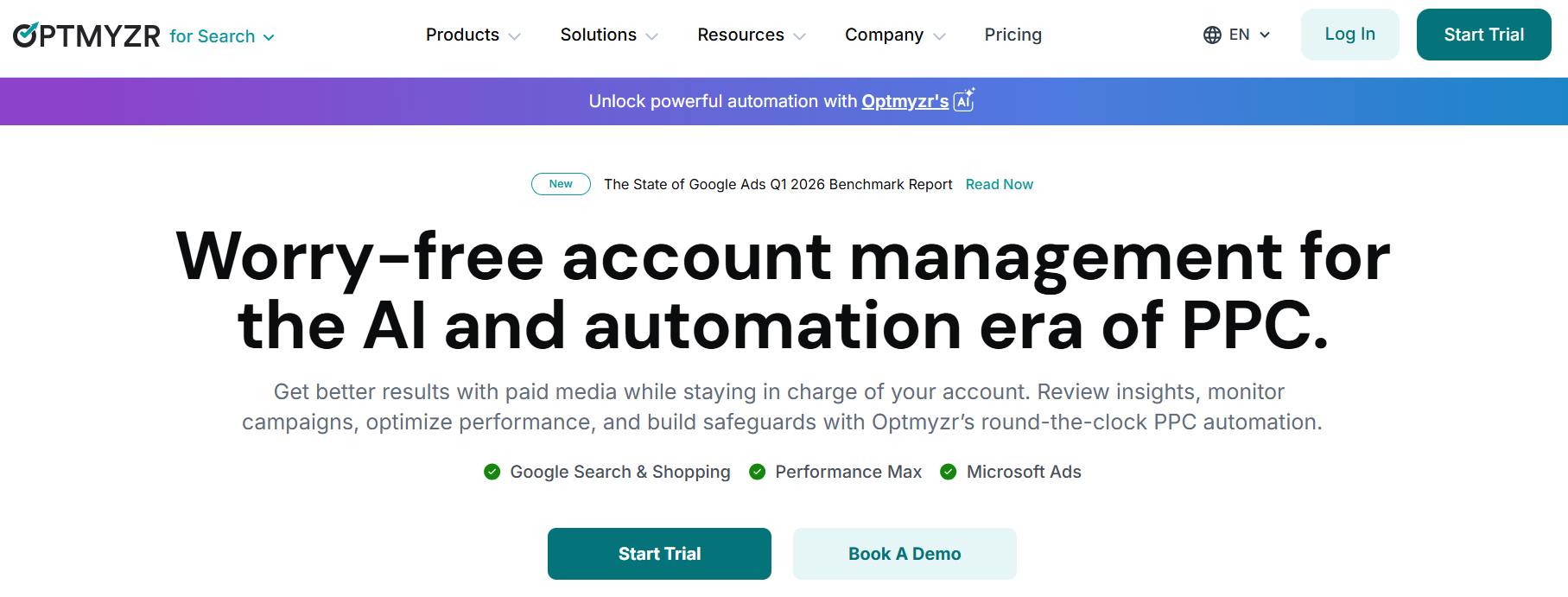
Optmyzr is a specialized spend optimization platform tailored for businesses whose primary customer acquisition happens through search-heavy platforms, including Google Ads, Microsoft Ads, and Amazon. It focuses on cleaning up budget waste across extensive keyword sheets and product inventory feeds. It stands apart from social-first alternatives by tailoring its complete toolkit to the structural logic of paid search match types, merchant center feeds, and Google Performance Max campaigns.
Key Strengths
- Performance Max Asset Group Auditing: This feature evaluates the specific quality scores of individual text headlines, long descriptions, and image assets inside your Google campaigns. It flags low-performing assets inside your active product feeds, allowing you to swap out weak components and save search budget.
- Feed Optimization Controls: It trims down spend on out-of-stock items or low-margin SKUs in Google Shopping automatically, protecting merchant capital from delivery errors and unguided automated bidding.
- Keyword Budget Shifting Scripts: This scripting tool flags high-cost, zero-conversion text strings and auto-excludes them, concentrating your paid search budget exclusively on high-intent buyer terms.
Limitations
- Social Channel Deficit: It offers minimal optimization or asset analysis resources for social-first, highly visual platforms like Meta, Instagram, or TikTok.
- Technical Knowledge Floor: It requires a foundational understanding of search campaign architecture and keyword bidding logic to use effectively.
Best For
Catalog-Heavy Retailers: Inventory-heavy ecommerce stores with thousands of product listings who generate their primary marketing revenue through Google Shopping, text search, and Amazon retail search grids.
7. Skai
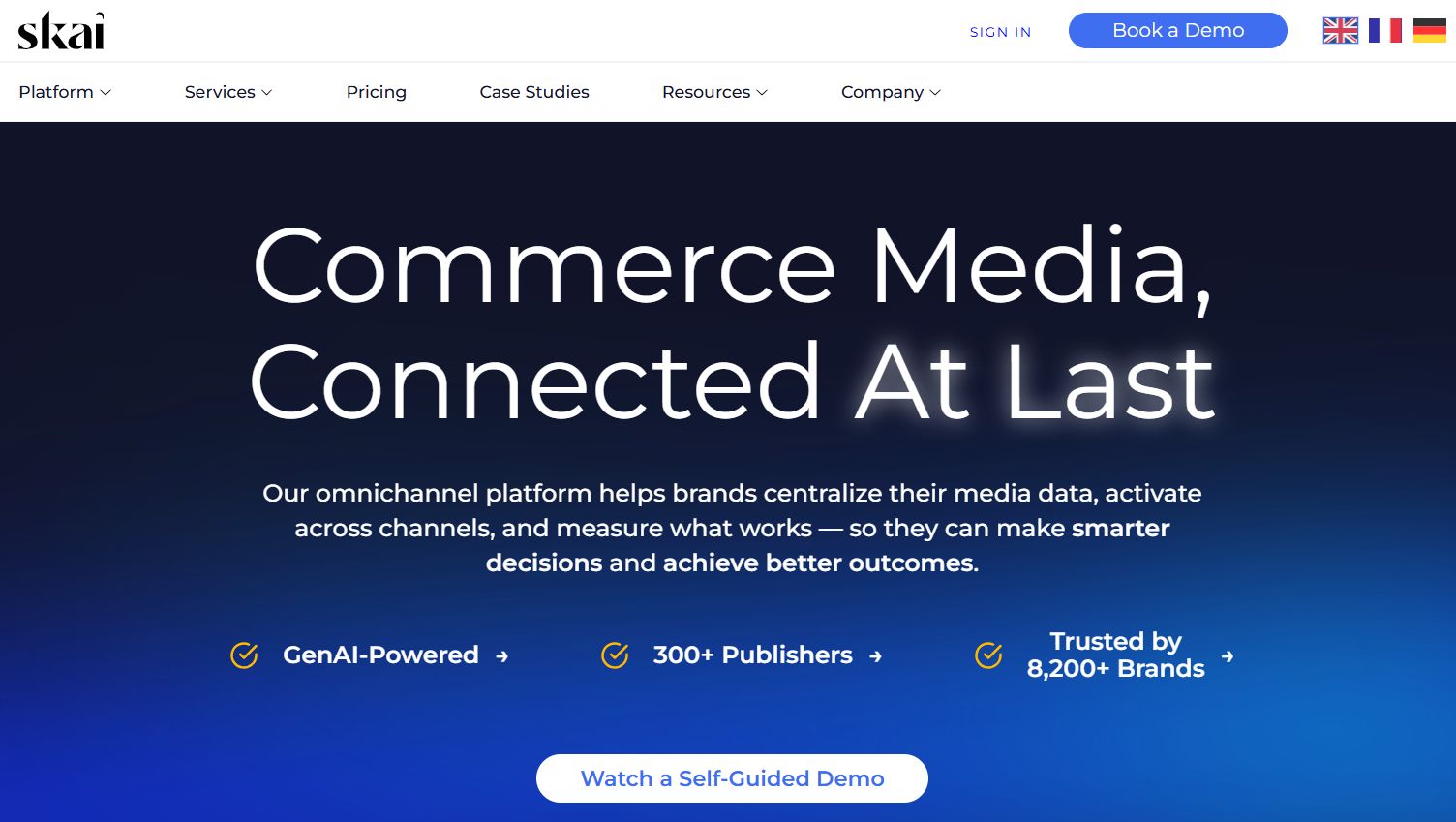
Skai is an enterprise-grade marketing intelligence and optimization platform engineered for large corporations running complex campaigns across retail media networks and global digital channels. It processes data at an immense scale, connecting direct retail inventory data to corporate marketing investments. It differs from mid-market applications by offering advanced data warehousing options, global security compliance, and sophisticated mathematical modeling engines.
Key Strengths
- Media Mix Modeling Creative Tracking: It maps visual and copy design characteristics against complex Media Mix Modeling algorithms. This lets enterprise teams see how subtle variations in video aesthetics alter long-term sales velocity, allowing them to forecast long-term portfolio optimization.
- Enterprise Automated Inventory Syncing: This logic halts or scales global retail campaigns based on live supply chains, mitigating spend on items facing supply disruptions or inventory shortages.
- Cross-Network Portfolio Balancing: It employs statistical models to automatically route millions in capital to the highest-yielding global digital channel, eliminating manual budgeting errors across international teams.
Limitations
- Prohibitive Pricing Tiers: The onboarding timeline, technical implementation requirements, and subscription costs are prohibitively expensive for small-to-medium independent operations.
- Operational Overhead: It requires a dedicated internal data analyst team to navigate the interface and execute configuration changes successfully.
Best For
Global Market Leaders: Global consumer brands managing multi-million dollar advertising portfolios across retail media networks and global digital distribution channels simultaneously.
👉 Related:
How to Choose the Right Server-Side Tracking Tools for Your Store
Shopify Advertising Costs: A Guide To Optimize Your Ad Spend
FAQs: Ad Spend Optimization Tools
Each platform optimizes your advertising ROI through a distinct mechanical approach: tracking tools like NestAds lower acquisition costs by routing clean, first-party server data directly back into ad network APIs to sharpen platform targeting algorithms; ecosystem aggregators like Triple Whale maximize efficiency by linking multi-channel spend to your live product margins (POAS), preventing you from scaling high-revenue but unprofitable campaigns; and automation engines like Madgicx defend your capital by using 24/7 autonomous scripts to instantly shift budgets away from decaying, fatigued creative assets and into active top-performers.
An attribution tool (like NestAds or Triple Whale) focuses on tracking accuracy. It charts the customer journey across multiple touchpoints to show you exactly which ad earned the purchase. An automation tool (like Madgicx or Birch) uses that data to take direct action, relying on custom rules to automatically scale up winning ad sets or pause bleeding budgets.
Free native network tools only look at their own ecosystem, meaning they cannot resolve cross-channel tracking overlap. If a customer clicks an Instagram ad and a Google Search ad before buying, both networks will claim full credit. A paid third-party platform acts as an independent referee to prevent you from over-allocating budget based on duplicate data.