







 Marketing Attribution
💡 Key Takeaways
-
If you want a quick answer to find the right software for your specific business setup, here are the top recommendations from our review:
- NestAds: The best option for small-to-medium sized ecommerce brands on Shopify that need to track multi-channel ads.
- Cometly: The best choice for B2B and SaaS businesses that need to connect digital ad clicks directly to CRM pipeline revenue.
- RedTrack: The top pick for scaling media buyers and agencies that require advanced automated rules to pause or scale campaigns across networks.
Why You Need to Scale with a Cross-platform Ad Tracker
If you are managing dozens of different ad creatives across Meta, Google, and TikTok, you already know how difficult it is to keep your data organized. The core problem is that platform-native analytics are built to report strictly within their own closed ecosystems.
Even a powerful tool like Google Analytics, which most businesses use as a baseline, naturally views your marketing performance through its own specialized tracking lens.
To scale your campaigns safely, you cannot rely on biased dashboards. You need an independent tracking system that shows exactly where your money goes.
How We Rank and Compare This List
To evaluate cross-platform ad tracking tools objectively, we use a consistent set of practical performance standards. Instead of focusing on vanity features, we judge each platform using three core metrics that directly influence operational efficiency.
- Data Freshness: This refers to the turnaround time between a consumer action and when that conversion displays in your reporting dashboard. Software with fast data syncing gives you a clear view of performance changes as they happen, allowing you to adjust daily budgets based on current numbers rather than waiting for delayed, day-old reports.
- Setup Complexity: Ad tracking tools vary widely in their technical installation requirements. We evaluate whether a platform offers plug-and-play, native integrations with standard website architectures or if it demands extensive custom server-side configurations and developer support to run correctly.
- Attribution Accuracy: A dependable tracking tool must be able to handle multi-touch customer journeys where a user clicks on ads from multiple different networks before making a final purchase. The software needs to clean and deduplicate this data so that a single conversion is not counted multiple times across different platform dashboards.
Quick Comparison: Top 7 Cross-Platforms Ad Tracking Tools
Before we dive into the specific details of each platform, here is a quick summary table to help you match your business needs with the right software.
| Ad Tracking Tool | Best Used For | Key Tracking Focus | Pricing Tier |
|---|---|---|---|
| NestAds | Small-to-medium ecommerce brands | Multi-channel ad and marketing attribution | $129.99/month (flat rate) |
| SpyFu | Competitor & Search Intelligence | Google and Bing ad history & keyword tracking | From $39/month |
| Cometly | B2B SaaS & Lead Generation | Connecting ad clicks to CRM revenue | Custom pricing (from $199 – $750/month) |
| RedTrack | Scaling Agencies & Media Buyers | Automated campaign optimization rules | From $149/month |
| ClickMagick | Funnel Marketers & Affiliates | Link verification and click-fraud protection | $79/month |
| Hyros | High-Ticket Sales & Long Funnels | Extended customer journeys & phone sales | From $230/month (scale with revenue) |
| Voluum | High-Volume Multi-Channel Campaigns | Real-time tracking across varied ad formats | From $149/month |
1. NestAds
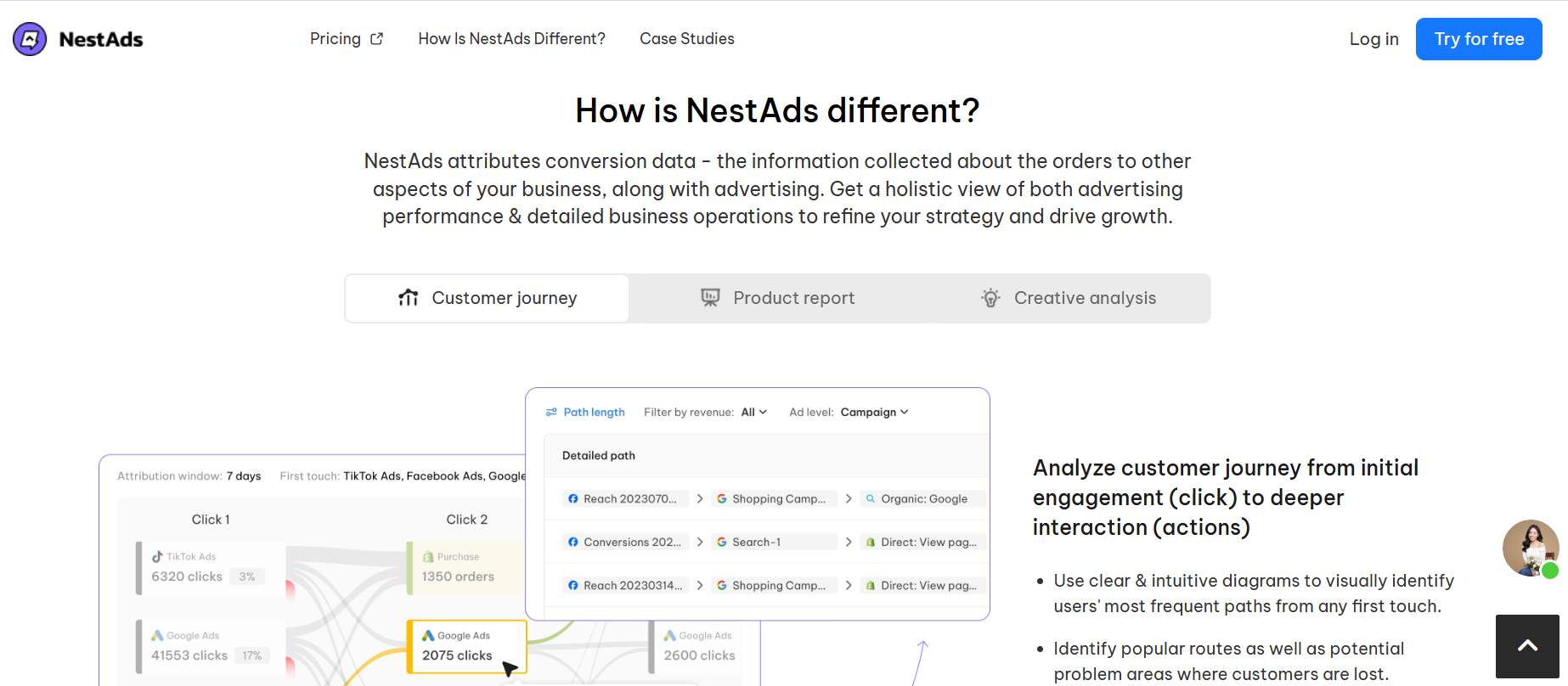
NestAds is a highly accessible marketing attribution tool built specifically for Shopify store owners. If you run a small to mid-sized e-commerce brand and feel overwhelmed by enterprise level software fees, NestAds offers a simple way to centralize your Meta, Google, and TikTok ad data.
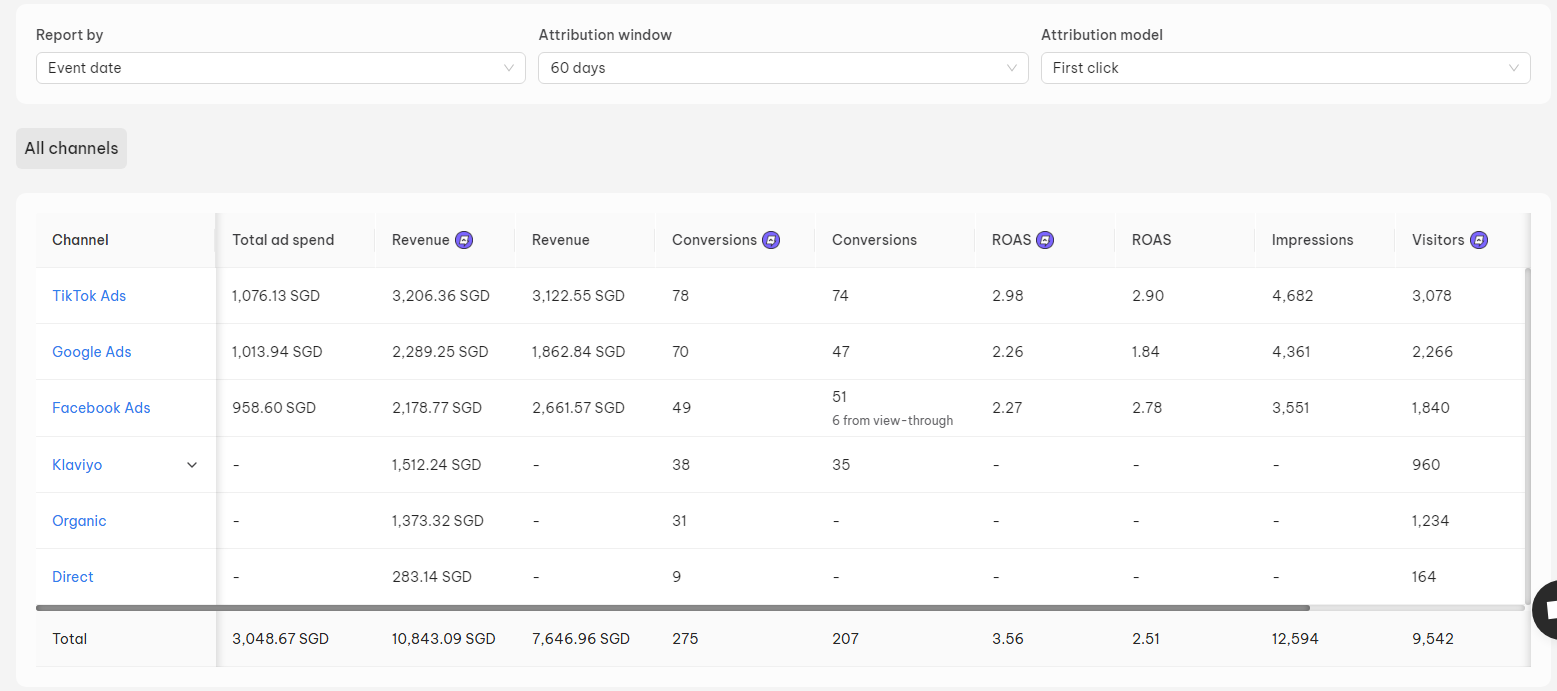
NestAds tracks key metrics such as Total ad spend, revenue, and ROAS of each platforms, also allowing you to customize your attribution model if needed. With NestAds, you can evaluate creatives, track customer journey, and reduce wasted ad spend.
Strengths
- Server-Side Tracking: Bypasses browser-level cookie deprecation blocks by collecting first-party purchase actions directly.
- Simplified Dashboard: Eliminates complex API installations by natively syncing with a single click inside Shopify.
- Customer Journey Tracking: Maps out the multi-touch path a shopper takes across TikTok, Meta, and Google before buying.
- Creative Analysis: Highlights your highest-performing ad visuals and videos; allow filtering by key metrics.
Limitations
- Limited Integrations: Connects primarily to major social channels and Klaviyo.
- Ecommerce Platform Restrictions: Mainly support Shopify merchants.
Best for
Small to mid-sized Shopify merchants who want simple, multi-platform ad clarity without paying a premium subscription fee.

2. SpyFu
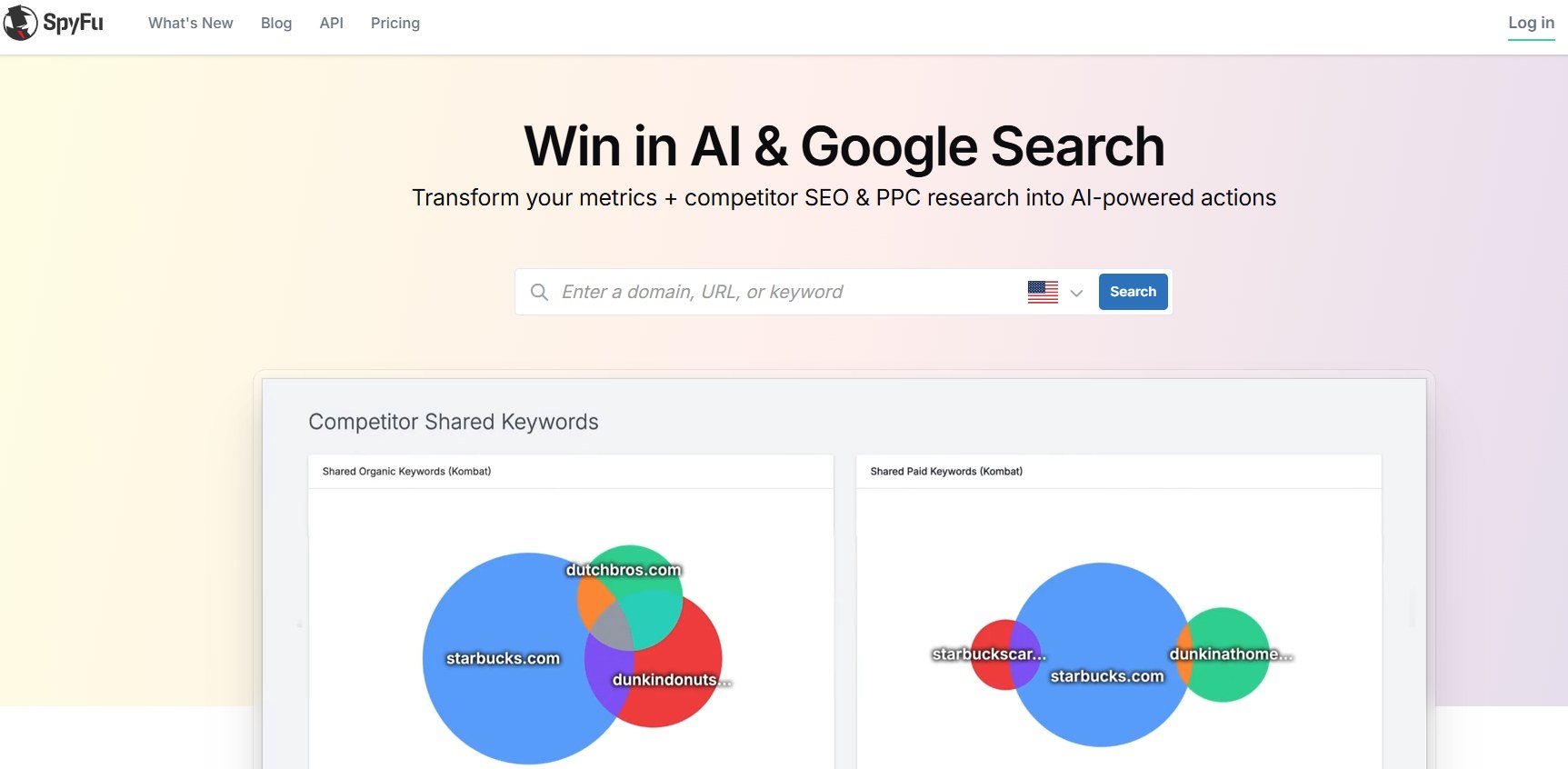
SpyFu approaches ad tracking from a completely different angle than traditional pixel platforms.
When you run search campaigns on Google Ads or Bing, you are constantly fighting bidding wars over expensive keywords. SpyFu tracks which keywords your direct market competitors are spending, what exact copy they use in their text ads, and which search keywords yield them the highest engagement.
This outside perspective gives you a distinct advantage because it allows you to spot gaps in your competitors’ strategies and track your own keyword rankings without flying blind against shifting search platform dynamics.
Strengths
- Competitor Ad Vault: Pulls a massive historical archive of your direct competitors’ ad copies and monthly search budgets
- Keyword Ranking Tracking: Monitors where your paid ads and organic pages rank over time for high-value search queries
- Budget-Friendly Pricing: Charges flat monthly fees
Limitations
- No Conversion Tracking: Lacks server-side conversion pixels to record actions inside your internal shopping cart
- Mainly For Search Network: Focuses entirely on Google and Bing, providing no metrics for social ads like Meta or TikTok
Best for
Search marketers and agencies who need to track ad copy trends, keyword rankings, and competitor budgets alongside their active search campaigns.
Relevant reading: How to Set Up Google Ads Server-side Tracking
3. Cometly
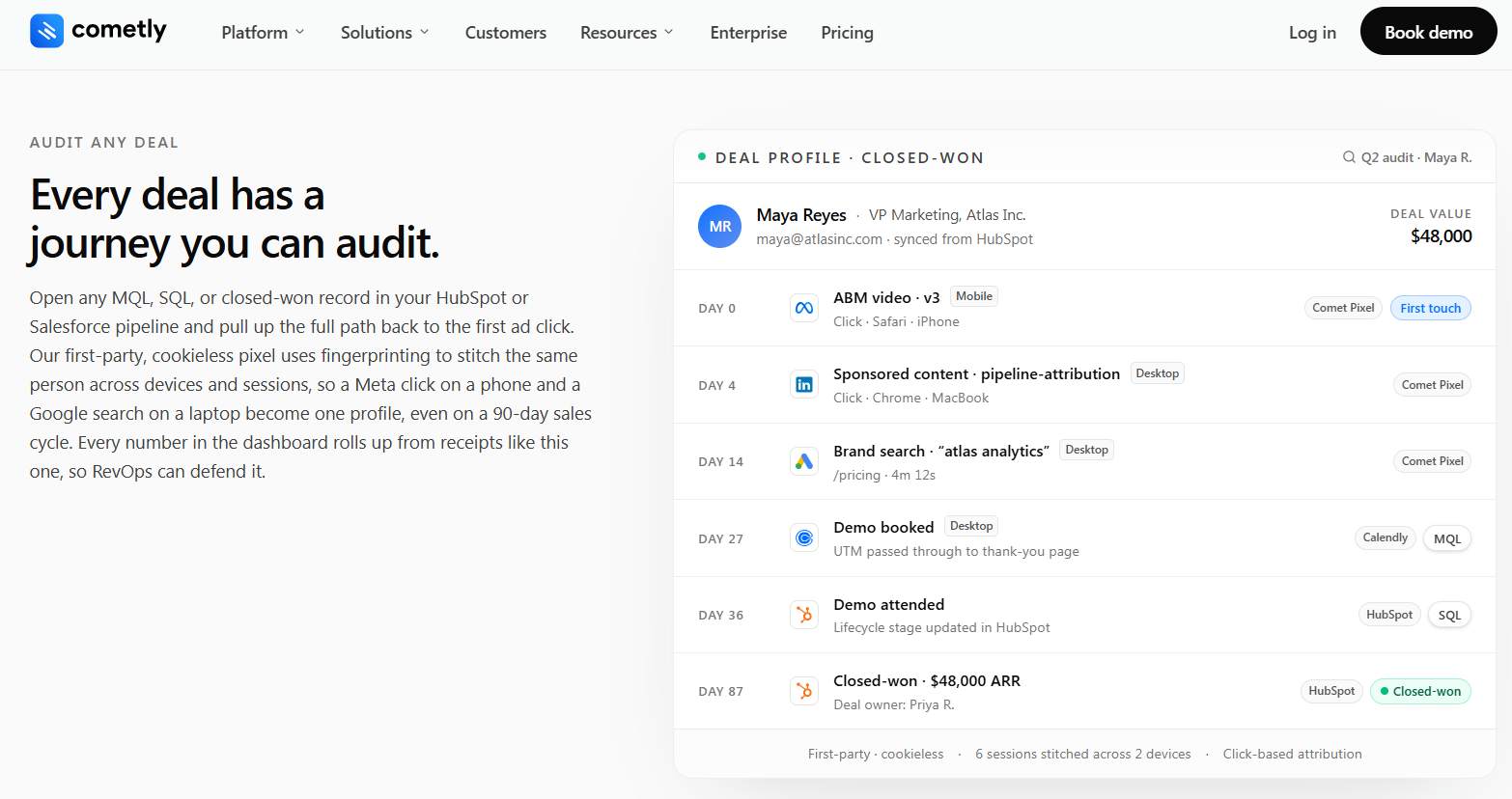
Cometly bridges the gap between your paid digital ad spend and your internal customer database. It helps you track your multi-channel ad performance by matching real time digital ad clicks directly with your actual back-end business revenue.
Strengths
- CRM and Database Alignment: Connects digital click paths directly to pipeline status updates in HubSpot or Salesforce.
- AI Campaign Recommendations: Features built-in analysis models that suggest which active sets to scale based on real revenue metrics.
- Stripe Revenue Sync: Pulls real-world payment events directly from your merchant processing account to verify true financial returns
Limitations
- Ad Spend Scale Pricing: Charges fees that increase dynamically alongside your total monthly multi-platform ad spend budgets.
- Complex Custom Setups: Demands exact mapping rules across multi-step sales funnels to prevent incoming data pipeline breaks.
- Sales Team Dependency: Relies heavily on accurate pipeline logging by your internal staff to maintain true attribution trails.
Best for
B2B companies, SaaS platforms, and lead generation businesses that need to track exactly which ads generate real pipeline revenue.
4. RedTrack
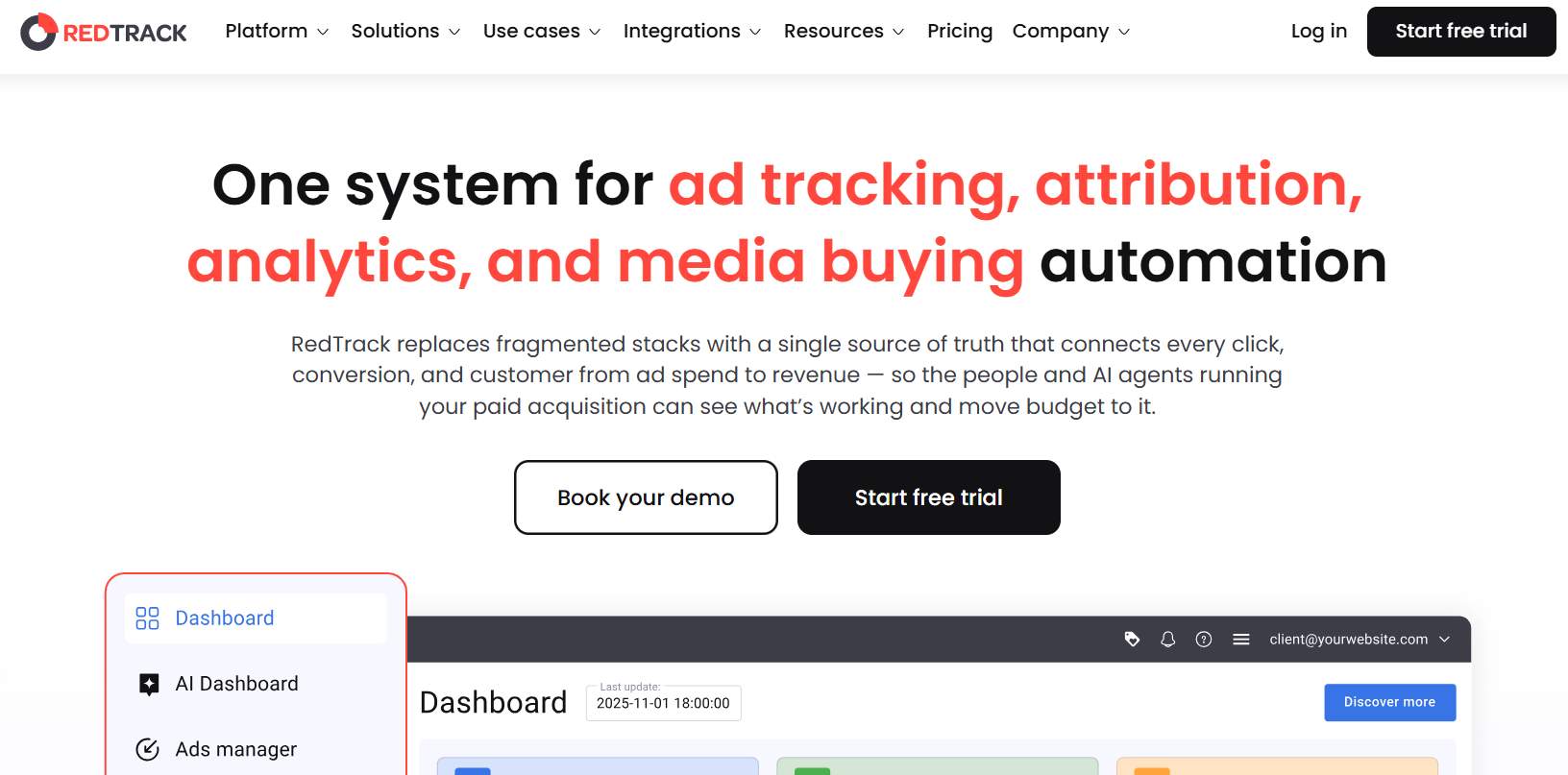
RedTrack is a privacy-compliant tracking and automation platform engineered for performance media buyers who manage high volume ad spend across multiple networks simultaneously. If you handle client accounts at an agency level, RedTrack is designed to make your operational data highly actionable.
RedTrack uses direct, rapid API pulls to sync costs and conversions constantly. This means you can build specific automated rules to run your accounts around the clock, protecting your client budgets from sudden performance drops.
Strengths
- Automated Campaign Rules: Pauses or scales live ad sets in Meta and Google automatically using custom thresholds you establish.
- White-Label Agency Dashboards: Offers custom branded reporting portals that you can securely share directly with your client base.
- Rapid Data Synchronization: Updates your platform ad spend every few minutes down to the granular individual creative tier.
Limitations
- Dense User Interface: Presents data-heavy reporting views that can feel overwhelming to non-technical store owners.
- Technical Learning Curve: Requires a clear operational understanding of server parameters, postbacks, and custom domain webhooks.
Best for
Professional media buying agencies and advanced performance marketers who manage complex, high volume budgets across multiple networks.
5. ClickMagick
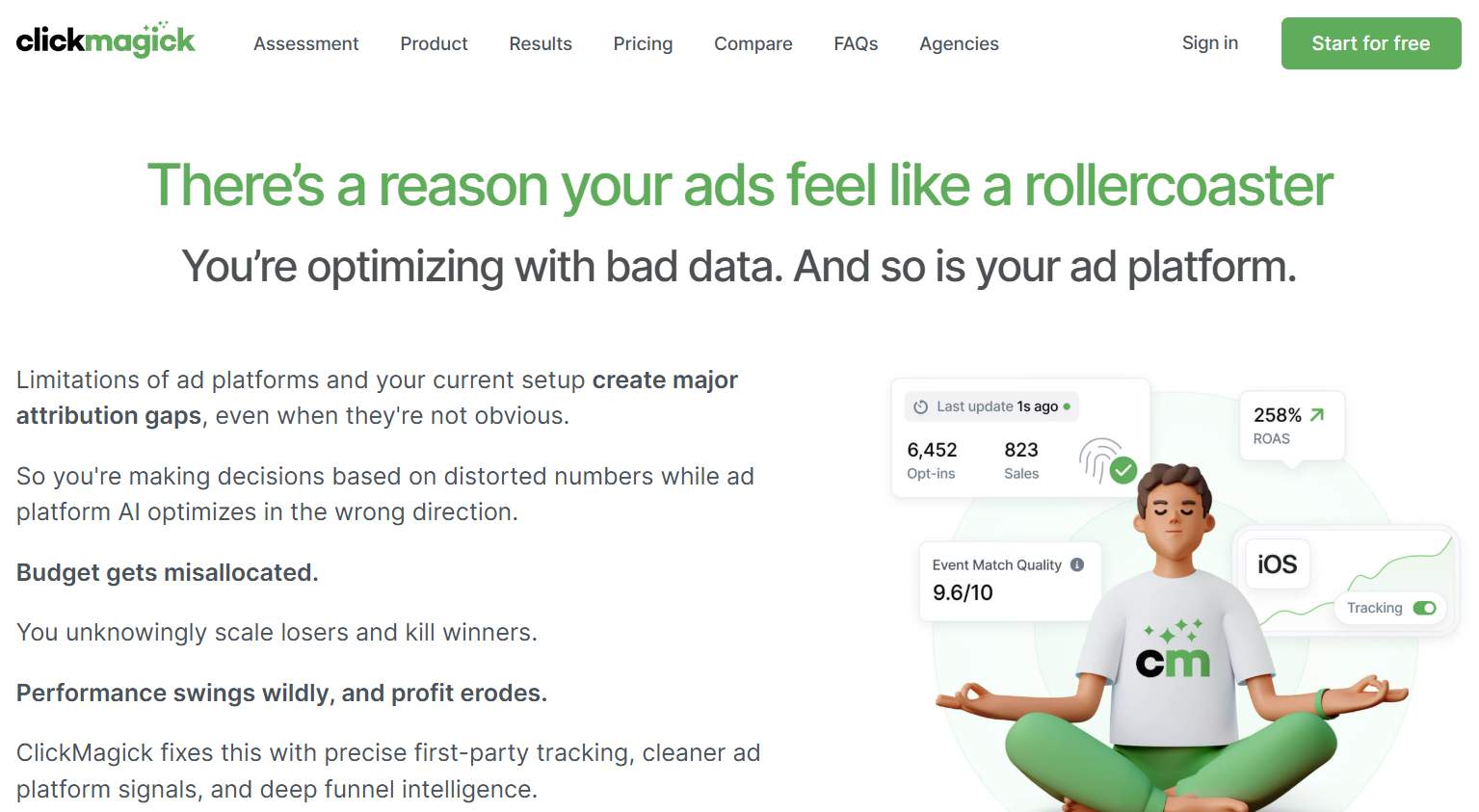
ClickMagick is a trusted, web-based tool designed to track, test, and protect your marketing links across any ad platform or custom landing page. It focuses heavily on tracking the integrity of your traffic to ensure you only pay for real human engagement.
Strengths
- Simple Link Splitting: Allows you to split test landing page variants directly from your central tracking dashboard links.
- Active Click-Fraud Protection: Detects and filters out programmatic bot clicks before they drain your live PPC campaign finances.
- Funnel Flexibility: Deploys cleanly across any custom-coded website, lander, or external affiliate ad platform network.
Limitations
- Legacy Dashboard Appearance: Features an older, text-based visual design that looks less modern than newer analytics dashboards.
- Manual Link Configuration: Demands that you create individual tracking link paths manually instead of relying on automatic store syncs.
Best for
Affiliate marketers and independent direct-response funnel builders who need affordable, accurate link tracking across diverse networks.
6. Hyros
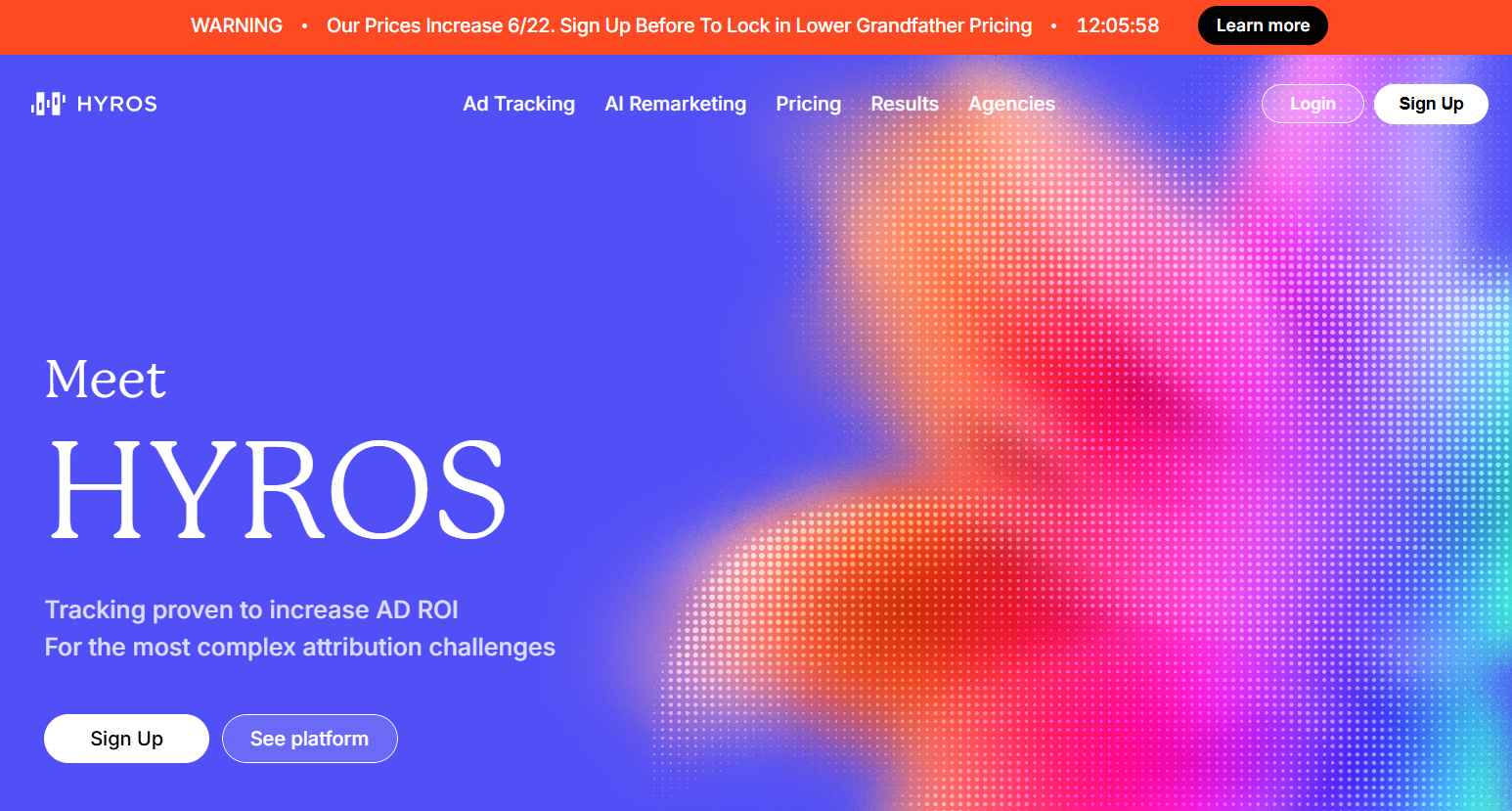
Hyros positions itself at the premium enterprise end of the market, focusing entirely on a concept known as long-term print tracking. In businesses with extended sales pipelines, like high-ticket consulting, online coaching, or complex digital course platforms, a buyer rarely purchases on day one. Hyros helps you visualize the buying process by building a highly persistent first-party profile that remembers exactly which ad started the relationship months ago, allowing you to feed clean optimization data back into your ad networks.
However, compared to affordable tools such as NestAds, Hyros is expensive and the fees aggresively scale with your revenue.
Strengths
- Extended Customer Archiving: Tracks complex customer conversion paths that take up to 90 days to close a sale.
- Offline Sales Record: Connect offline sales from phone calls, sales team bookings, or custom client contracts directly back to the original ad creative.
- Ad Platform Learning Feeds: Pushes clean first-party conversion data back into Google and Meta optimization engines to lower costs
Limitations
- Rigid Technical Installation: Demands an uncompromisingly exact configuration across your sales funnels to ensure reporting stays clean.
- Overkill for Most Businesses: Provides excessive tracking features that are only suitable for larage ecommerce brands and enterprises.
Best for
High-ticket consulting businesses, digital course creators, and businesses with lengthy, sales-call-driven marketing cycles.
7. Voluum
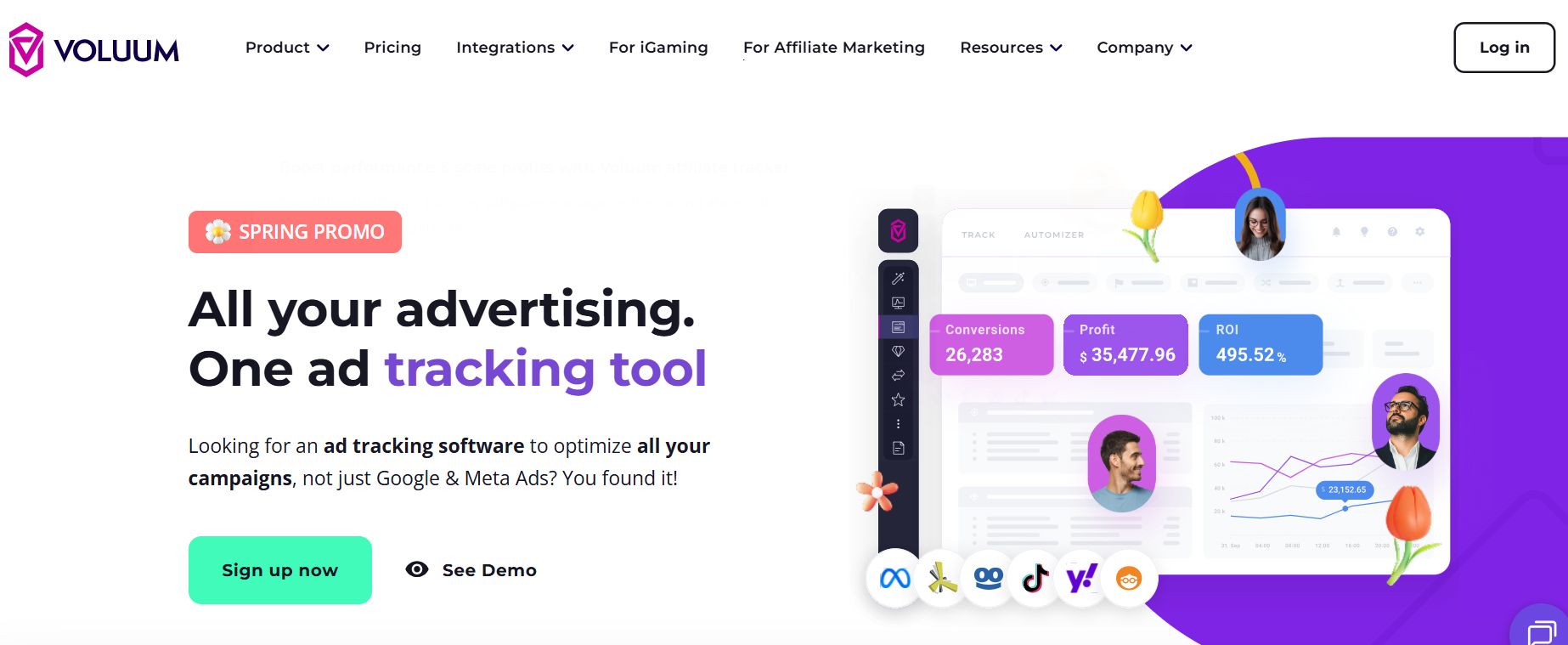
Voluum is a powerful, cloud-based ad tracker designed to monitor and optimize multi-channel performance across social media, native advertising networks, and search ads from within a single command center.
Strengths
- Real-Time Analytical Reporting: Delivers instantaneous data metrics on visitor device types, locations, and traffic sources without delay.
- Multi-Currency Conversions: Translates different traffic network expenses and sales platform currencies into one unified value.
- Dynamic Live Redirection: Switches active traffic paths to different landing pages without requiring manual ad URL changes.
Limitations
- Advanced Setup Demands: Demands an advanced operational grasp of server postbacks and tracking parameters to initiate use
- Overwhelming Data Volume: Displays massive, dense analytics tables that require professional data filtering skills.
Best for
High-growth performance marketers and media buyers running highly diversified ad campaigns across native, search, and social channels.
Best Practices to Track Ad Performance Across Channels
To get the absolute most out of your software investment, you need to establish clean data habits across every single campaign you run.
Use URL Parameters in Every Live Campaign
Writing out manual tracking links for every single ad creative is exhausting, and it leaves a massive margin for human error. Instead, you should use dynamic URL parameters provided natively by the ad platforms.
For instance, you can use automated macros like {campaignid} or {{campaign.name}} within your ad settings. When a user clicks your ad, the network automatically replaces those brackets with the actual name and ID of your campaign. This allows your tracking software to organize your incoming performance reports automatically, saving you hours of manual data entry.
Prioritize Server-Side Tracking
Relying entirely on a standard browser pixel to track your ads is like trying to shout a message across a crowded, noisy room. Modern web browsers block these messages by default to protect user privacy. If your tracking code only lives on the browser level, you will inevitably lose a massive chunk of your data.
To fix this, you need to set up server-side tracking, such as Meta Conversions API. Instead of relying on the web browser to send conversion data, your website server sends a direct, secure message to the ad platform server. Think of it like a direct phone call between your online store and Meta or Google. It ensures that when a purchase happens, the data is recorded perfectly, even if the customer is using an aggressive ad blocker or a privacy-focused browser.
Lock in a Consistent Attribution Window
If your creative team is evaluating ad performance using a 1-day click model while your media buying team is optimizing campaigns using a 7-day click model, you are going to have chaotic internal debates. Different attribution windows tell completely different stories about which creatives are working.
Before you launch any new campaigns, you must choose a single, standardized attribution window that your entire company agrees on. If you are selling an affordable impulse-buy product, a short tracking window makes sense. If you are selling an expensive high-ticket item that requires weeks of consideration, you need a longer window. The specific timeline you choose matters less than consistency. When everyone looks at the exact same data window, you eliminate internal confusion and can scale your winning ad assets much faster.
👉 Related:
7 Customer Journey Metrics to Boost Your Ads Efficiency
FAQs: Cross-Platform Ad Tracking Tools
Many PPC agents use Google Analytics as their baseline, combining it with marketing attribution tools. They also use reporting tools such as Looker Studio, not only for ad tracking, but also for other marketing activities (e.g., SEO optimization).
You can use GA4, but its limitations will become major obstacles as you scale. While GA4 is an excellent, free tool for tracking overall website behavior and Google Ads campaigns, it struggles to accurately attribute non-Google channels like Meta or TikTok, and relies heavily on browser cookies which are frequently blocked.
Built-in dashboards (like Meta Ads Manager or Google Ads) use siloed attribution models and often claim credit for the same conversion. For example, if a user clicks a Google Ad, then later clicks a Facebook Ad and buys a product, both platforms will likely claim 100% credit for that sale.
Cross-platform tracking tools eliminate this platform bias by acting as a single, unbiased source of truth.
Data Aggregators (e.g., Supermetrics, Funnel.io, Looker Studio) pull raw metrics like spend, clicks, and impressions from various platforms into one spreadsheet or dashboard. They tell you what happened.
Marketing Attribution tools (e.g., NestAds, Cometly) use first-party data, pixels, and server-side tracking to follow a user’s journey across different platforms to determine which specific ad actually triggered the final purchase.
Modern ad tracking tools rely heavily on Server-Side Tracking (via Conversions API or CAPI) and first-party data pixels rather than traditional browser cookies. Because the tracking data is sent directly from your website’s server to the ad platform’s server—bypassing the user’s browser entirely—it is much more resilient against ad blockers and privacy updates.




 Facebook Advertising