







 Shopify Development
With rising customer acquisition costs and changing search algorithms, manual operations can limit your growth. AI has become a powerful solution for automating workflows and improving user experience.
After evaluating 10+ apps on actual Shopify businesses, we identified the top 7 Shopify AI tools based on pricing, features, and actual value for your money.
For a quick start, try AI SEO & GEO Catalog Optimizer for a free tool that get your products suggested on ChatGPT, Gemini, and more.

1. Quick Overview: Best Shopify AI tools
Let’s take a look at an immediate overview of the top AI applications available for Shopify merchants. It highlights the primary category, baseline pricing, and the ideal use case.
| App Name | Main Category | Pricing Plan | Best For |
| Shopify Magic & Sidekick | Content & Store Operations | Free (Built-in) | Product descriptions and basic workflows |
| Klaviyo | Email & SMS Marketing | Free plan available; paid from $15/month | Predictive analytics and smart segmentation |
| AI SEO & GEO Catalog Optimizer | Generative Engine Optimization | Free | Optimize product data for AI engine discovery (ChatGPT, Gemini, etc) |
| Rebuy Personalization Engine | Upselling & Personalization | Free plan available; paid from $25/month | Dynamic checkout cross-sells and smart carts |
| Naridon | AI Search Visibility & Tracking | Free plan available; paid from $49/month | Tracking citations in ChatGPT and Perplexity |
| Alia: Email & SMS Popups | Lead Capture | From $100/month (14-day free trial) | Autonomous list-building and active A/B testing |
| Octane AI | Interactive Marketing | From $50/month (14-day free trial) | Interactive product recommendation quizzes |
Category Winners
- Best Free Option (for AI visibility): AI SEO & GEO catalog optimizer
- Best for Automated Marketing: Klaviyo AI
- Best for Product Recommendation: Octane AI
2. How I Choose the Best AI Tools for Shopify
To ensure this list only includes applications that drive actual efficiency for most businesses, I evaluated each tool based on four main criteria:
- Native Integration: The application must integrate directly with the Shopify administrative panel. It should deploy quickly without causing theme conflicts or requiring complex developer support.
- Measurable ROI: Every application should justify its monthly subscription fee. I focused on software that directly increases average order value, reduces labor hours, or lowers customer acquisition costs.
- Ease of Use: The applications have intuitive dashboards that you can learn and configure without too much technical skills required.
- Transparent Pricing Structure: The software must offer clear pricing tiers that scales with your business.
3. Top 7 AI Tools for Shopify (2026)
3.1. Shopify Magic & Sidekick
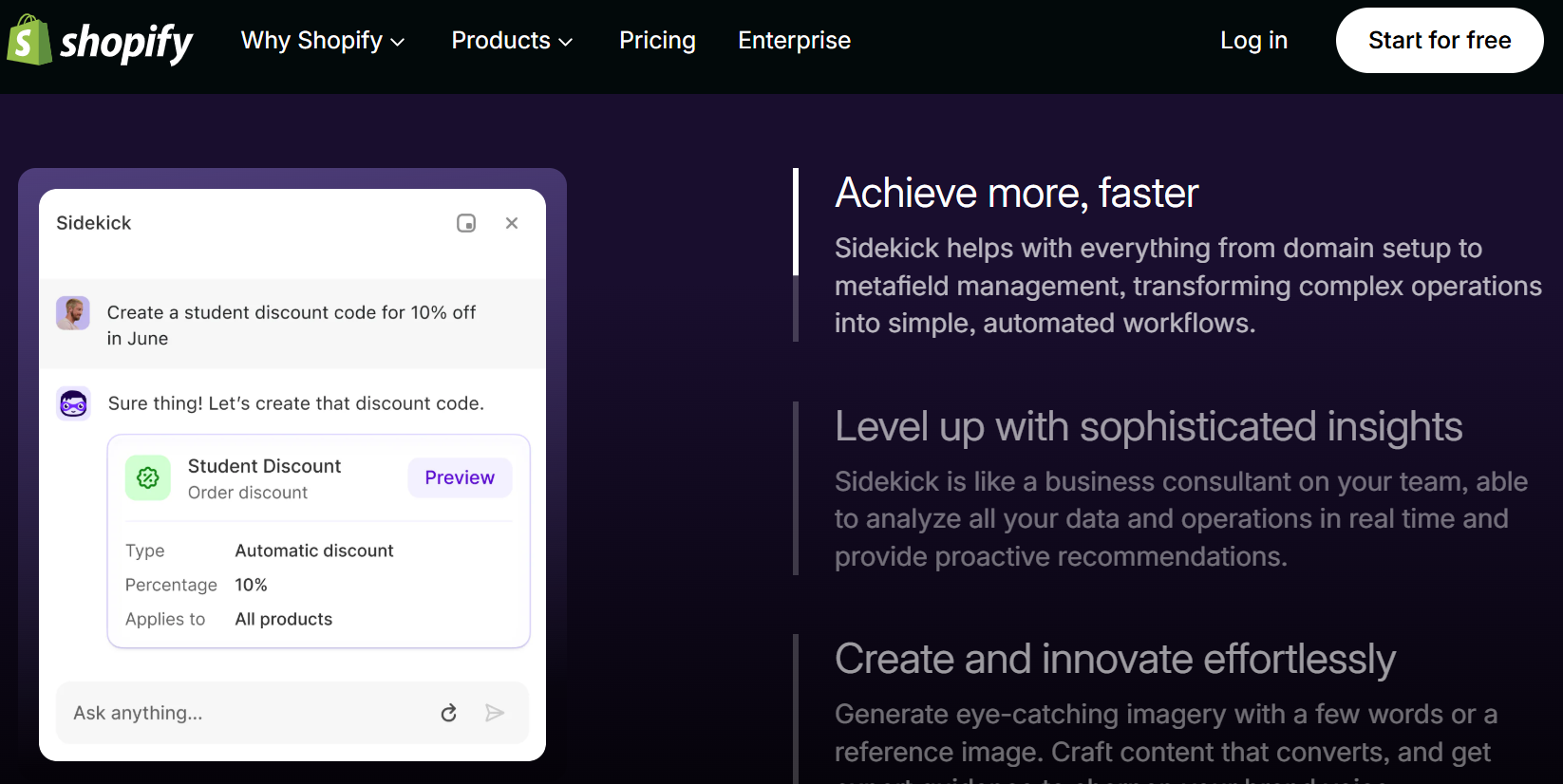
Shopify Magic is a suite of native features built directly into the Shopify core platform. It allows you to automate repetitive tasks directly from your existing store dashboard without installing third-party software.
Key Features
- Instant text generation that creates product descriptions based on specific keywords and tones.
- Automated email subject line and baseline copy suggestions within Shopify Email.
- Sidekick chatbot that executes store configuration changes and generates inventory reports.
- Built-in media editing tools that remove photo backgrounds
Shopify Magic Pros & Cons
Pros:
- Entirely free, zero setup required
- Operates seamlessly within your store
Cons:
- Generated text can sound generic without customization
- Only execute simple tasks, lack personalization
Best for
Early-stage or scaling merchants who need immediate assistance with copywriting and basic image editing without adding to their fixed monthly costs.
3.2. Klaviyo
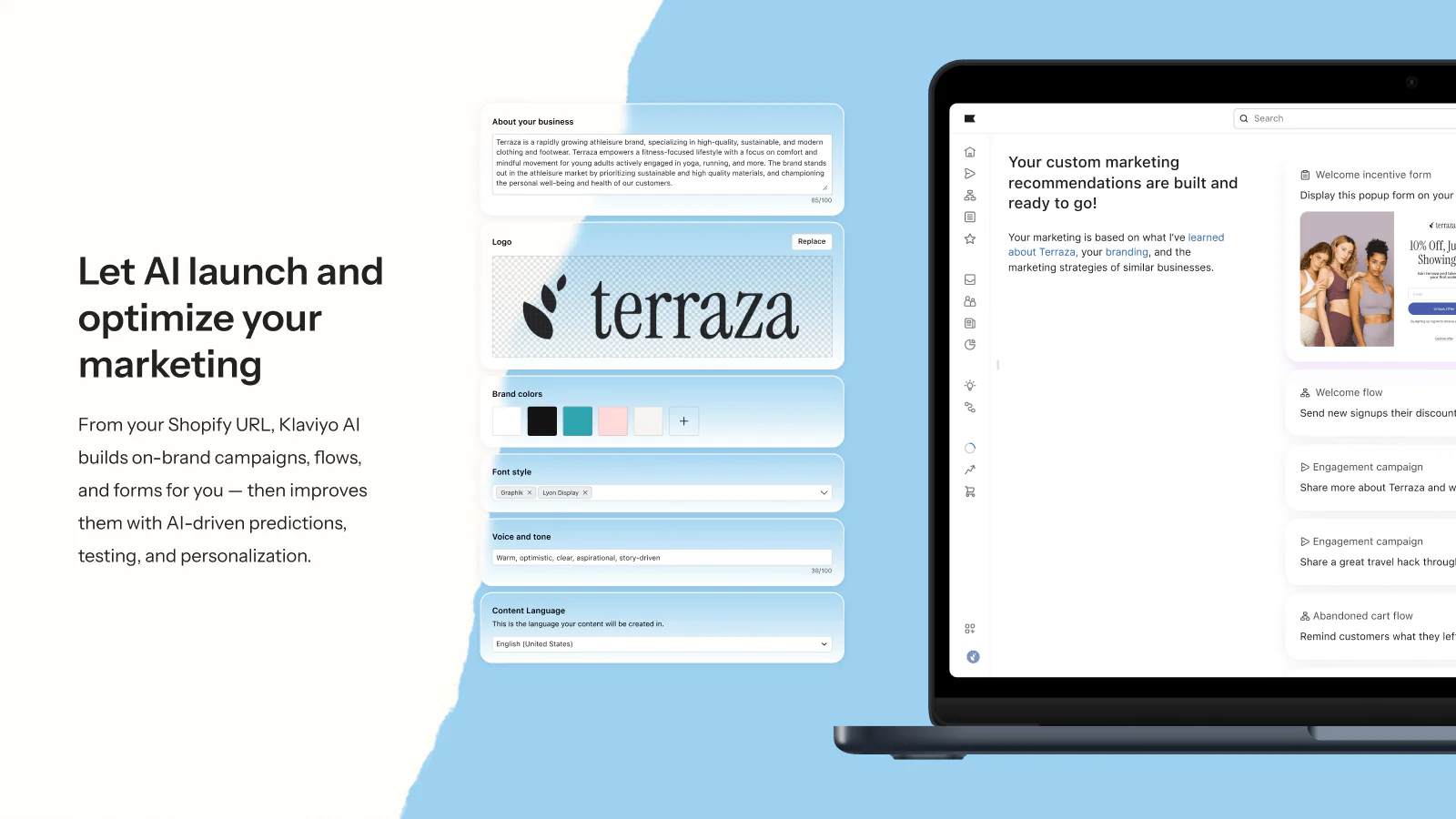
Klaviyo AI integrates machine learning into your email and SMS marketing workflows. Instead of sending identical campaigns to your entire subscriber list, this application analyzes consumer data to automate and personalize your brand communications.
Key Features
- Predictive analytics models that calculate customer lifetime value and identify immediate churn risks.
- Smart Send Time Optimization that delivers marketing messages based on the specific historical open patterns.
- Generative AI for drafting email headlines, body copy, and SMS campaigns.
- Natural language audience segmentation that builds target lists instantly based on descriptive commands.
Klaviyo AI Pros & Cons
Pros: It provides thorough behavioral insights, precise predictive modeling data, and manages complex retention campaigns effectively.
Cons: The advanced data dashboard requires a learning curve, and monthly subscription pricing scales rapidly as your subscriber count grows.
Best for
Established e-commerce brands that want to improve customer retention rates and use historical behavioral data to generate repeat sales.
3.3. AI SEO & GEO catalog optimizer
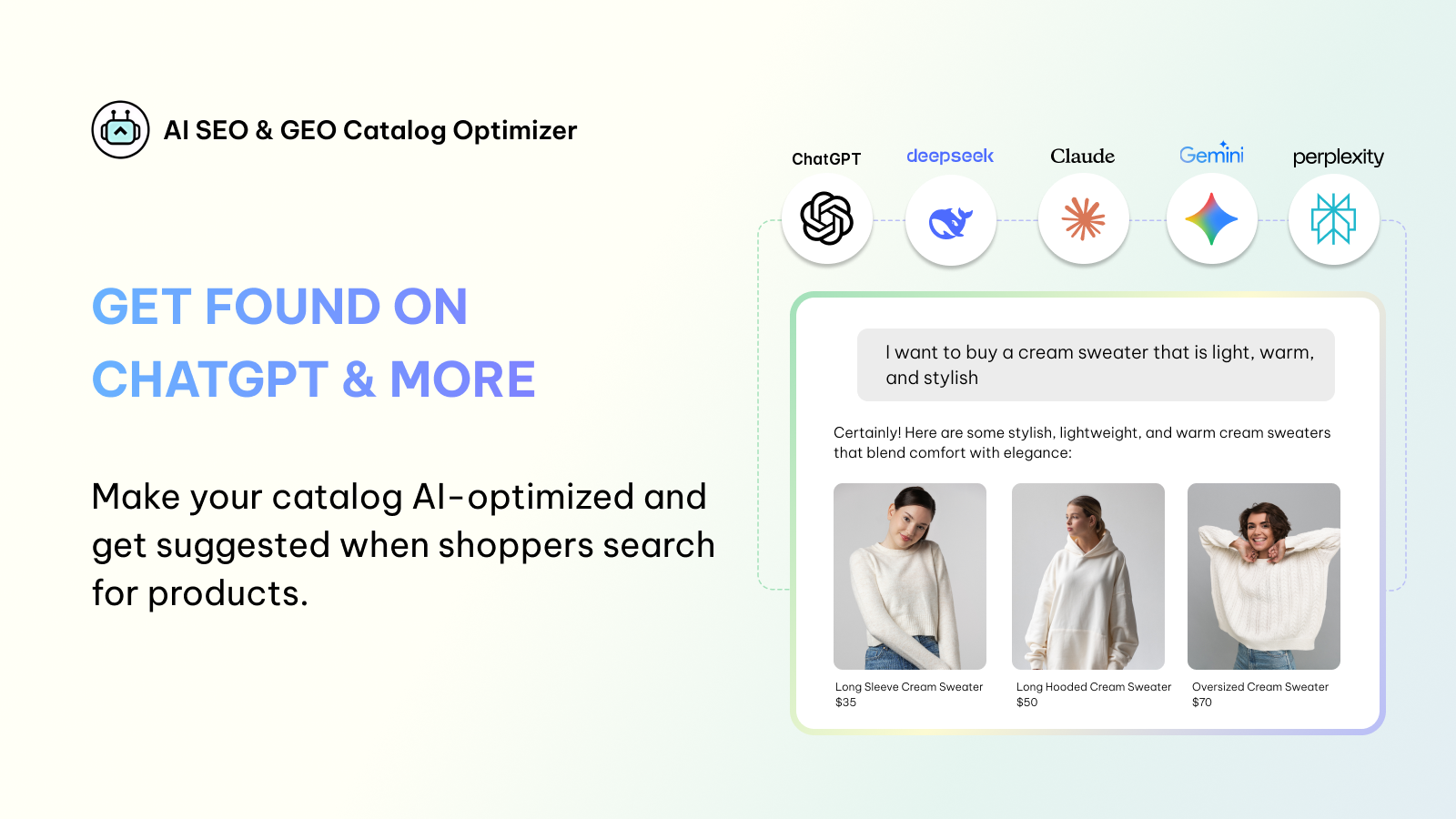
The AI SEO & GEO Catalog Optimizer helps merchants solve a specific challenge: AI engine optimization. This application optimizes your storefront data so conversational AI models like ChatGPT, Claude, and Perplexity can easily read, index, and recommend your products.
Key Features
- Formats your product catalog and inventory feed to ensure large language models can comprehend your product options.
- Perform GEO & GEO audits and get checklists of actions to take.
- Updates your store data in real time whenever you modify prices, product specifications, or inventory levels.
AI SEO & GEO Catalog Optimizer Pros & Cons
Pros:
- Free to use with full features
- Quickly SEO & GEO audit for a single product or in bulk
- Get actionable insights and AI confidence score for each product data
Cons:
- The technical standards for AI search are still evolving
- Can be overwhelming at first if you have a large catalog (over 500 products)
Best for
Merchants who require a direct, cost-effective method to prepare their storefront for modern Generative Engine Optimization.
Further reading: How People Are Using AI for Shopping in 2026
3.4. Rebuy Personalization Engine
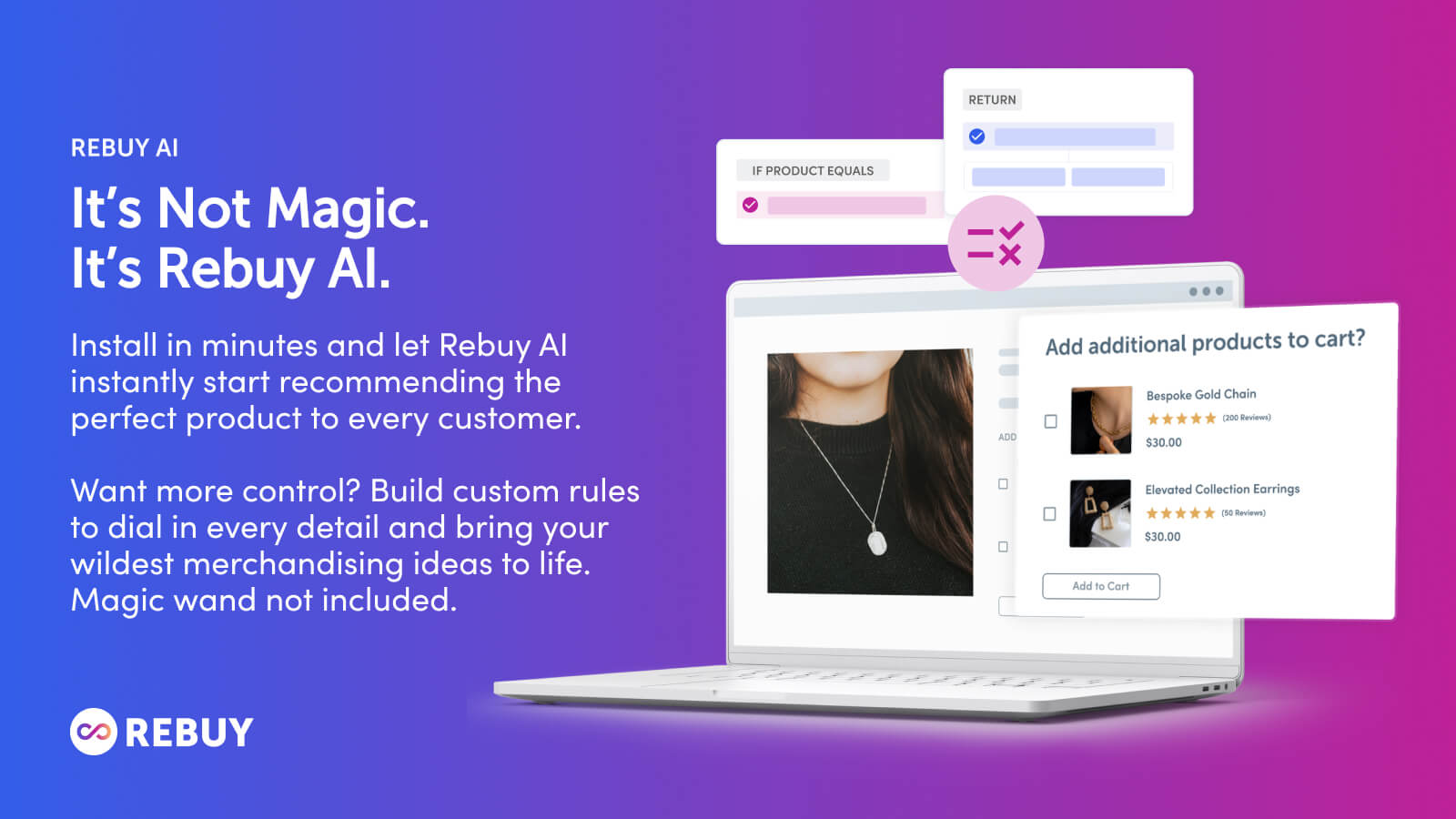
Rebuy focuses on personalizing the on-site shopping experience. The software monitors real-time consumer data and browsing history to display relevant product recommendations across the buying journey.
Key Features
- Predictive recommendation blocks that display dynamically on individual product pages and slide-out cart drawers.
- Automatically generated Frequently Bought Together bundles calculated from historical purchase combinations.
- Post-purchase product offers that appear on screen immediately after a buyer completes the initial checkout step.
- Built-in multivariate testing tools to determine which layout locations generate the highest conversion rates.
Rebuy Engine Pros & Cons
Pros: It is highly effective at increasing average order value and provides complete control over your recommendation logic.
Cons: The widgets can clutter your storefront if not styled properly, and configuring the backend data rules requires dedicated setup time.
Best for
Merchants with large product catalogs who want to increase their average transaction values through automated cross-selling.
3.5. Naridon
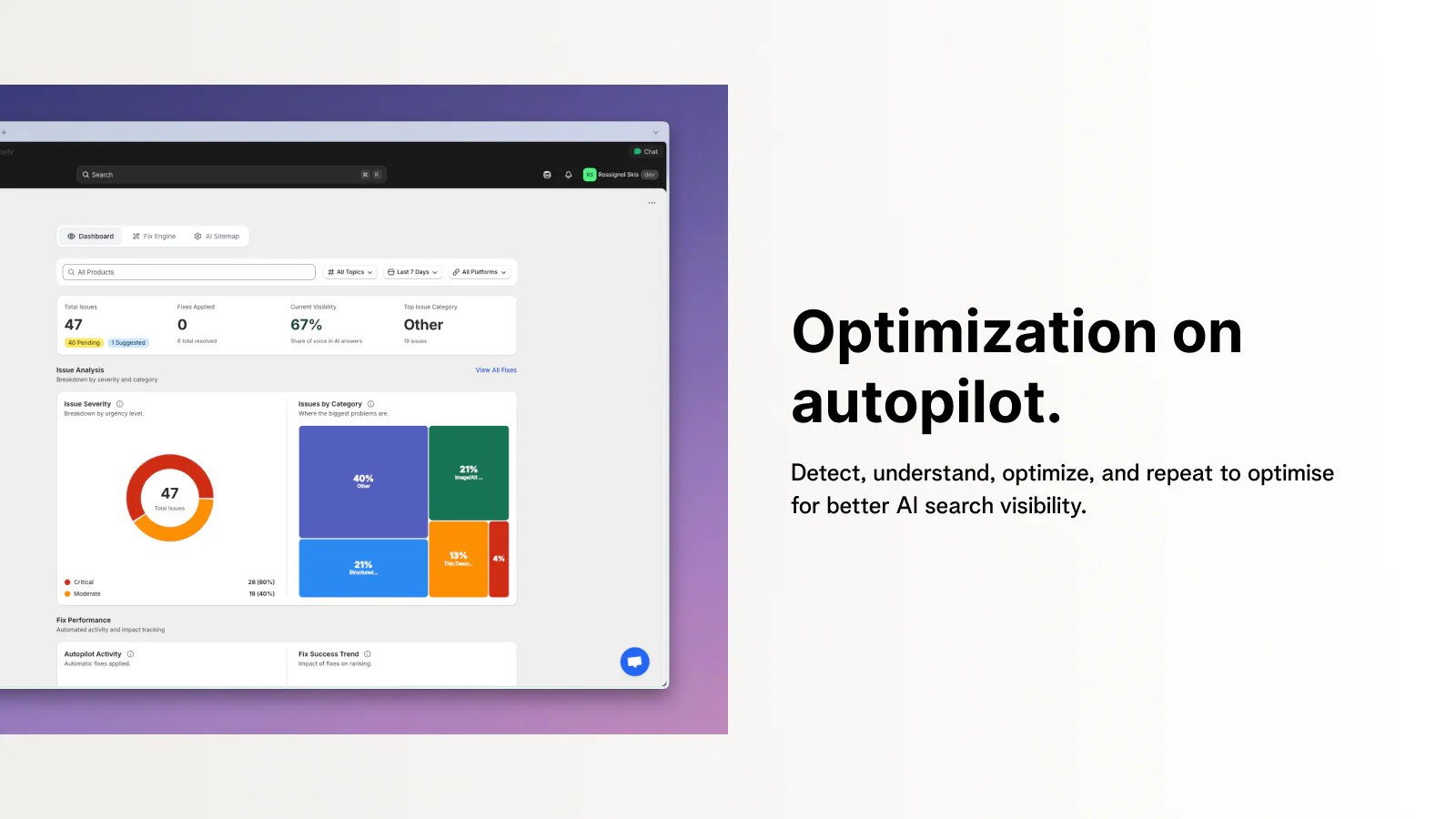
Naridon is an analytics and optimization application designed for tracking your store visibility across AI platforms. It monitors the web to identify exactly when and where your products are referenced by AI search tools.
Key Features
- Real-time monitoring of specific brand citations and mentions inside ChatGPT, Claude, Perplexity, and Google AI Overviews.
- Competitor benchmarking dashboards that reveal which alternative brands are earning visibility in AI search results.
- Automated structured data validation and schema repair to help AI crawlers map your site correctly.
- On-page content recommendations that advise you on how to structure your text for clear AI summarization.
Naridon Pros & Cons
Pros: It delivers specialized analytical insights into modern AI traffic sources and adapts alongside major search algorithm changes.
Cons: The software focuses strictly on backend optimization and data tracking rather than asset creation or public-facing marketing.
Best for
Merchants who want to actively measure, benchmark, and improve their organic recommendation share inside generative search networks.
3.6. Alia: Email & SMS Popups
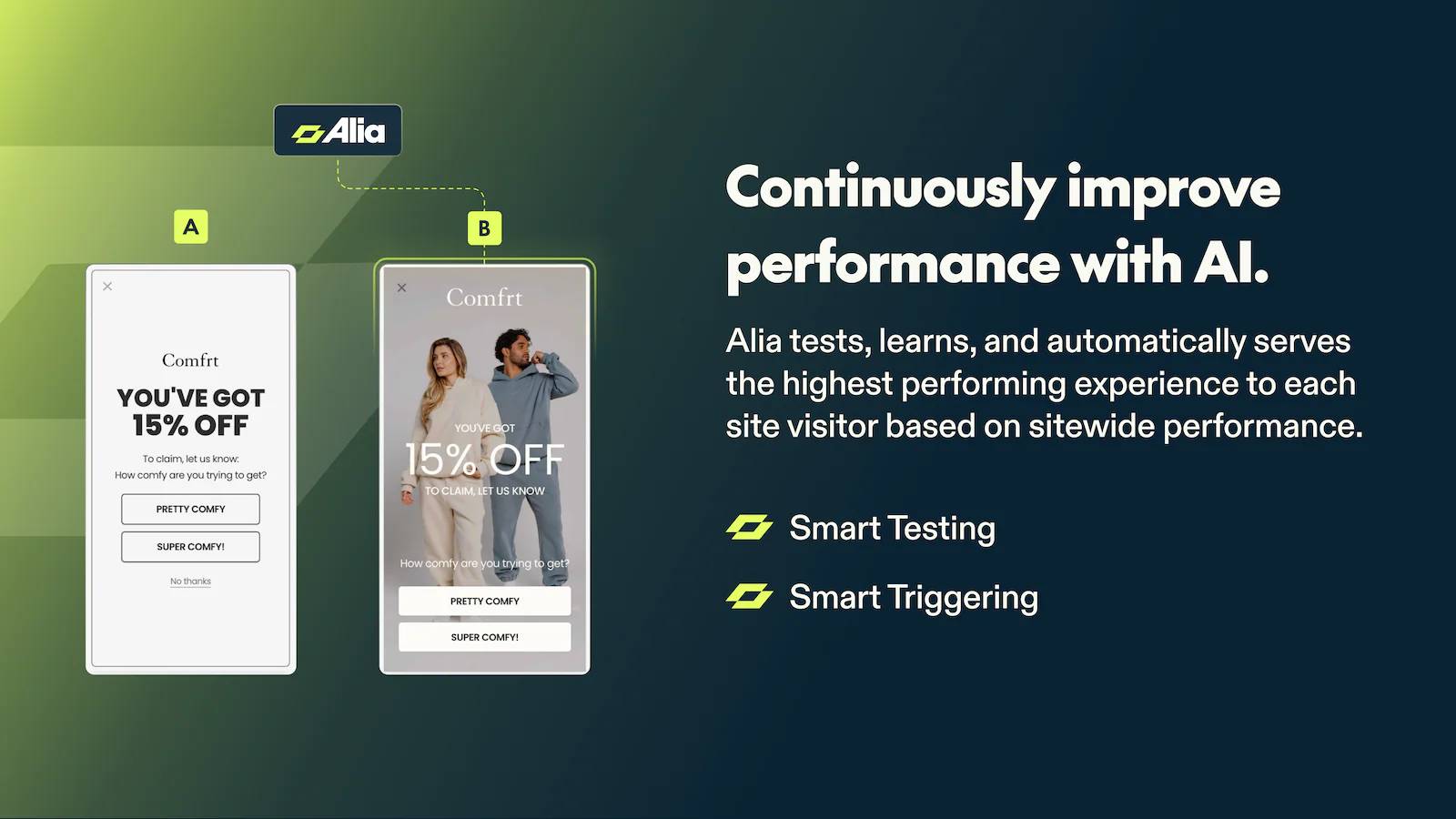
Alia Popups automates your store customer acquisition strategy. Instead of utilizing static signup forms that look identical to every visitor, this software adjusts its presentation based on real-time user behavior to capture more leads.
Key Features
- Continuous, autonomous split-testing that modifies headlines and offer structures all day without manual inputs.
- Predictive exit-intent and behavioral triggers that display signup forms when a visitor is most likely to convert.
- Integrated micro-quizzes built directly inside lead capture forms to drive higher consumer engagement.
- Data suppression filters that prevent active, returning subscribers from seeing repetitive signup forms.
Alia Pros & Cons
Pros: It delivers high conversion rates compared to standard forms and eliminates the administrative task of managing manual tests.
Cons: The monthly subscription price is higher than traditional, non-automated popup applications.
Best for
High-traffic stores spending significantly on paid advertisements that need to convert a higher percentage of visitors into email or SMS subscribers.
3.7. Octane AI
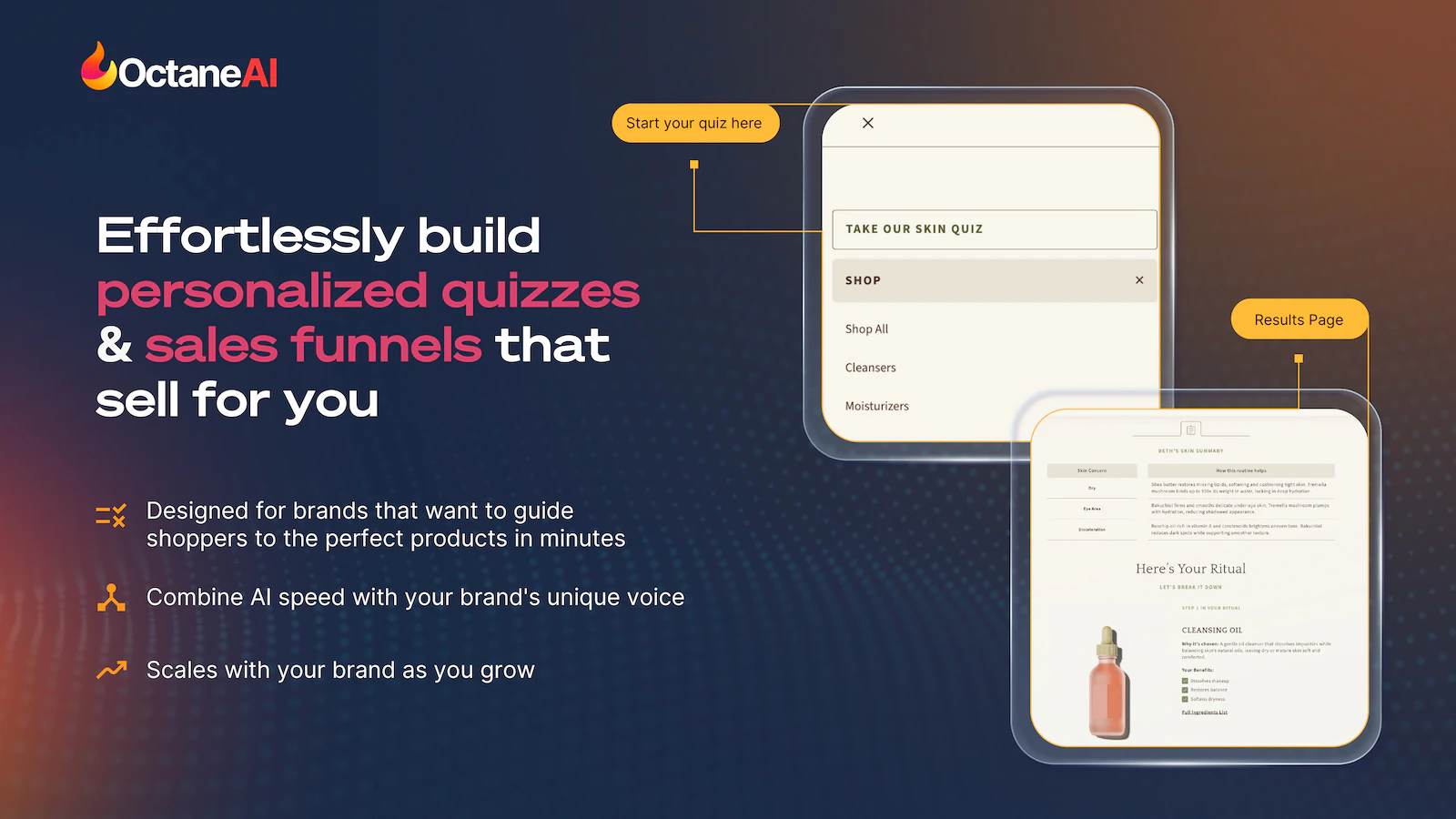
Octane AI allows you to construct interactive on-site quizzes that guide buyers to the right products. This software replaces traditional catalog browsing with an educational questionnaire to reduce purchasing confusion.
Key Features
- Conversational quiz builder that interviews shoppers regarding their specific preferences, skin types, or size requirements.
- Zero-party data synchronization that passes customer quiz answers directly into Klaviyo and Meta Ads profiles.
- Dynamic results templates that showcase curated product collections or multi-step routines tailored to individual answers.
- In-quiz social proof integrations that highlight relevant customer reviews based on the items recommended.
Octane AI Pros & Cons
Pros: It increases on-site engagement times, lowers return rates, and collects detailed, compliant customer preference data.
Cons: Creating an effective conversational path requires deliberate planning and thorough mapping of your product inventory.
Best for
Brands selling specialized or technical products, including cosmetics, nutrition supplements, and customized clothing, where customers require purchasing guidance.
4. What Changes in 2026
Online shopping behaviors have changed significantly. Traditional marketing strategies require adjustments to remain effective against modern consumer trends:
- Generative Engine Optimization (GEO): Shoppers are changing how they discover products. Instead of relying solely on traditional keyword search engines, many users consult AI assistants to research purchases. According to the Athos Commerce Connected Consumer 2026 report, 60% of consumers now incorporate AI platforms like ChatGPT, Claude, or Gemini into their shopping research journeys. Research available on arXiv indicates that preparing your site with specific GEO methods can increase your visibility within these conversational answers by up to 40%.
- Zero-Party Data Collection: Privacy regulations and operating system updates have reduced the reliability of background tracking cookies. To understand consumer preferences accurately, modern stores must gather information directly from the user through interactive elements like quizzes, choices, and preference centers.
- Automation: Small ecommerce teams cannot manage every minor operational variable manually. Modern applications must monitor data patterns, identify optimization opportunities, and implement adjustments independently to maximize store conversion efficiency.
👉 Related:
What Is Proactive AI & How It Changes Customer Engagement
AI Agent vs Chatbot: Key Differences You Need to Know
FAQs: Shopify AI Tools
Yes, Shopify features a built-in suite of AI features called Shopify Magic, alongside a chatbot, Sidekick. Additionally, there are many AI-powered apps available for Shopify merchants.
Shopify Magic excels at general store operations and copywriting because it is free and built directly into your dashboard. However, specialized third-party applications provide much deeper functionalities such as marketing, GEO optimization, or product recommendation.
The ideal AI tool depends on your goal, but here is my recommendation:
– For marketing automation: Klaviyo
– For product recommendation: Octane AI, Rebuy Engine
– For SEO & GEO optimization: AI SEO & GEO Catalog Optimizer