







 Shopify Development
You might be noticing a trend in your analytics: search rankings are intact, but your direct organic traffic from standard search links feels the same or even decreases.
Why is this happening?
It is because people are asking AI assistants like ChatGPT, Perplexity, and Google AI Overviews to do the shopping for them.
This is where Answer Engine Optimization (AEO) comes into play. In this article, I will guide you on how to win AEO and get found on AI engines. This includes creating user-first content, structured product data, and so much more.

What is Answer Engine Optimization (AEO)
Answer Engine Optimization (AEO) is the process of structuring your online store’s content so that artificial intelligence (AI) models can easily read, verify, and recommend your products.
AI engines, such as Google AI Overview, read the entire web to synthesize the information, and answer the user directly inside a chat interface.
For a Shopify merchant, AEO means formatting your product data and website content so that an AI engine can confidently crawl your store and recommend it as a solution to a user’s question.
AEO vs SEO: Key Differences
To win at AEO, you do not need to throw away everything you know about Search Engine Optimization (SEO).
In fact, traditional SEO lays the technical foundation that AI crawlers use to access your site. However, the two strategies target different search behaviors and metrics as below:
| Traditional SEO | Answer Engine Optimization (AEO) | |
|---|---|---|
| Primary Goal | Drive user clicks to a specific website link | Get your brand cited or recommended inside an AI response |
| User Query Style | Short keywords like “waterproof boots” | Natural questions like “what are the best waterproof boots for wide feet?” |
| Content Focus | Keyword density, page length, and backlink volume | User-first content, structured data, and reviews across platforms |
| Primary Metric | SERP ranking and organic traffic | Citation share, brand mentions, and AI referral traffic |
As you can see, traditional SEO wants to bring a user to your homepage so they can browse. AEO aims to serve the exact piece of data an AI needs to answer a prompt instantly.
According to data published by FPT Software, industry research shows that nearly 69% of Google searches now end without a single click to an external website.
This indicates an era of using AI for shopping has begun. Now, getting mentioned in AI engines is the most effective way for your products to get discovered.
How to Get AI Platforms to Suggest Your Products
To get your Shopify products featured in AI responses, you need to make your website “AI-friendly”.
If your store’s information is incomplete or hard for a machine to parse, the AI engine will skip your products and recommend a competitor. Here are the concrete steps you can take to make sure your Shopify store is optimized for AI discovery.
Optimize product title, category, and description
Here is the ChatGPT result for my prompt “best snowboard for winter sports”:
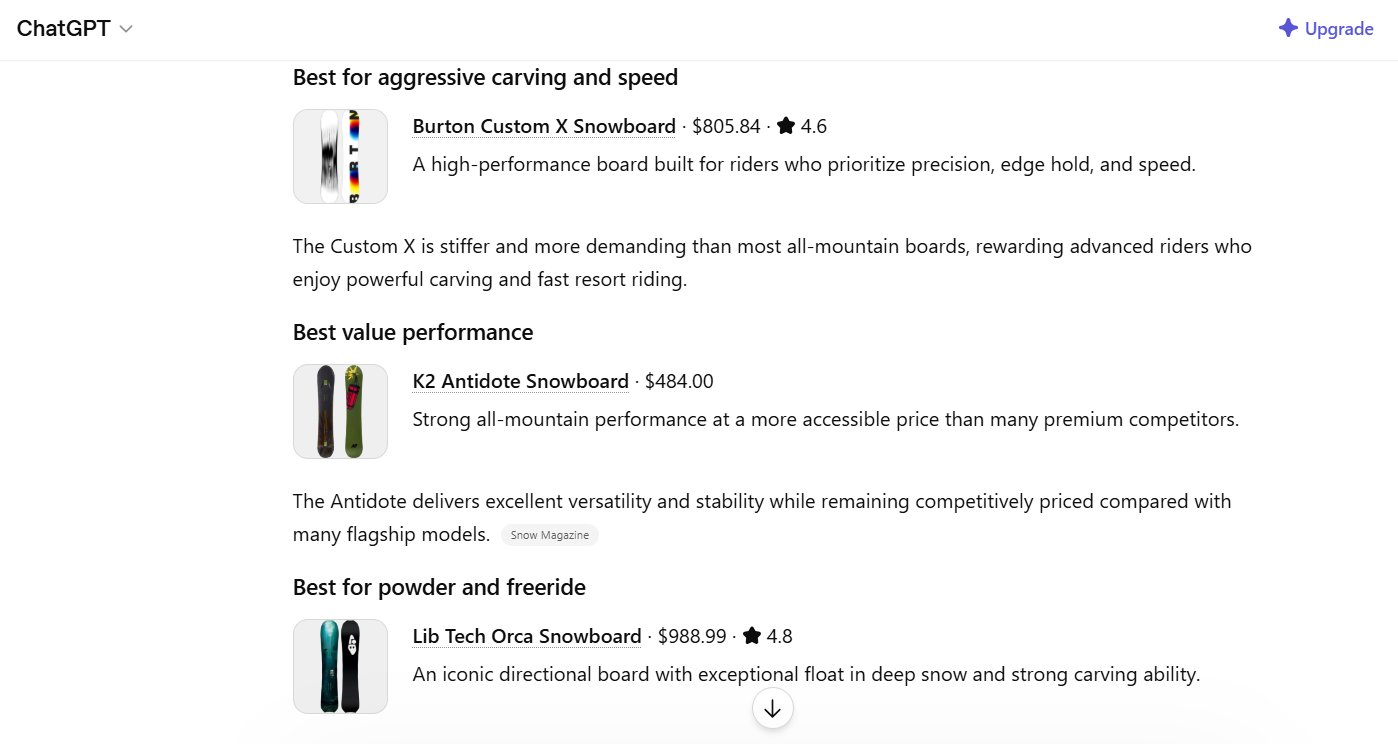
What do these products have in common?
From what I can see, they all have:
- Relevant product title
- Clear product description and benefits
- Listed in the right category
RyzeAI’s research indicates that highly detailed product content is 6.2x more likely to be mentioned in AI Overview.
AI search engines rely heavily on clean text metadata to identify what you are selling. If your product content is vague or uses stock code, an AI engine will struggle to match your product with a user query.
You can improve your visibility by refining three core areas in a catalog: product titles, product categories, and product descriptions.
Setting Up Product Structured Data
Structured data, or schema markup, is the ultimate cheat code for AEO. It is a standardized language that you add to your store’s backend code to tell search engines exactly what your content means.
Basically, schema markup explicitly flags data bits so a machine can log them instantly.
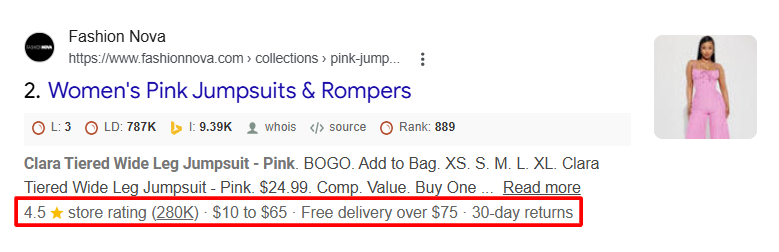
Clear semantic markup is highly critical because it directly supports accurate machine extraction for answer layers.
To make your Shopify store AI-ready, your product pages must clearly communicate these specific schema fields:
- Product Availability: Tells the AI if your item is in stock right now so it does not recommend an unavailable item.
- Price and Currency: Allows the engine to filter your product into the user’s explicit budget limits.
- SKU and MPN identifiers: Provides distinct manufacturing data that proves your item is a legitimate, verifiable product.
- Rating: Supplies a clear mathematical proof of customer satisfaction, which AI engines prioritize to protect user trust.
You do not need a computer science degree to implement this code. Shopify themes often include baseline schema, but you can maximize your coverage by using dedicated apps from the Shopify App Store.
Build Up External Brand Mentions
AI models do not just look at your website to form an opinion about your business. They scan third party sites, news outlets, and forums to confirm that your brand is trustworthy and popular.
Platforms like ChatGPT and Perplexity rely heavily on third party validation and brand authority signals before selecting an answer source.
And if you check the cited sources yourself, you can see AI engines pull reviews from community platforms like Reddit a lot.
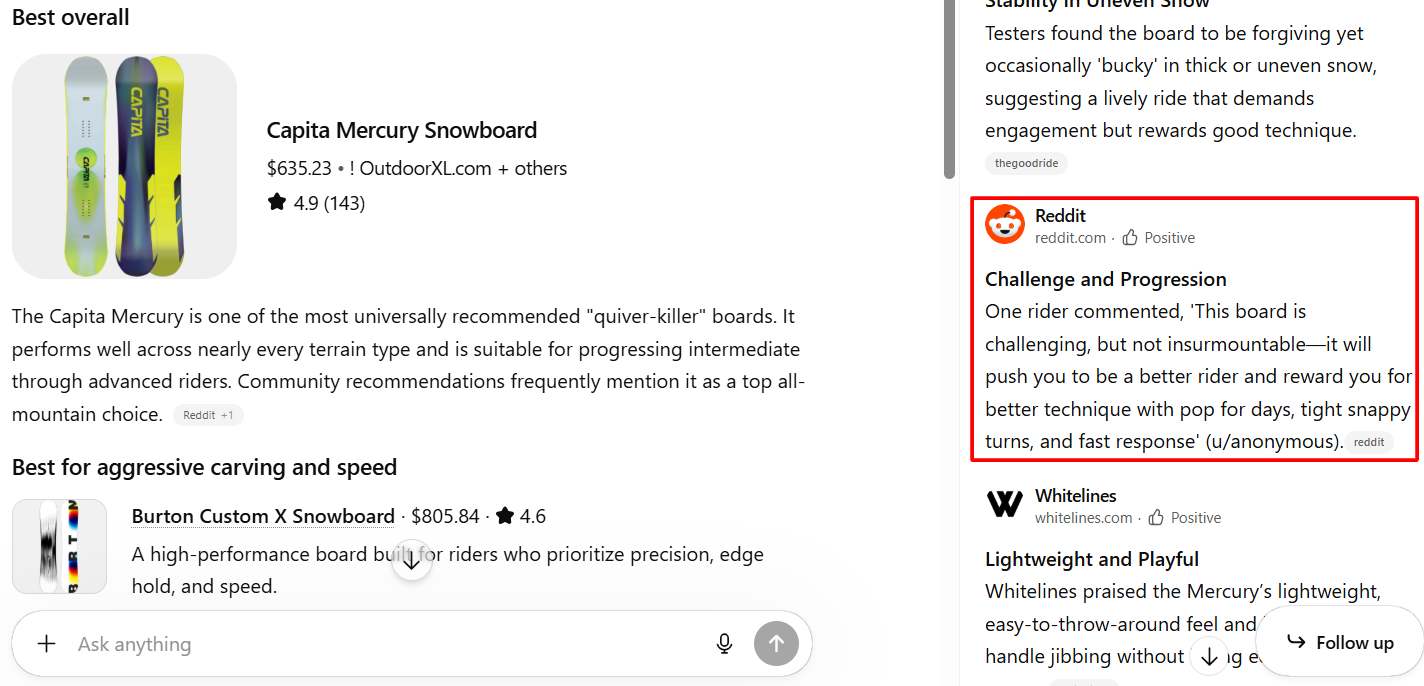
To build this external authority, focus on digital PR and community engagement.
With AI, you don’t need to be linked to increase brand authority. Just a mention is enough for AI to associate your brand to the discussion.
For long-term authority, identify platforms or industry specific forums where consumers discuss products in your niche. Offer guest posts or provide answers as an expert.
Update Content Regularly
AI engines prioritize fresh, accurate data. If an engine crawls your site and finds outdated blog posts, old pricing figures, or expired product guides, it may stop pulling information from your store to avoid serving bad answers to users.
To keep your content relevant for AI models, you must look at optimization as a recurring task rather than a one-time project. Here is how you can structure your update strategy:
- Update your inventory status: Ensure out-of-stock items are flagged in your dashboard so AI engines do not recommend unavailable products.
- Refresh your blog posts quarterly: Update old facts, revise layout formatting, and refresh timestamps so AI tools recognize your guides as current.
- Fix broken internal and external links: Run monthly link audits to remove dead links, which prevent AI crawlers from navigating your store cleanly.
- Verify pricing and discount tables: Keep your listed prices and active promotion dates accurate so AI engines do not quote wrong figures to buyers.
Improve Your Website Speed
If your Shopify store loads too slow because of uncompressed images or heavy scripts, the AI crawler will have a hard time understanding your pages.
Plus, site speed is a crucial factor in SEO and customer experience. Many users will open multiple pages and choose the one that loads faster.
That is why you need to audit your website performance once in a while on PageSpeed Insight. It will show you how your store is performing on both mobile and desktop.
Here are a few ways to optimize your Shopify store’s loading time:
- Compress product images: Large image files are the primary cause of slow ecommerce pages. Use compression tools to reduce file sizes to about 100kB only.
- Remove unused Shopify apps: Every app you install adds tracking codes and JavaScript files to your theme. Review your active applications and delete any tools you no longer use.
- Choose a fast-loading theme: Some themes are built with complex animations that may slow down performance. Prioritize a clean, speed-optimized theme from the official Shopify Theme Store.
- Minimize heavy tracking scripts: Avoid stacking multiple analytical tools or website pop-ups . They can contain heavy scripts and annoy customers too.
Key Metrics to Track AEO Results
Because AEO operates differently than classic search, checking your standard keyword rankings will not give you the full picture. You need to adjust your analytics lens to watch how conversational platforms interact with your domain.
Monitor these specific signals to judge your AEO performance:
- LLM Referral Traffic: Check your Shopify traffic analytics and tracking logs for incoming visitors whose referral sources show domains like chatgpt.com, perplexity.ai, or copilot.microsoft.com. A steady climb here proves your store is winning live citations.
- Brand Impression Volume in Search Consoles: Watch your Google Search Console performance charts. Look closely at impressions coming from long-tail, question-based queries. An increase in these impressions indicates that your content is being processed inside AI Overviews and featured answer blocks.
- AI visibility: Use tools such as Ahrefs and Semrush to check your AI visibility across all AI search engines.
By focusing on these metrics, you can see exactly where your store is being picked up by AI engines and which products need more optimization work.
👉 Related:
AI in Ecommerce FAQs: 16 Common Questions & Answers
FAQs: Shopify AEO
Answer Engine Optimization (AEO) in ecommerce is the technical and creative process of tailoring an online store’s content so AI systems can instantly find and recommend its inventory. It focuses on turning raw product pages into clear, extractable facts that serve as immediate answers for conversational shoppers.
No, AEO is an extension of SEO rather than a replacement. Traditional technical SEO ensures that search crawlers can find, read, and index your website architecture cleanly. AEO takes that indexed data and refines its phrasing and context so AI models can confidently use it to synthesize conversational answers.
Traditional SEO remains completely vital to your business health. While conversational search is growing at a rapid pace, millions of shoppers still use classic search patterns to navigate directly to known brands, compare local options, or read long-form educational content. Good SEO habits provide the architecture that makes your AEO strategies possible.
To maximize your store’s AEO performance, ensure your technical foundation uses flawless product schema markup so AI bots can read your data without friction. Combine this code structure with fast page speeds, natural product descriptions that solve specific buyer problems, and an active digital footprint across trustworthy community forums to build undeniable brand authority.