







 Shopify Development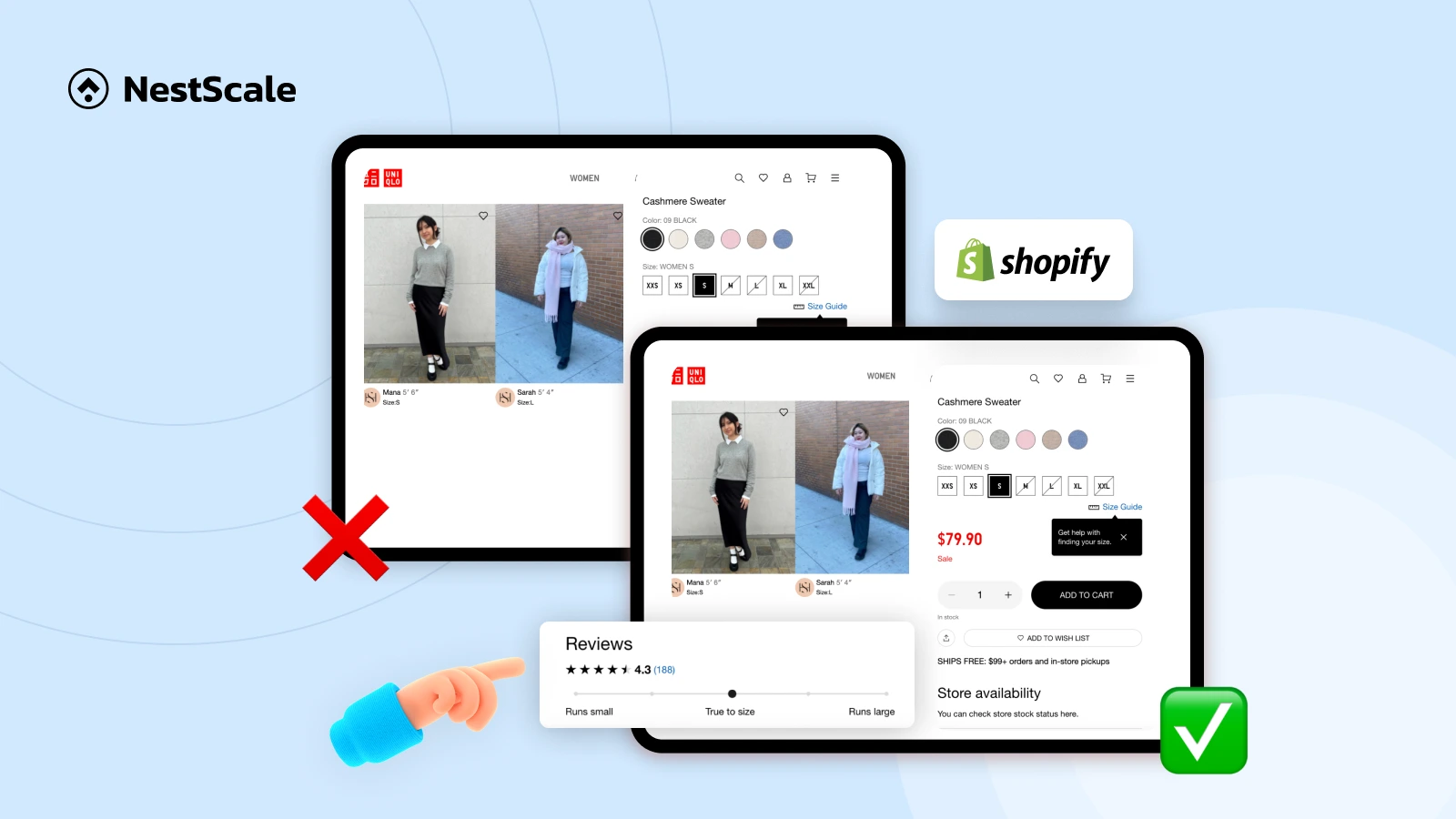
Running an online clothing store is challenging since you need to convince shoppers to buy items they can’t touch, try on, or see in person. If your analytics show visitors aren’t buying, you’re not the only one facing this issue.
It can be frustrating when your conversion rates don’t seem to improve.
The good news is that some clothing stores achieve conversion rates of 5 to 7 percent, while others struggle to reach 2 percent. Usually, it’s not about spending more on ads or having a well-known brand. The key difference is how your product page builds trust and addresses customer doubts.
If you have plenty of visitors but not enough sales, your product pages might be where shoppers hesitate to buy. Here are seven proven strategies to help turn more browsers into confident buyers.
1. Solve the sizing problem
Sizing is probably your biggest challenge, and it’s also one of your customers’ main concerns.
The numbers tell the story:
- 70% of shoppers abandon carts because they’re unsure about sizing
- Up to 50% of returns happen because something doesn’t fit
- 23% of customers won’t buy at all without clear size guidance
A simple size chart tucked away in a tab isn’t enough for most stores now.
Today’s shoppers don’t want to guess—they want clear guidance.
A size guide is most effective when it acts like a personal shopping assistant, not just a static chart. It should show customers how to measure themselves with clear visuals, even if they’ve never done it before, and then recommend a size based on their measurements.
If you want to go beyond static size charts, adding an interactive sizing tool can really help. MP Size Chart & Size Guide, for example, turns traditional size charts into helpful guides that point customers to the right size instead of making them guess.
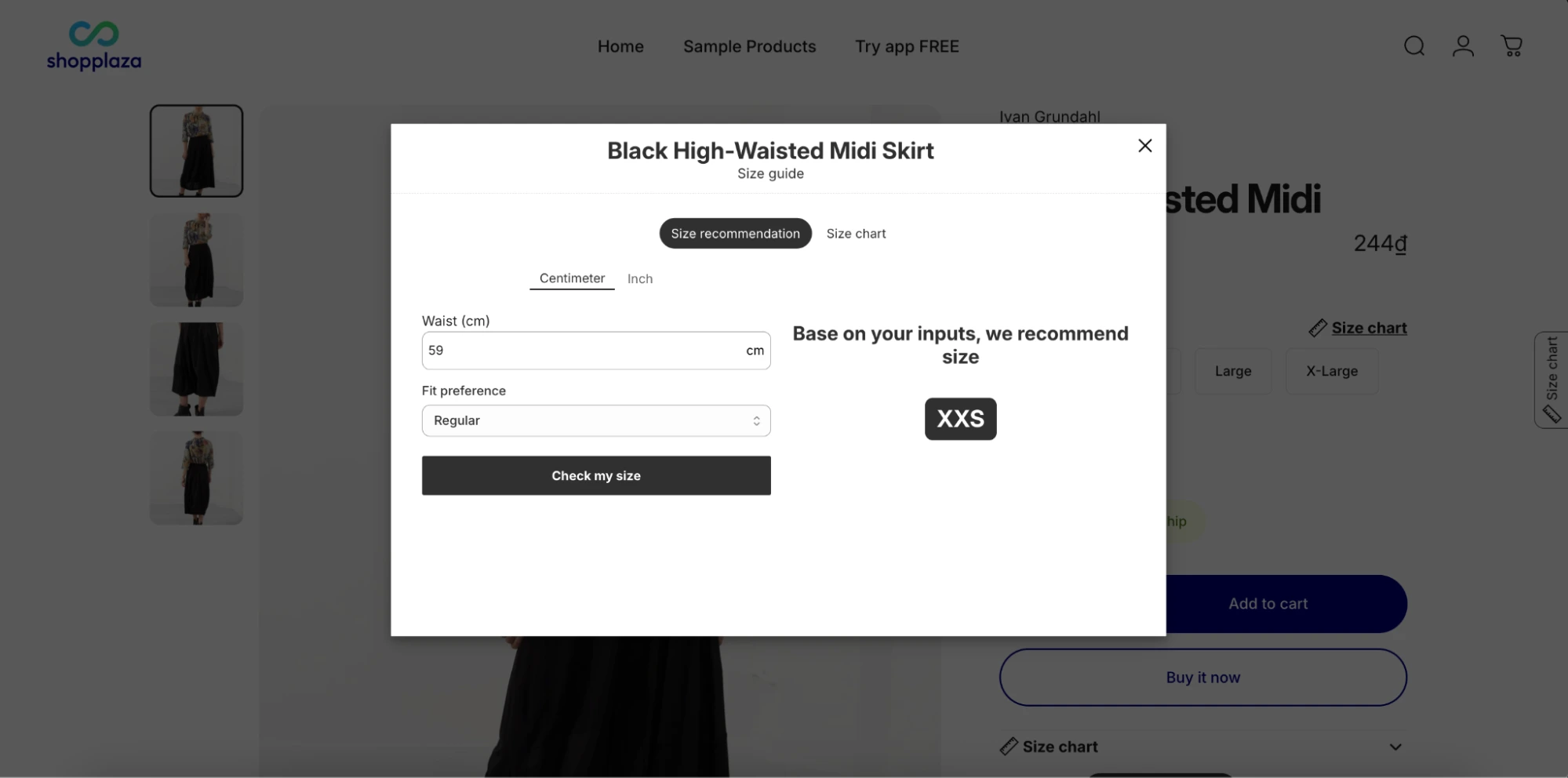
Source: Shopplaza
Here’s what a high-converting size guide usually includes:
- Visual measurement guides: Use clear diagrams to show exactly where and how to measure. Customers shouldn’t have to search online for instructions while shopping.
- Smart size recommendations: Let shoppers input their measurements and receive a specific size suggestion. This alone can dramatically reduce hesitation.
- Real customer fit feedback: Show if items run small, large, or true to size, based on what real buyers say. If 85% of customers report that something runs large, that’s important information.
- Easy-to-find placement: Position the size guide next to the size selector. If it is not easily accessible, customers are unlikely to use it.
- Mobile-friendly design: Most shoppers choose sizes on their phones. If your size chart needs zooming or sideways scrolling, it isn’t working well.
Across many apparel stores, merchants typically see:
- 25–35% fewer size-related returns
- 18–22% higher conversion rates
- Significantly fewer “What size should I order?” support tickets
For most stores, reducing return costs is a good reason to invest in better sizing tools.
If customers still have to guess their size on your product page, they’ll hesitate. Clear, visual, and interactive size guides help shoppers buy with confidence and lower return rates.
2. Let customers see colors instantly
Besides sizing, confusion about color is another common reason for returns.
Many of us have experienced this: a product called “dusty rose” arrives and looks nothing like what the customer expected. Even if the fabric is great, disappointment often leads to a return.
The issue is that every screen displays colors differently, and color names can be confusing. If your product photos aren’t clear and consistent, customers are left guessing.
In practice, what works better:
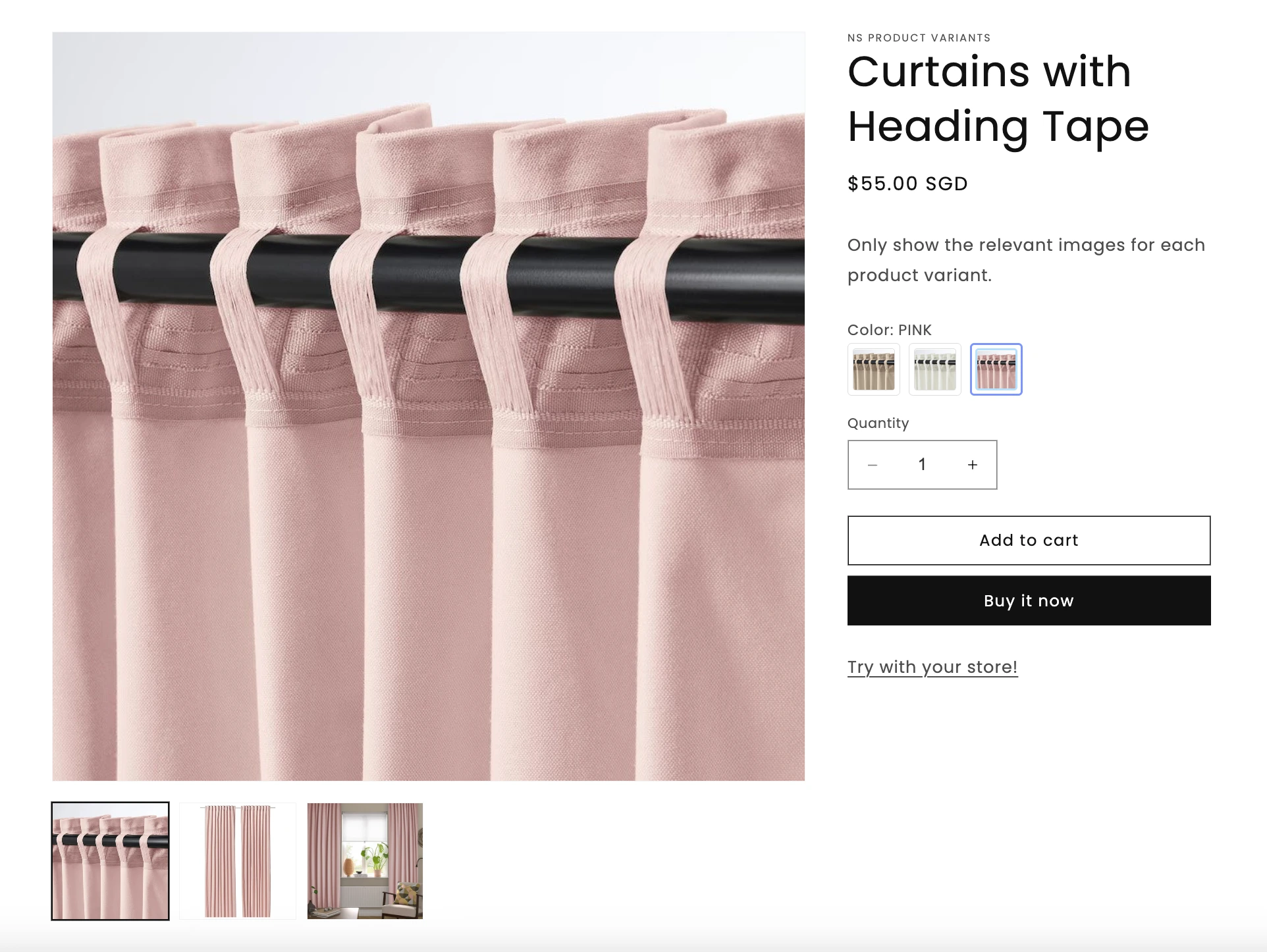
- Replace dropdown menus with visual swatches: Customers are much more likely to use visual color options than text lists. Visual swatches are easier to use, especially on mobile. NS Color Swatch Variant Images is a popular tool for this, letting shoppers see all colors right away without extra clicks.
- Show real photos for each color: When someone selects “Navy,” they should immediately see the product in navy—not just a small square.
- Combine names with visuals: Some shoppers search by color name, others browse visually. Supporting both reduces friction.
- Display stock status clearly: Showing which colors are low in stock or sold out helps set expectations and can even create urgency.
- Invest in accurate photography: Consistent lighting and color correction are non-negotiable for apparel.
Using visual color swatches and real photos instead of text dropdowns makes product pages easier to use and helps reduce color-related returns, especially for mobile shoppers.
3. Use customer reviews the right way
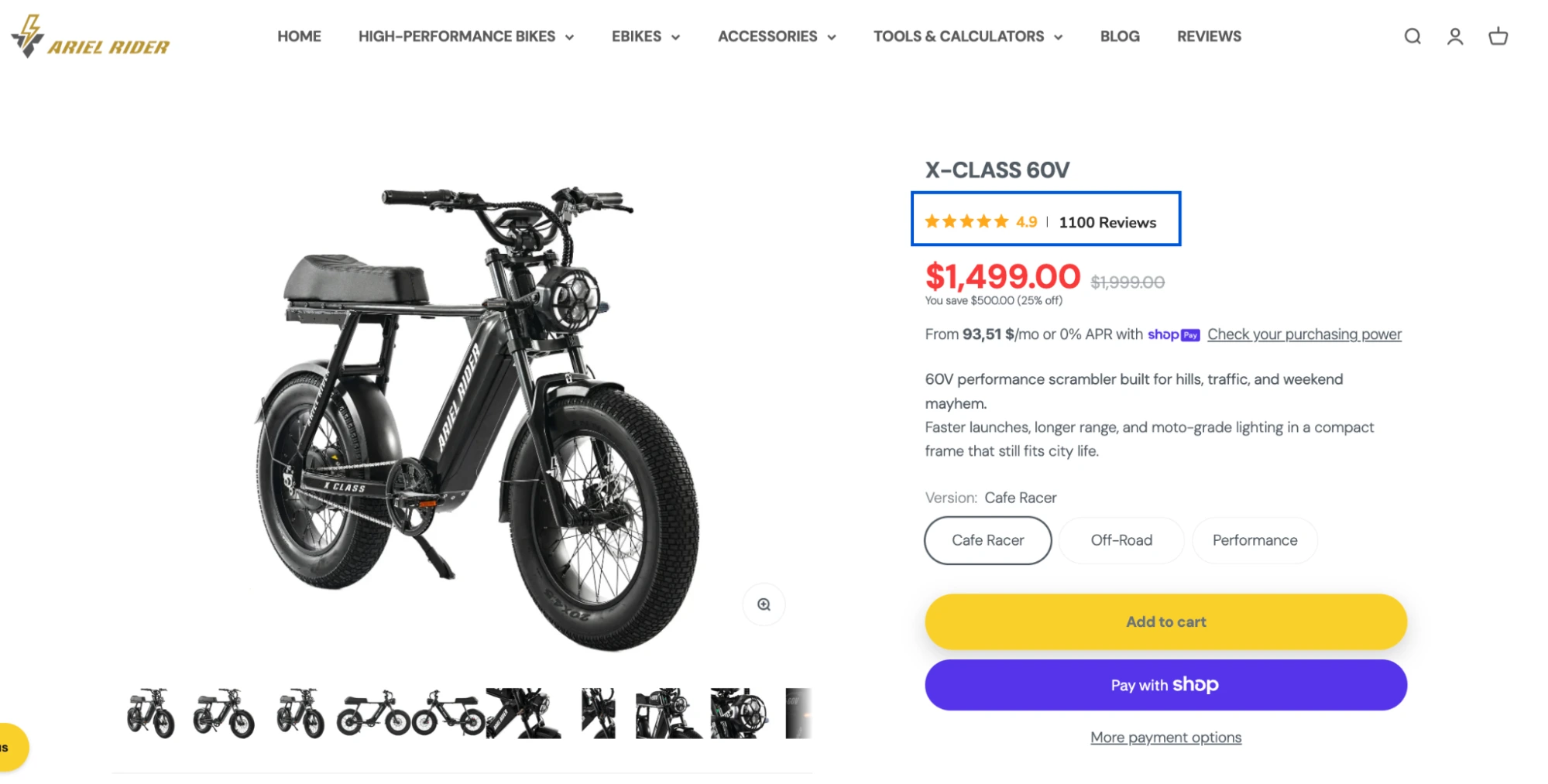
Your customers trust other shoppers more than they trust your product descriptions. Social proof isn’t just helpful anymore—it’s expected.
Why it matters:
- 93% of shoppers read reviews before buying
- Products with reviews get 270% more conversions
- Photo reviews increase purchase likelihood by 85%
To make reviews work harder for your product pages:
- Make ratings visible everywhere: Show star ratings on collection pages, search results, and at the top of product pages—not just at the bottom.
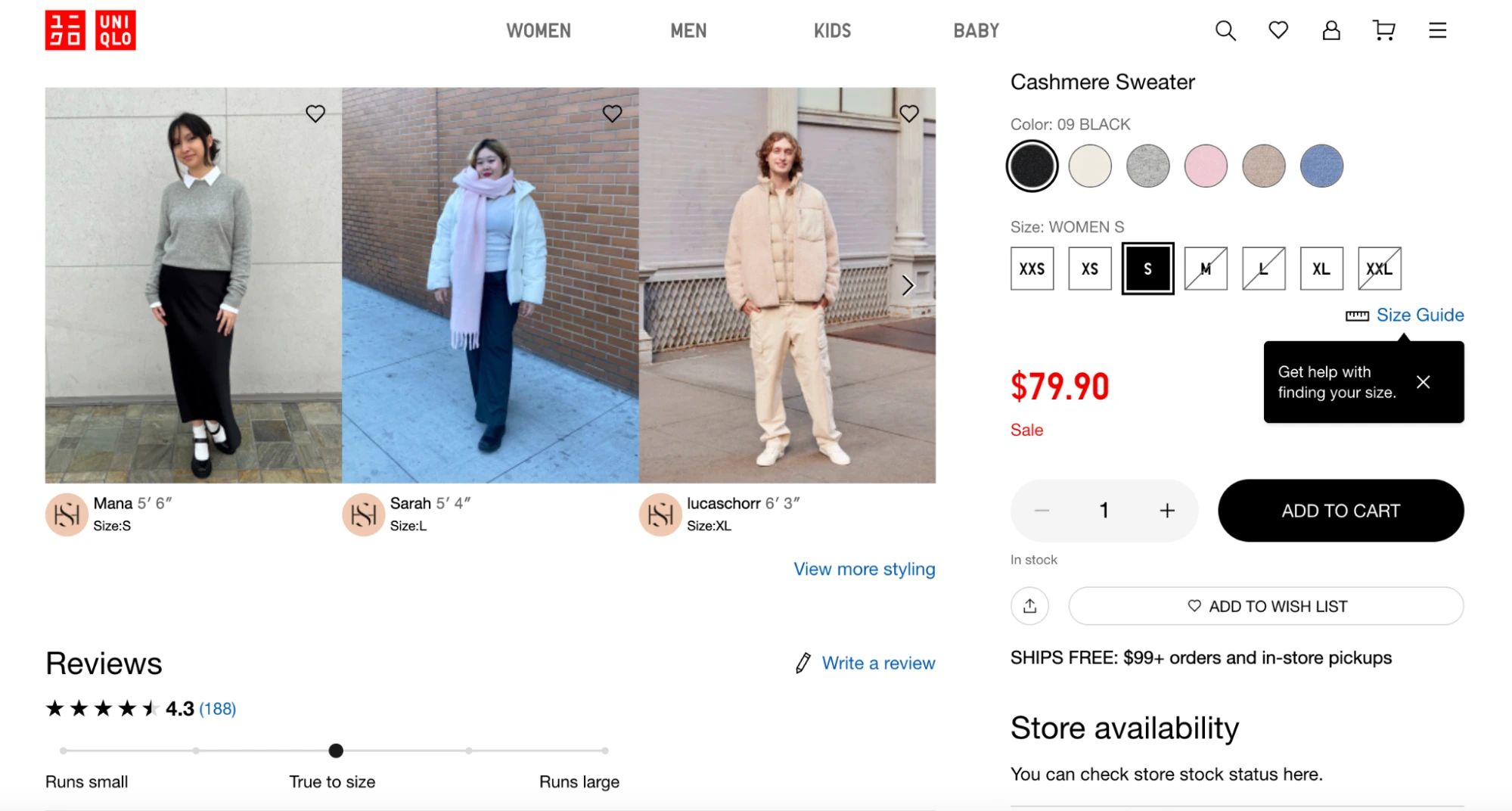
- Highlight customer photos: Real people wearing your clothes give context that studio photos can’t provide.
- Encourage detailed feedback: Fit, quality, comfort, and accuracy compared to photos are far more useful than generic “Love it!” reviews.
- Aim for more reviews: Products with at least 10 to 20 reviews convert much better. Sending post-purchase emails with small incentives can help you get more feedback.
- Respond to negative reviews: Thoughtful responses show accountability and build trust with future shoppers.
Source: Ariel Rider
4. Write product descriptions that actually answer questions
Your product description plays the role of a sales associate. If you leave questions unanswered, shoppers are more likely to leave.
Descriptions that convert tend to:
- Lead with benefits, not just fabric details: For example, “Stretchy, wrinkle-resistant fabric that moves with you” is more appealing than a list of materials.
- Answer common questions upfront:
- How does it feel?
- How does it fit?
- Where can I wear it?
- How do I care for it?
- Is it see-through?
- Include styling ideas: Demonstrating how an item can be worn in various scenarios increases its perceived value.
- Keep it easy to scan: Use short paragraphs, bullet points, and highlight key details.
- Be honest: Being clear about care instructions or product quirks builds trust and helps reduce returns.
Pro tip: To save time writing your descriptions one by one, you can try AI-generated product descriptions in bulk that can be customized by prompting.
5. Show your clothes in real life
Studio photos show details, but lifestyle photos help sell clothes. Customers aren’t just buying fabric; they’re buying confidence, style, and a lifestyle.
Effective image galleries usually include:
- Multiple angles and close-ups: Provide front, back, and side views, along with detailed shots of fabric texture, stitching, buttons, and zippers. These images help customers evaluate details they cannot see in person.
- Real-life context shots: Show products in places where customers might wear them, like offices, coffee shops, or weekend outings. This helps shoppers picture themselves in your clothes.
- Different body types and sizes: Showing a range of people helps with conversions. When customers see people who look like them in your clothes, they feel more confident about buying.
- Styling variations: Show the same item styled in three different ways to highlight its versatility. For example, a blazer can be worn casually with jeans, professionally with trousers, or dressed up for an evening out.
- Short videos showing movement or drape: Even a 10 to 15 second video of fabric moving as someone walks gives shoppers information that photos can’t provide.
- Authentic customer photos: Real customers wearing your products add credibility that studio photos can’t match. Many brands use user-generated photos from Instagram or TikTok and show them right on product pages. MP Instagram Feed makes it easy to display these authentic images alongside your product photos.
Source: Uniqlo
6. Make mobile shopping smooth (because that’s where your customers are)
More than 70% of your traffic likely comes from phones. If your product pages don’t work well on mobile, you’re missing out on sales.
A few things are especially important on mobile:
- Speed is crucial: If your pages take more than three seconds to load, you could lose over half your potential customers. Compress images, check your site speed often, and aim for under three seconds.
- Thumb-friendly design: Place key elements such as the size selector, color options, and add-to-cart button within easy reach for mobile users.
- Readable size information: Your size chart should work perfectly on phones, with no need to zoom or scroll sideways.
- Simplified content: Use accordions to hide less important information, but keep essentials like size, color, price, and add to cart easy to find.
- Tappable buttons: Ensure buttons are at least 44 by 44 pixels and properly spaced to prevent accidental taps.
7. Remove every little thing that makes buying harder
Every small obstacle between a customer liking a product and completing an order can cost you money. Your job is to find and remove each one.
Common friction points include:
- Surprise shipping costs: Unexpected fees at checkout cause 55% of shoppers to abandon their carts. Show shipping costs or free shipping offers clearly on your product pages.
- Unclear returns: Make your return policy easy to find. Displaying “Free 30-day returns” clearly helps remove purchase risk.
- Stock questions: Let customers know when items are running low, such as “Only 2 left in Medium,” to create urgency. Offer an “Email me when back in stock” option for sold-out products.
- Limited payment options: The more payment methods you offer, like credit cards, PayPal, or buy-now-pay-later, the fewer carts will be abandoned.
- Unanswered questions: Comprehensive FAQ sections or live chat support address customer concerns before they become obstacles to purchase.
- Confusing navigation: Every extra click or unclear button increases the chance that people will leave. Make your site as simple as possible.
- Trust signals: Show security badges, clear contact information, and guarantees in a prominent place.
- Technical problems: Regularly check for and promptly resolve issues such as broken images, slow loading times, or bugs.
Conclusion
High-converting clothing product pages don’t depend on just one tactic. They succeed because every element helps shoppers make confident decisions.
Sizing clarity, visual selection, social proof, transparency, and mobile usability all come together to create a great experience. Stores that treat product pages as a complete system, rather than a set of separate features, consistently convert better, reduce returns, and build long-term trust.