







Shoppable content allows people to buy products directly from photos, videos, and articles without leaving the page. When you remove extra steps between discovering a product and checking out, customers are far more likely to complete their purchase.
In this guide, you will learn what shoppable content is, why it works for online stores, and how five distinct formats operate. You will also see real viral examples from well-known brands and practical tips you can apply to your own social media and website.
Understand shoppable content (& key statistics)
Shoppable content is any photo, video, or written article that includes direct purchase tags. When a viewer taps on a featured item, a small pop-up window opens showing the product name, price, and a buy button.
The customer can complete their order right there on the screen without leaving the app or website, thus greatly increasing conversion rate on social platforms.

Industry data highlights how quickly social shopping has grown:
- Massive market size: Global social commerce sales reached about $2 trillion in 2025, and will continue to grow more this year.
- High customer adoption: Over 59% of social media users worldwide have bought a product directly through a social media app (eMarketer).
- Shift in product search: More than 80% of shoppers use platforms like TikTok, Instagram, or YouTube to discover and research new products.
- Higher conversion rates: Interactive shopping videos and live streams generate conversion rates up to 10 times higher than standard web pages.
- Appeal to Gen Z: Over half of Gen Z consumers now use social media search over traditional search engines when looking for products.
Five main types of shoppable content (& examples)
Different types of content serve different purposes. Here are the five main formats you can build, along with viral campaigns that show how effective they can be.
Shoppable short videos
Short-form videos on platforms like TikTok and Instagram Reels allow you to attach clickable tags directly to moving video clips. A shoppable video is when a small shopping tag appears at the bottom of the screen so viewers can tap and buy without pausing the clip.
Vietnamese fashion brand Yody used this format effectively on TikTok Shop to scale their online sales. They published short, relatable videos showing everyday outfits, fabric quality tests, and quick styling tips, while tagging each clothing item directly inside the clip with TikTok Shop product links. Viewers watching a 15-second video on how a polo shirt or jacket fits in real life could tap the yellow basket icon on screen and complete their purchase in seconds.

The campaign succeeded because the videos felt casual and helpful, and the buy tags made taking action effortless.
Shoppable images
Shoppable lookbooks use lifestyle photography containing multiple tagged products. Interactive pins or dots overlay various items in a photo. Tapping a couch in a living room photo displays its price, size options, and an add-to-cart button.
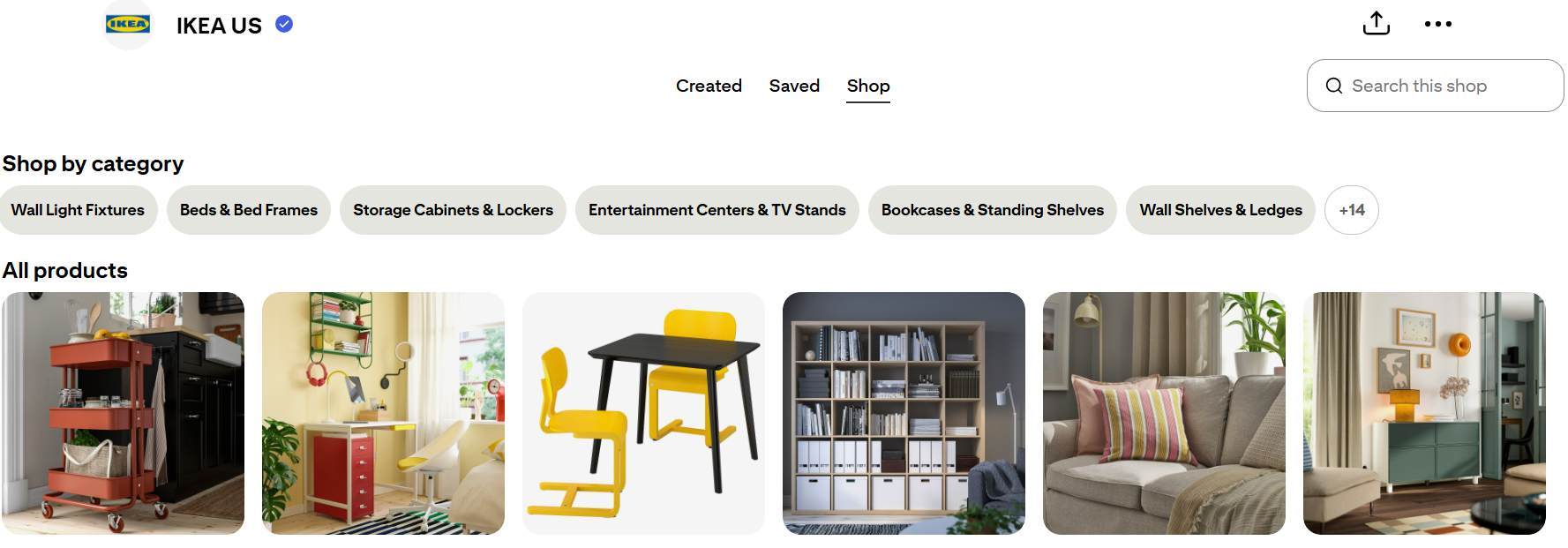
IKEA uses interactive image galleries on Pinterest boards. Instead of showing individual products against plain white backgrounds, IKEA displays fully decorated rooms. A shopper viewing a bedroom layout can tap on the link directed to the product page.
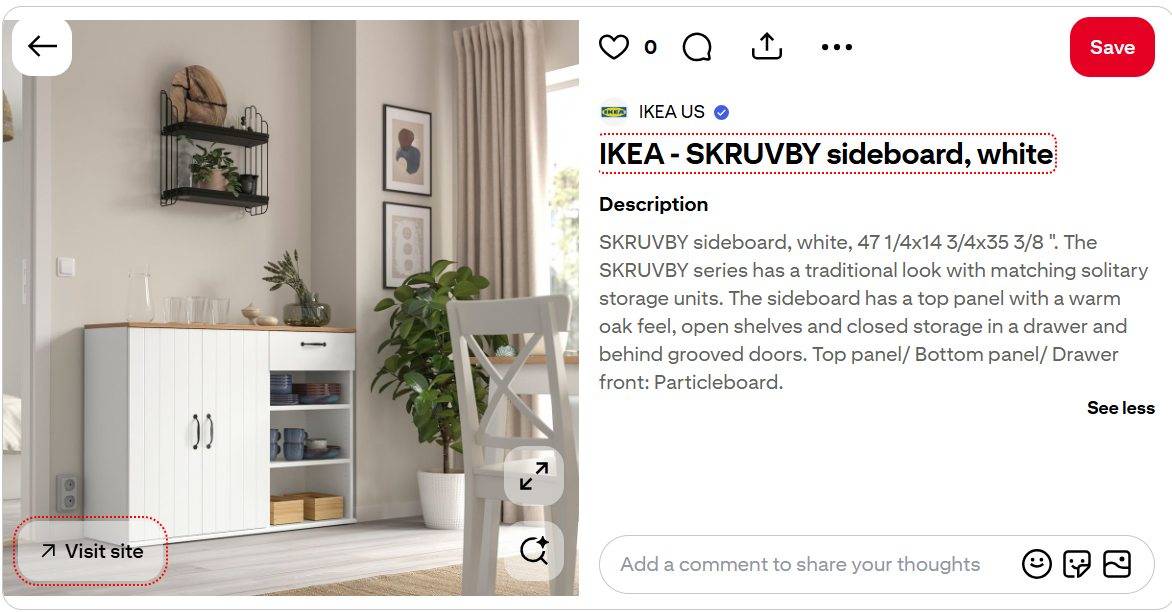
Pinterest also has a built-in shopping feed that allows IKEA to display their product galleries:
Shoppable blog articles
Written articles remain a reliable way to attract visitors from search engines, but plain text links can be easy to skip. Shoppable blog posts integrate clean product cards into the body of an article. Readers scrolling through a gift guide or tutorial can view live prices and buy recommended items directly from the text.
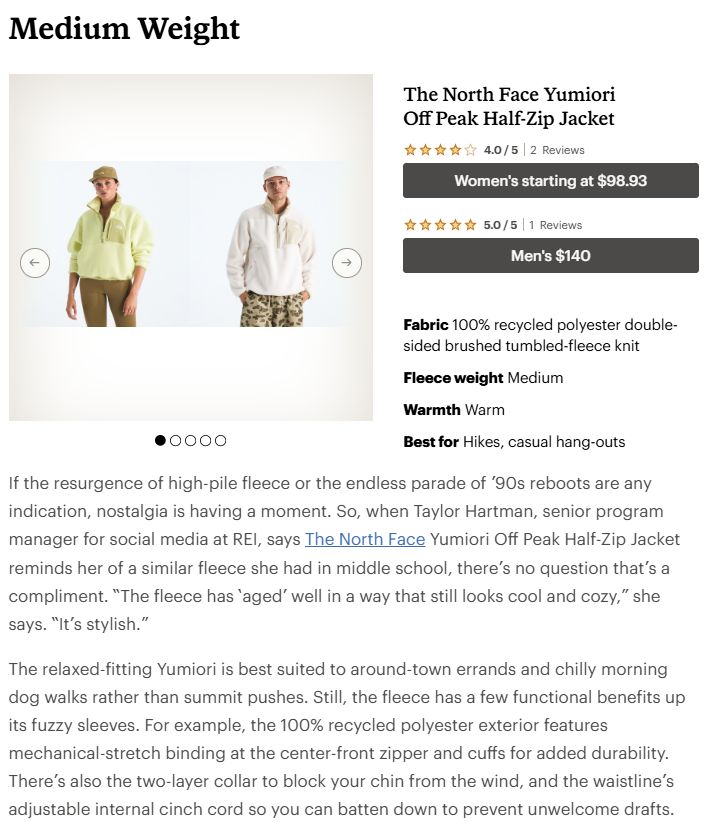
Outdoor retailer REI uses this format effectively across its website’s “Expert Advice” blog. When REI publishes an educational guide on topics like “How to Choose a Backpacking Tent” or “Spring Hiking Layering,” the article embeds clean product cards alongside expert tips. Readers can see the recommended tent or jacket, check the price, select a color or size, and add the item directly to their shopping cart right inside the article.
Shoppable user-generated content (UGC)
User generated content consists of photos, videos, and reviews posted by your actual customers. When you collect customer posts and add shopping tags to them on your homepage or product pages, you turn social proof into a direct sales channel.
Gymshark uses customer photos on their website by featuring everyday athletes wearing their activewear. Website visitors can click on any customer photo in the gallery to view the exact product name, size details, and purchase link.
Interactive livestreams
Live stream shopping works like a live product broadcast where the host demonstrates items, answers questions from viewers in real time, and offers limited-time discounts. Pinned product cards pop up on the screen during the broadcast so viewers can purchase items while watching.
Skincare brand Kiehl’s Vietnam used this strategy on TikTok LIVE by streaming over 40 live sessions in 30 days. Hosts answered viewer chat questions out loud, demonstrated skin routines live, and pinned product cards as items were discussed.

How shoppable content transforms the customer journey
Shoppable content changes how people move from finding a product to making a purchase. In traditional ecommerce, shoppers go through multiple steps on different platforms. Each transition creates friction, giving people time to close the tab or forget what they were looking at.
By embedding product tags into your media, you unite discovery, consideration, and checkout into one single step.
Here is a quick comparison between shoppable content journey and traditional ecommerce journey:
| Journey stage | Traditional ecommerce journey | Shoppable content journey |
| 1. Awareness | Sees a static ad or regular post | Sees an engaging video or photo with a clear, interactive product tag visible on screen |
| 2. Consideration | Go to the website via link in bio, or search on Google | Taps the tag on screen to open an instant overlay with pricing, photos, and item details |
| 3. Evaluation | Navigates website menus, compares items across browser tabs, and checks available sizes | Check reviews, UGC, brand activities directly on social platforms |
| 4. Purchase | Fills out shipping and payment forms on an external website checkout page. | Completes the order in one or two taps using saved in-app payment tools |
| 5. Post-purchase | Receives a standard email receipt and order tracking instructions | Remains in the app to follow your brand, share the purchase, or post their own review. |
Relevant reading: How to Map the Customer Journey on Social Media
Common mistakes to avoid when creating content
To get the best results from your shoppable posts, you want to avoid common setup errors that confuse buyers or disrupt the shopping experience. Here is a closer look at the key mistakes to avoid and how to fix them:
- Adding product tags in irrelevant videos: Adding tags in random funny videos are not effective, and can make your viewers feel annoyed. You should only include product tags in showcase videos.
- Using low-quality visuals: Interactive tags work best when your product looks clear and appealing. Poor lighting and blurry video make products look cheap, which discourages clicks. Bright, natural lighting and sharp focus build buyer trust instantly.
- Forgetting a clear call to action: Viewers do not always realize a video or photo is interactive. Add a brief caption or on-screen cue, such as “Tap the screen to shop this outfit,” so your audience knows they can buy directly.
- Ignoring performance analytics: Check your platform analytics regularly to see which video styles, thumbnail choices, and product categories drive the highest sales, then focus your effort on what works best.
FAQs about Shoppable content
Major social media networks like Instagram, TikTok, Pinterest, YouTube, and Facebook offer native shopping tags.
Yes. You do not need expensive equipment to create effective shoppable posts. Authentic, simple videos showing a product in use often perform better on TikTok and Instagram Reels than polished commercials.
Not really, most social commerce tags run natively inside apps like Instagram or TikTok. You should choose a lightweight integration tool and curate your shoppable content instead of including everything.