







If your posts are not getting the views or comments they used to, it usually comes down to how the platform ranks content today.
To get good results on Facebook in 2026, it helps to understand what the platform wants and what people actually stop to read or watch. In this guide, we will look at what type of content performs best on Facebook and best practices to maximize reach and engagement.
How the Facebook algorithm and user behavior work in 2026
To see what works today, it helps to look at how Facebook has changed over the last few years.
Back around 2020 and 2021, Facebook mostly showed you posts from accounts you chose to follow. If someone liked your business page, your posts showed up directly in their feed.
Today, Facebook works more like a recommendation feed. A large portion of what you see on your feed comes from accounts you do not follow.
An algorithm looks at what you watch and like, then recommends similar posts from across the entire platform. While most adults still use Facebook, people spend more time watching short-form videos and sending private messages than posting public status updates.
Because of these changes, your content usually falls into one of three main jobs:
- Content for reach: Short vertical videos (Reels) that Facebook shows to people who do not follow you yet.
- Content for engagement: Status updates and photos that encourage people to leave comments or save the post.
- Content for trust: Real customer reviews, short video tours, and simple updates that show how your product or service works.
Using a mix of these three post types helps you reach new people while keeping your current followers interested.
5 top performing types of content on Facebook
Different post formats do different jobs on Facebook. A short video might get thousands of views from new audiences, while a plain text post might get far more (meaningful) comments from your existing followers.
Here is a quick overview of how the main post types compare on Facebook right now.
| Content Format | Use Case | Key Metrics |
| Reels | Attracting new audiences through feed recommendations | 3-second retention and total watch time |
| Multi-image posts | Tutorials, useful guides, product showcase | Dwell time and shares |
| Text status updates | Starting conversations | Comments and shares |
| Live streaming | Hosting Q&A sessions, product walk-throughs, and announcements | Real-time views and comments |
| UGC (User-generated content) | Showing real social proof and build a community | Likes, comments, and shares |
Which content format to use depends on your goals and how you want to promote your Facebook page. Let’s see how each format helps bring you reach and engagement:
Short-form video (Reels)
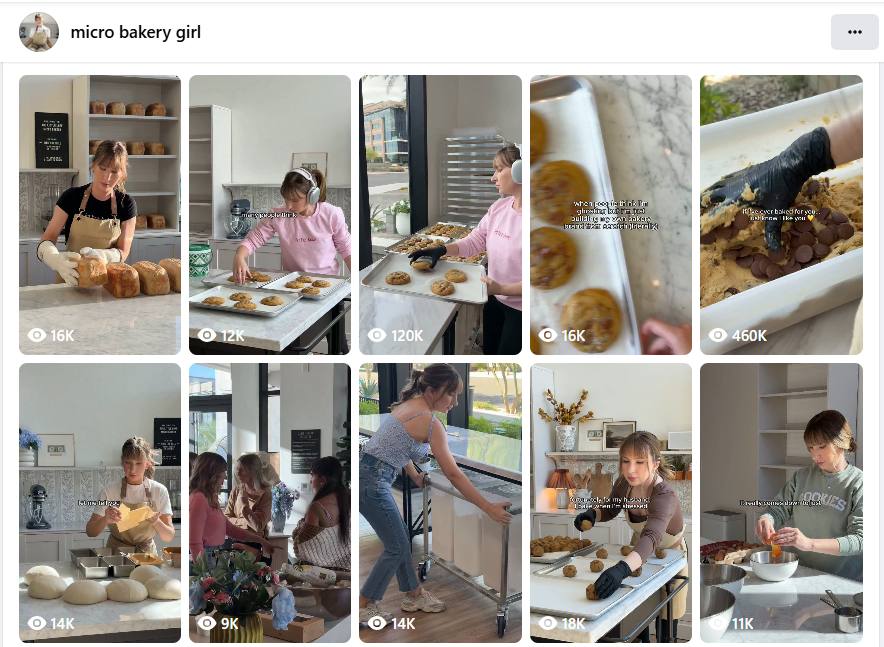
Short vertical video is currently the fastest way to reach people who have never heard of your page. Facebook highlights Reels in the main feed because they keep people on the app longer.
Longer videos are allowed, but shorter clips are easier for people to finish. When a clip keeps viewers watching past that midpoint, the algorithm recommends it to a wider audience.
With a good content strategy for Reels, you can quickly get the the initial phase of building a follower base and gaining traction. You can also repost these videos across platforms such as TikTok and Instagram Reels.
Multi-image posts
While Reels help you reach new viewers, static images are great for keeping people on your posts longer. A multi-image post simply lets people swipe sideways through a series of pictures or slides.
Images perform well because of a metric called dwell time. When someone pauses on your post to swipe through four or five pictures, they spend more time on your page than if they just looked at a single photo. Facebook notices that extra time and shows the post to more people.
You can use carousels to share step-by-step guides, show recent project photos, or highlight different features of a product. Make sure your first image gives people a clear reason to swipe to the next photo.
Text status updates
Plain text updates get surprisingly good reach on Facebook. Social media benchmark reports show that short text updates often earn higher comment rates than single photos.

When a feed is full of bright ads and graphics, a simple text post stands out. It looks like a regular update from a friend, easy to read or scan, which stops people from scrolling.
You can use text posts to share a joke, ask simple questions, or talk about a recent experience. Try to avoid putting website links directly in the body of your text post, as posts with outgoing links often get lower reach.
Funny text posts can get you more comments on Facebook when they are unpolished, relatable and prompt people to hashtag their friends.
Live streaming
Going live is one of the direct ways to interact with your audience. When you start a live video, Facebook often sends a short notification to some of your followers so they can jump in and watch.
Live streams work well because they generate quick comment activity. As viewers type questions and react to what you say, the post gets a burst of engagement. The algorithm sees that sudden activity and pushes the stream higher in people’s feeds while you are still live.
Good topics for live streams include quick Q&A sessions, product walk-throughs, or a look behind the scenes at your work. Try to stay live for at least 30 minutes so viewers have enough time to see the notification and join in.
User-generated content (UGC)
What your customers say about your business always carries more weight than what you say about yourself. Sharing real customer experiences is one of the best ways to build trust and encourage sales on Facebook.

When potential buyers see real people using your product or service, it answers their doubts. You can share customer reviews as short video clips, screenshots of nice emails (with permission), or photos sent in by clients.
To get the best response, write a short caption with the review that explains what problem you solved for that client. Real feedback gives new visitors the confidence to reach out or buy.
Why Reels is now the way to go viral on Facebook
If your main goal on Facebook is gaining new followers and customers, Reel is your best option. The recommendation system gives video clips far more discovery space than static images or standard link posts.
How the algorithm pushes Reels to non-followers
Going viral on Facebook comes down to watch time and retention. When the system picks a Reel to distribute widely, it looks at three primary signals:
- 3-second hook retention: How many people stop scrolling to watch the beginning.
- Video completion: How many viewers stay past the middle of the clip.
- Average watch time: The average watch duration of your videos
You can hit these signals without expensive camera gear or cinematic editing. Simple clips shot on a smartphone that solve a quick problem or show an interesting moment often outperform polished corporate ads.
Relevant reading: 12 TikTok Metrics to Track for Organic Growth in 2026
Matching Reels to your business goals
While viral reach brings a quick surge of views, the real win comes from turning casual viewers into actual followers or customers.
- For broad viral reach: Share short 10 to 15 second clips with quick visual movement or an interesting quick fact.
- For qualified leads: Create 20 to 30 second tutorial Reels that answer a specific customer question, then invite viewers to check your page for more details.
- For steady growth: Share two or three simple Reels a week to keep new discovery traffic flowing to your page alongside your standard text updates and carousels.
Best practices for posting on Facebook
Creating good Facebook content is not just about choosing between a video or a photo. Simple choices in how you write your captions and space your text also make a big difference.
Opening hooks to stop feed scrolling
The first line of your caption is the most important part of your post. If that first sentence does not catch someone’s attention in a couple of seconds, they will keep scrolling past.
Instead of starting with a generic intro like “Welcome to our weekly update post,” lead with an interesting statement or a clear question.
Here is a quick comparison:
- Basic opening: “Here are a few tips on how to care for your wooden furniture.”
- Better opening: “Water marks on solid wood tables usually happen because of one small cleaning mistake.”
The second option gives the reader a reason to tap “See More” and read the rest of your post.
Caption layout for mobile reading
Most people browse Facebook on a smartphone. If your caption looks like a huge block of text, people will skip over it.
Break your writing into short blocks of one to three sentences. If you are listing items or ideas, short bullet points make the information easier to scan. You can also use hashtags to categorize your Facebook Reels and let the algorithm know who to show your videos to.
Earning comments without spam triggers
Getting comments tells the algorithm that your post is interesting, but you have to be careful with how you ask for those replies.
Facebook has explicit automated rules against Engagement Bait. Posts that directly demand simple interactions (like “Comment YES below!” or “Tag a friend who needs this!”) can get penalized with reduced reach.
Instead of asking for forced replies, ask open questions that invite real opinions or jump on trending topics.
Frequently Asked Questions
You cannot trick the algorithm, but you can work with it by publishing content that holds viewer attention and drives natural conversation. Focus on short vertical Reels for discovery, alongside simple text and carousel posts that invite genuine comments. When your posts keep users on the app longer, Facebook automatically rewards you with higher feed distribution.
The general sweet spot is early to mid-morning (8 AM to 11 AM) or early afternoon (1 PM to 3 PM) when users check their feeds during breaks. However, checking your Facebook Professional Dashboard will give you the exact times your specific followers are active online.
Your reach might be down because Facebook now fills feeds with AI-recommended short videos instead of standard follower updates. Posts containing outbound website links, low-resolution graphics, or weak opening lines also get suppressed by the system. Switching to short Reels, placing website links in the comments, and writing stronger hooks will help bring your views back up.
Boosting is worth it if you put money behind an organic post that is already getting strong views and comments on its own. It is rarely worth boosting a low-performing post, because paid budget cannot force people to interact with unengaging content. Using Meta Ads Manager to scale your organic winning posts gives you the highest return on ad spend.
👉 Related:
Facebook Reels vs TikTok: Which Platform Brings More Engagement
15 Viral Hooks for TikTok and Reels to Boost Engagement
Choose Social Media Content Pillars That You Won’t Regret Later
7 Types of Content for Social Media to Build a Strong Community