







 Marketing Attribution
If you are spending heavily on paid social channels, optimizing your ad budget and performance is critical to keeping your store profitable.
Aimerce is a good option, but it often struggles to show deeper customer insights and a more holistic view of the buyer journey. To better evaluate ads performance and ROI, you have a number of other options that vary in key features and pricing.
Let’s break down the best Aimerce alternatives available to help you find the right tracking tool.
💡 Key Takeaways
-
Here are our most recommended Aimerce alternatives for merchants running paid social ads and email campaigns:
- NestAds: Best for multi-touch attribution and accurate server-side pixel tracking.
- LittleData: Best for a hands-off, no-code server connection that aligns directly with GA4.
- Attribuly: Best for basic ad tracking and focusing on email campaign converts.

Why Shopify Merchants Are Searching for Aimerce Alternatives
Aimerce built its reputation by offering reliable server-side tracking for Shopify and helping stores recover conversions that web browsers blocked. But despite its strengths, many independent brands and digital marketing agencies are actively seeking out Aimerce alternatives.
The first major driver is the baseline cost. With starting plans sitting at minimum $299 every month, small-to-medium brands often find it difficult to justify the upfront fee before they scale their ad spend.
The second reason is limited feature. Aimerce provides data tracking for Meta, Google, and Klaviyo, but no deeper insights on customer behavior and ad creative performance. There are many other apps that offer both conversion tracking and customer analysis features that are NOT locked behind premium plans.
In-Depth Review of 7 Best Aimerce Alternatives
To save you time, this comparison table highlights how the top tracking choices match up against each other:
| Tool Name | Starting Price | Key Features | Best Match For |
|---|---|---|---|
| NestAds | Free plan available; paid plan is $129.99/month (flat rate) | Multi-Touch Attribution & Customer Journey Mapping | Growing SMBs Focus on Paid Social Ads |
| ThoughtMetric | From $99/month (scale with page views) | Multi-Touch Attribution | Mid-Market Multi-Channel Brands |
| Elevar | From $225/month (scale with monthly order volume) | Server-Side GTM Data Piping | Teams with Dedicated Developers |
| Littledata | From $199/month (scale with orders) | Direct Shopify-to-GA4 Accuracy | Hands-off GA4 and Meta Merchants |
| Stape | Free to install | GTM Cloud Infrastructure | Agencies and Technical Teams |
| Attribuly | Free plan available; paid plan starts from $450/month | Klaviyo Recovery and Audience Sync | Brands Heavily Scaling Email Flows |
| Triple Whale | Free plan available; paid plan starts from $219/month | Total Profitability Ecosystem | Mid-to-large Ecommerce Brands |
Now, let us unpack each individual solution. I will explore what each tool does, who it serves, and how it differs from the competition to help you pinpoint the best fit for your store.
1. NestAds
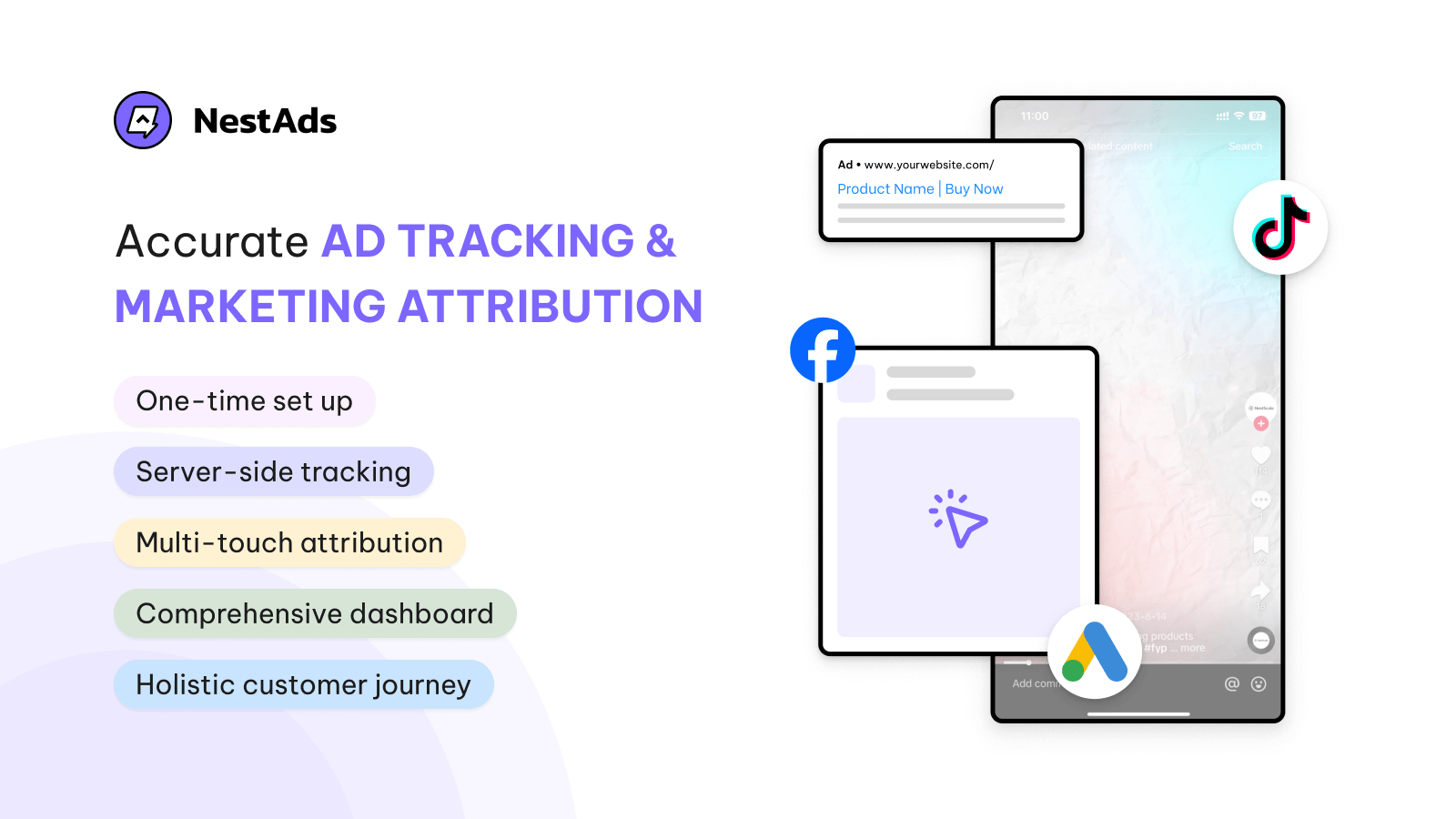
NestAds acts as a highly accessible marketing attribution platform designed for growing Shopify stores managing ads across Meta, Google, and TikTok. It offers an easy entry point for brands that need server-side data accuracy without paying standard enterprise software rates, bridging the gap between raw data collection and visual dashboards.
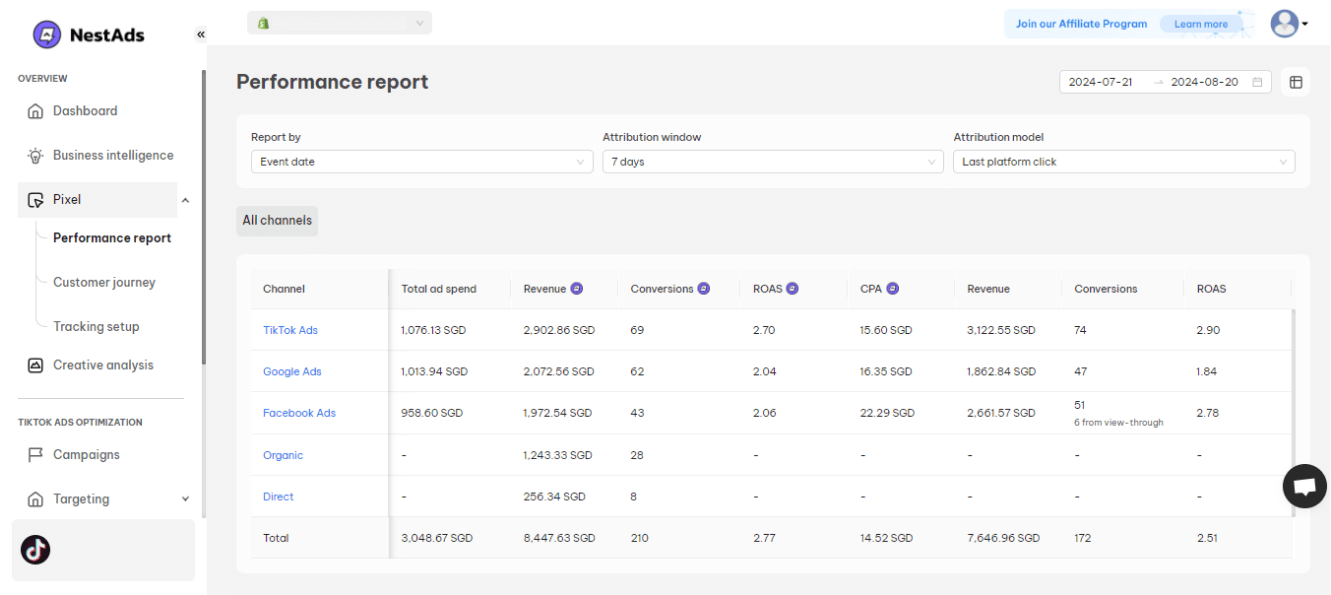
NestAds is especially powerful for DTC brands wanting to optimize ad creative performance and reduce wasted ad spend. NestAds tracks ROAS, ad spend, and conversion rate down to creative-level to help you identity winning ads.
Key strength
- First-Party Server Pixel: Automatically bypasses web browser privacy filters and mobile operating system blocks to log true customer orders directly from the server.
- Unified ROI Dashboard: Aggregates multi-channel ad performance figures into one clear screen, saving hours of manual data export.
- Customer Journey Tracking: Visualizes individual touchpoints across channels so you can see exactly what an individual clicked before buying.
- Cohort and LTV Analytics: Tracks how your customer acquisition cost returns value over a long-term window.
Limitations
- Fewer Secondary Destinations: Lacks native server integrations for smaller ad networks or niche programmatic platforms outside the main channels.
- No Ad Automation: Focuses on data reporting rather than automated ad budget reallocation or complex bidding rules.
Best For
- DTC Store Owners: Teams that need clarity on how top-of-funnel awareness ads interact with bottom-of-funnel campaigns.
- Paid Social Specialists: Store owners running heavy creative budgets on TikTok and Facebook.
2. ThoughtMetric
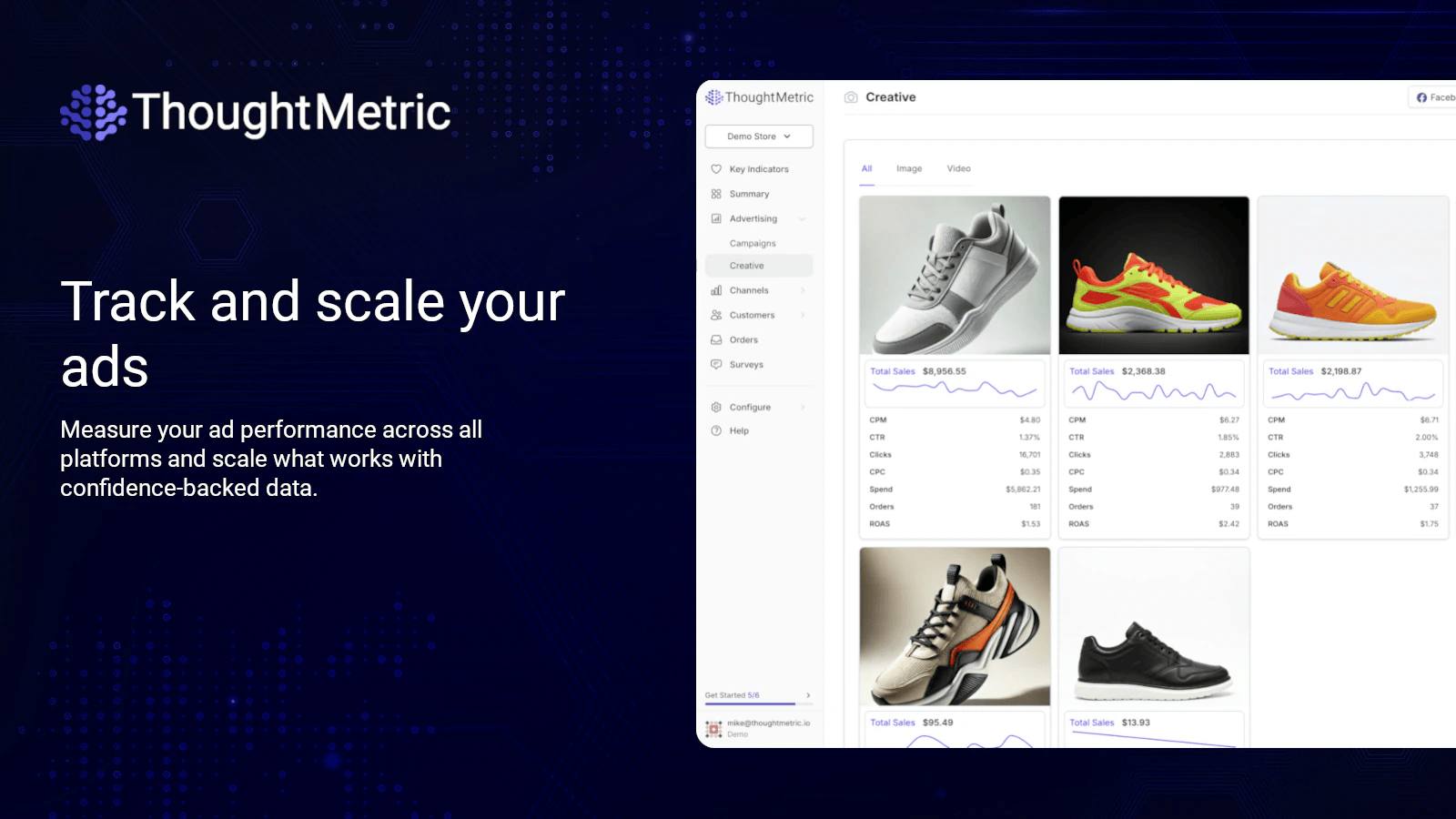
ThoughtMetric focuses entirely on solving complex customer journeys where buyers click multiple ads across different channels before purchasing. It offers mid-market brands deep insight into first-click, last-click, and linear distribution models at a fraction of enterprise costs.
Key strength
- Multi-Touch Modeling: Automatically applies fractional revenue credit to multiple marketing touchpoints rather than giving all credit to the last ad.
- Off-Platform Trackers: Monitors non-ad traffic sources like organic influencers, newsletters, and affiliate links efficiently.
- Sleek UX Layout: Simplifies advanced, multi-channel data paths into easy, plain-English summary charts.
Limitations
- Pageview Caps: Pricing structures scale directly based on your store’s monthly traffic limits, which can penalize high-traffic, low-margin products.
- Integration Lag: Some platform dashboard sync actions experience minor processing delays during heavy promotion periods like Black Friday.
Best For
- Multi-Channel Marketers: Merchants running active marketing campaigns on Google Search, Meta, and email lists simultaneously.
3. Elevar
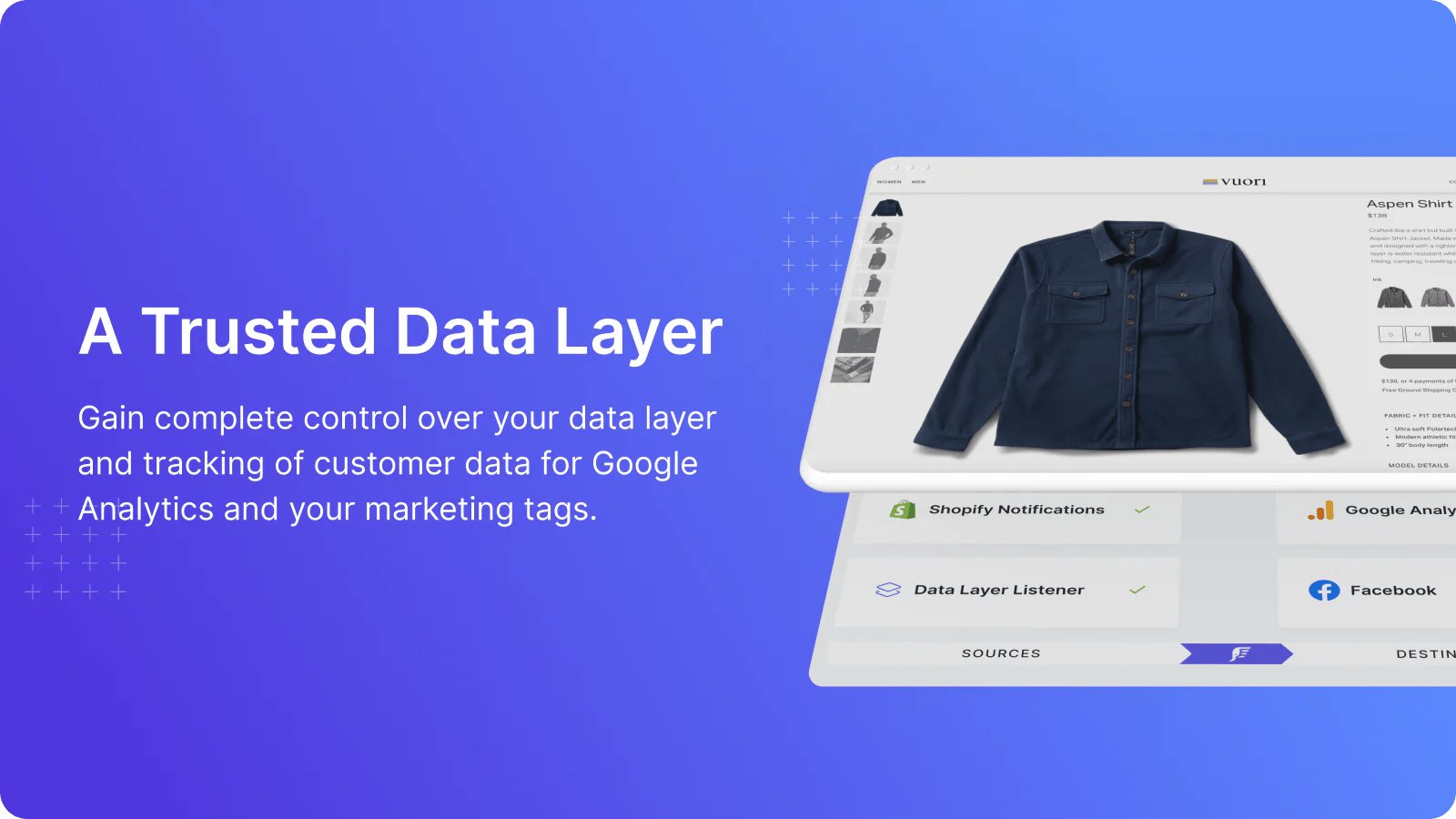
Elevar serves as an advanced server-side data pipeline designed for brands that want absolute ownership of their web events. Instead of locking data into a custom dashboard, Elevar builds a highly resilient foundation that cleans and channels server-side conversions directly into Google Tag Manager and over 40 distinct marketing apps.
Key strength
- Server-Side GTM Hosting: Offloads tracking scripts away from the user’s browser, significantly increasing website load speeds.
- Massive Destination Library: Connects native server pipelines to over 40 distinct advertising channels, affiliate programs, and operational tools.
- Real-Time Error Alerting: Messages your team immediately via email or Slack if a critical checkout tracking event stops firing.
Limitations
- Steep Learning Curve: Requires an understanding of web event tags, triggers, and basic Google Tag Manager mechanics to configure properly.
- No Native Attribution Dashboard: Operates strictly as a data utility pipeline, meaning it does not display its own proprietary marketing analysis dashboard.
Best For
- Shopify Plus Brands: High-volume brands with dedicated backend developers or external agency support.
- Performance Tech Stacks: Marketers who need precise tracking for secondary ad networks like Pinterest, Snapchat, or Microsoft Ads.
4. Littledata
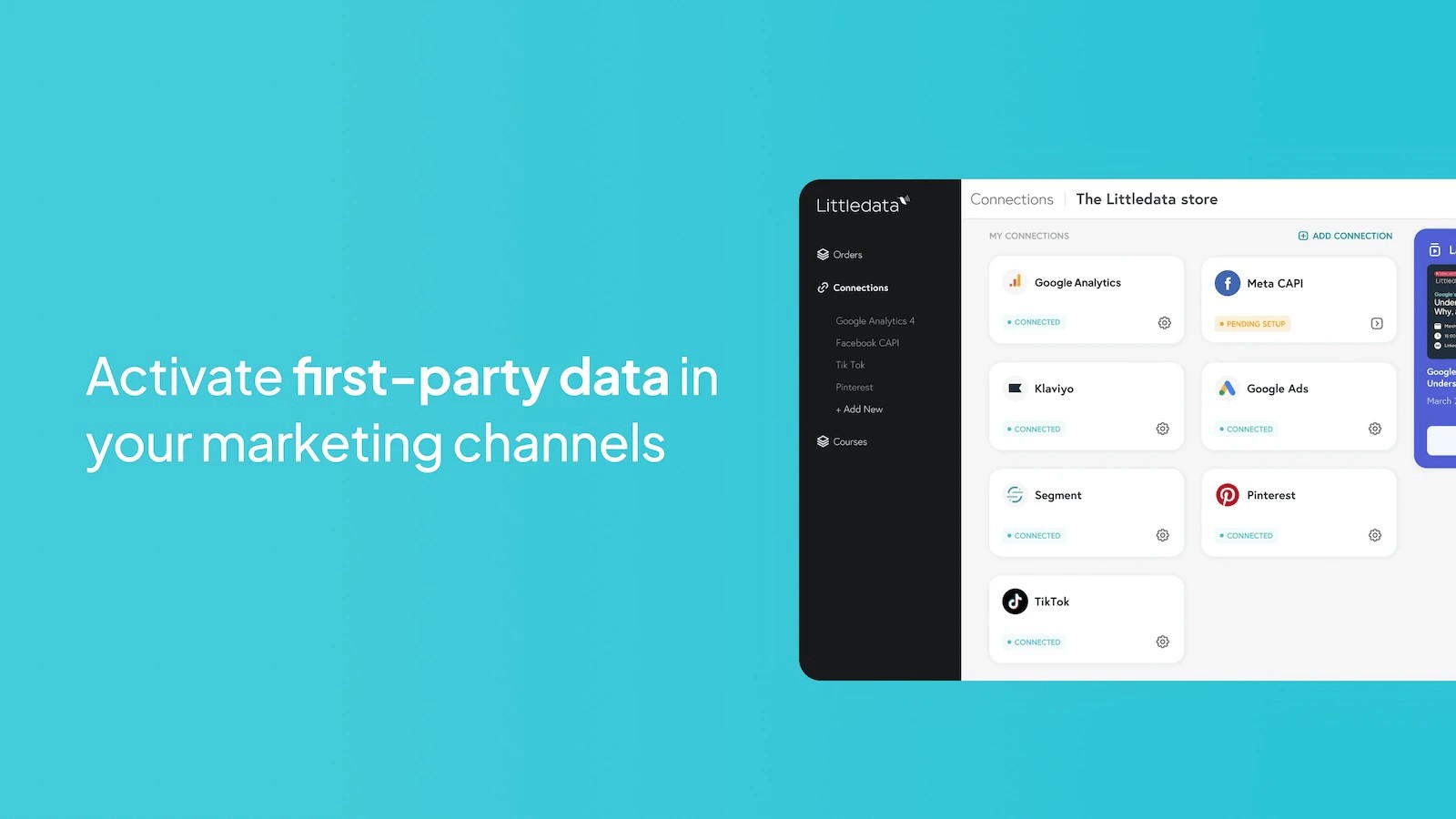
Littledata uses a smart server-to-server connection that hooks directly into the Shopify checkout backend. It automatically repairs broken attribution links by matching recurring billing cycles, manual phone orders, and web checkout details directly to your Google Analytics 4 (GA4) account with zero daily configuration needed.
Key strength
- Automated GA4 Alignment: Forces your GA4 reports to match your actual Shopify database with near-perfect conversion accuracy.
- Subscription App Integrity: Flawlessly tracks recurring charges from external subscription tools like Recharge or Loop without dropping data.
- No-Code Setup: Launches with a plug-and-play installation wizard that requires absolutely no custom code injection.
Limitations
- GA4 Dependence: Heavily optimized around the Google ecosystem, making it less useful if you dislike the GA4 reporting layout.
- Order Tier Pricing: Monthly subscription tiers climb automatically based on total order counts, regardless of your average order value.
Best For
- Subscription Ecommerce: Ecommerce stores reliant on recurring box subscriptions or automated customer replenishments.
- Solopreneurs: Small business owners who need immediate, accurate server tracking without touching complex code.
5. Stape
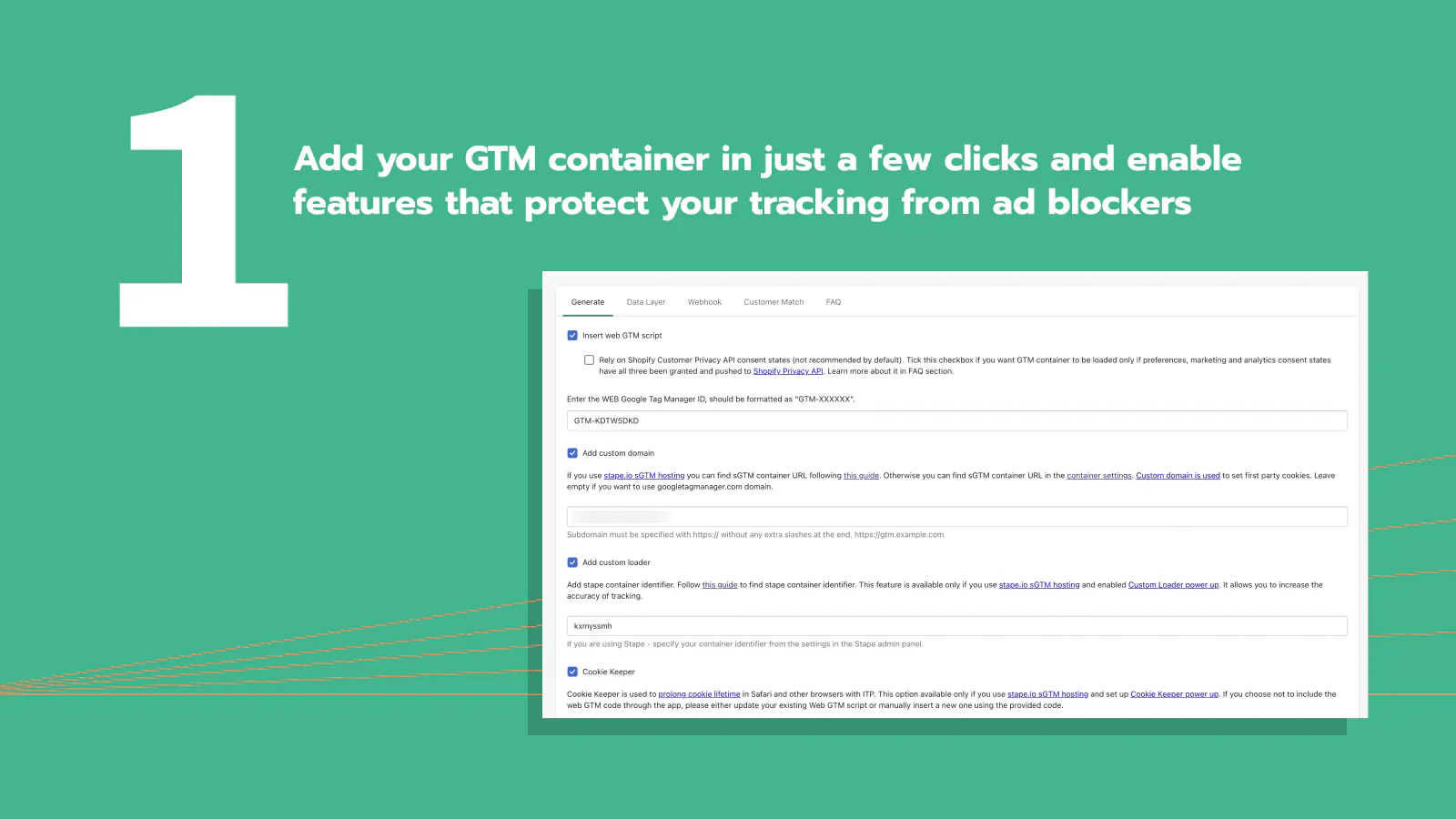
Stape is an infrastructure cloud hosting solution built explicitly to bypass expensive marketing software tools. Instead of paying for a pre-built app dashboard, Stape provides the raw server background needed to run server-side Google Tag Manager containers at a tiny fraction of the cost of standard web cloud services.
Key strength
- Free to install: Removing the premium markups charged by traditional e-commerce attribution software.
- Cookie Life Extension: Employs advanced first-party custom domain setups to keep tracking cookies alive on Safari devices for up to 180 days.
- Global Server Arrays: Places tracking servers near your actual web visitors to maximize load times and data capture stability.
Limitations
- No Out-of-the-Box Dashboards: Provides only raw cloud server hosting infrastructure, which means you must build your own custom data visualizations.
- Manual Configuration Required: Requires a web developer or experienced tag manager professional to set up every single tracking node.
Best For
- Internal Development Teams: Brands that employ full-time software engineers capable of managing custom tracking setups.
- Ecommerce Agencies: Tech partners looking to scale client server-side frameworks without driving up app subscription bills.
6. Attribuly
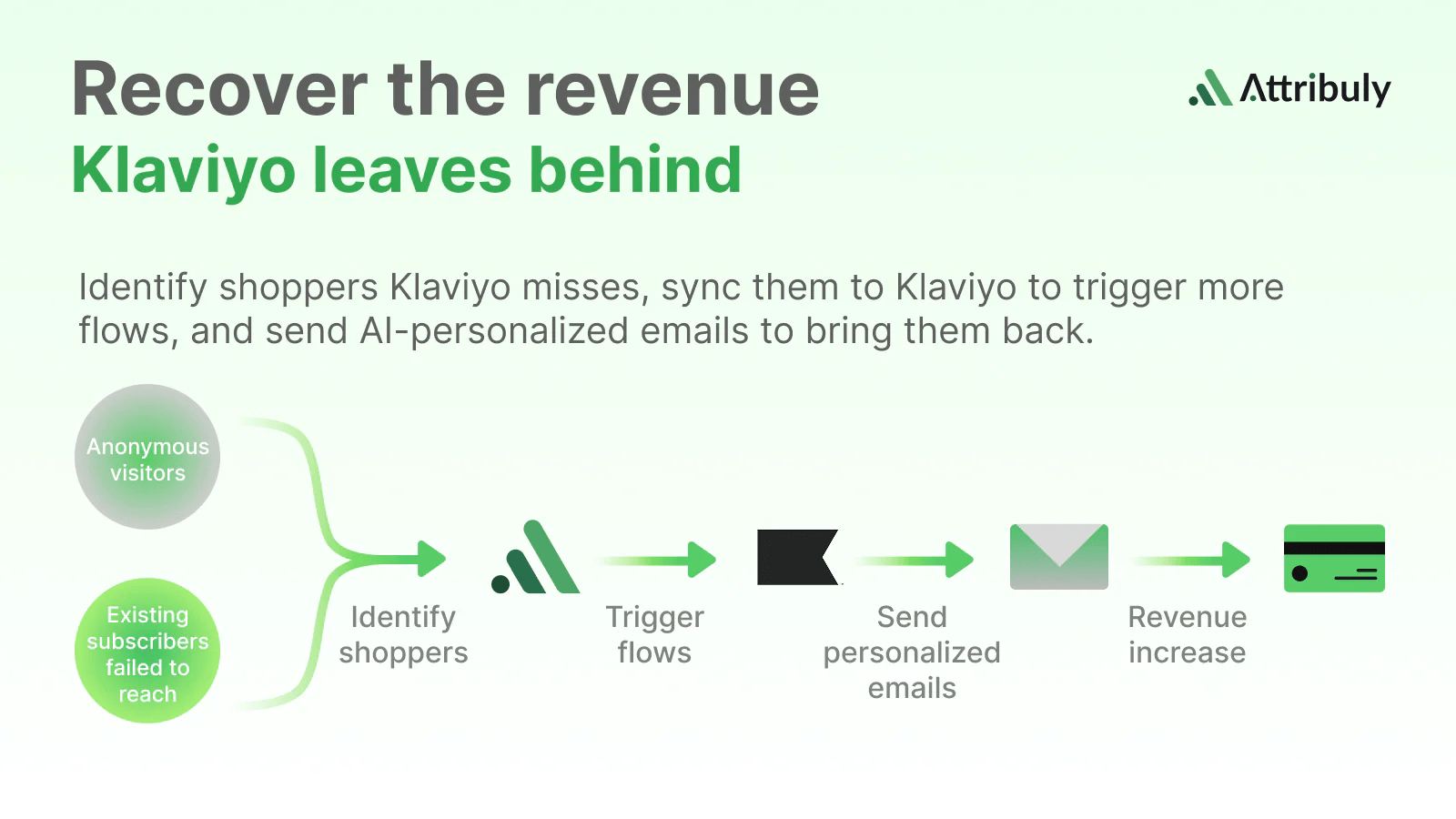
Attribuly balances server-side tracking with intelligent first-party audience synchronization. It focuses heavily on mapping anonymous store drop-ins and pushing that enriched customer contact data straight into Klaviyo flows, significantly lifting email revenue recovery.
Key strength
- Identity Enrichment Sync: Links anonymous web browsing actions to real email contacts to trigger highly accurate abandon-cart sequences.
- Audience Profiling: Automatically pushes clean first-party customer profiles into Meta and Google ad managers for hyper-targeted custom lookalike lists.
- Ad-Level Conversion Proof: Traces precise conversion actions back to individual ad IDs to simplify weekly creative reviews.
Limitations
- Public Pricing Vagueness: Custom tier adjustments require booking direct consultation calls as your store scales into large volume brackets.
- DTC Specificity: Deeply locked into the standard Shopify structure, making it a poor choice for multi-platform custom checkout builds.
Best For
- Email-Centric Stores: Brands that lean heavily on automated email retargeting and SMS marketing flows over pure cold ad spend.
- Retention-Focused Marketers: Growth teams that prioritize lowering customer acquisition costs via precise customer lookalike lists.
7. Triple Whale
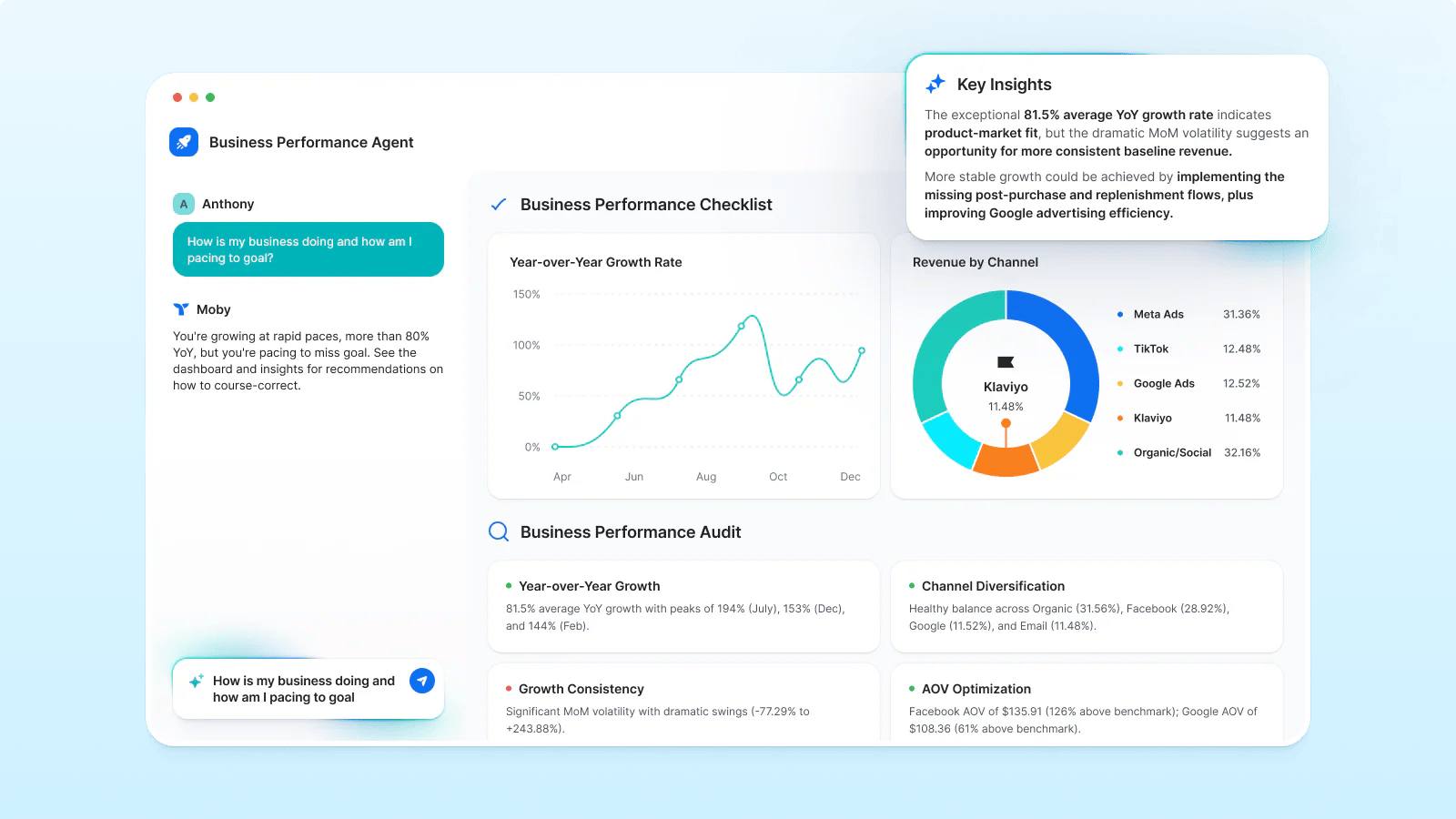
Triple Whale is a massive, central operating ecosystem built for scaling direct-to-consumer brands. Beyond its first-party tracking engine, it unifies your store’s ad metrics, actual shipping fees, product inventory trends, and real-time contribution margins into a single central control station.
Key strength
- Triple Pixel Technology: Uses advanced server signal enrichment to fix missing attribution tags directly inside ad accounts.
- Net-Profit Tracking Engine: Automatically subtracts cost of goods, transaction fees, and shipping costs to reveal your true hourly net profits.
- Creative Analytics Layout: Ranks your static images and video ads by actual conversion metrics to pinpoint winning ad designs instantly.
Limitations
- Premium Cost Model: Subscription pricing climbs quickly based on your store’s annual revenue, making it expensive for low-margin brands.
- Feature Overload: The immense volume of tabs, financial calculators, and metrics can overwhelm small, single-person teams.
Best For
- High-Growth Scaling Brands: Brands spending heavily on ads that need real-time data to back up large scaling decisions.
- Data-Driven Operations: Teams that need their tracking data tightly connected to inventory limits and financial profit reporting.
👉 Related:
How to Choose the Right Server-Side Tracking Tools for Your Store
Best Attribution Tools for DTC Brands (2026)
Shopify Server-side Tracking: How to Set Up & Best Practices
FAQs: Aimerce Alternatives
The common options are divided into distinct categories:
– Littledata: The best no-code choice if your primary goal is to make your Shopify server data match your Google Analytics 4 (GA4) dashboard without touching code.
– NestAds: The top choice for small to medium businesses that need an affordable, plug-and-play multi-touch attribution tool for social ads.
– Triple Whale: A comprehensive ecosystem for scaling direct-to-consumer brands that combines its first-party tracking pixel with real-time profit and inventory analytics.
The fundamental difference between Aimerce and NestAds comes down to their target audience pricing structures and core software functionalities.
– Aimerce is an enterprise-grade backend infrastructure tool starting at around $299 per month that focuses on server-side signal boosting to maximize ad platform machine learning for high-volume brands.
– NestAds is a mid-level multi-touch attribution tool that prioritizes simplifying cross-channel ad reporting and customer journey timelines for DTC businesses running paid social campaigns.





 Facebook Advertising